Palazzo Cattaneo Della Volta: A Rolli Palace in Genoa


Site at a Glance
- Rating
- 4.7
- Popularity
- Very Low
- Country
- Italy
- Primary era
- Early Modern
- Eras represented
- Medieval, Early Modern, Modern
- Civilizations
- Genoese, Italian
- Site type
- Domestic
- Remains
- Palace
On this page8 sections
History
Palazzo Cattaneo Della Volta is a historic palace in Genoa, Italy, whose present form combines sixteenth-century origins with Mannerist and Baroque elements. Located in the old city centre at Piazza Cattaneo, it developed on a site held by the Cattaneo della Volta family from the twelfth century.
The Cattaneo della Volta family
The family maintained its household establishment and the church of San Torpete on this site for centuries. Its wealth was connected to textile commerce with Flanders. Filippo Cattaneo owned a trading company in Antwerp from 1562 and became consul of the Genoese Nation there in 1584.
The palace was listed in every Rolli register from 1599. These official registers identified aristocratic residences that could accommodate distinguished visitors during state visits, giving participating palaces a public hospitality role on behalf of the Genoese Republic.
Renovation, damage, and rebuilding
The present palace was formed by joining two medieval plots. In 1623, Leila Cattaneo commissioned the architect Bartolomeo Bianco to carry out a general renovation and add a floor. The building was damaged during Louis XIV of France’s naval bombardment of Genoa in 1684.
Further destruction occurred in 1941, when bombing demolished the top two floors. They were later rebuilt, and an additional floor was added. A more recent partial restoration brought to light decorative traces and frescoes provisionally attributed to the late Middle Ages.
The picture collection and its dispersal
The palace once contained a particularly valuable family picture gallery, including nine portraits by Antoon van Dyck, the Flemish Baroque painter renowned for portraiture. After Marquis Giuseppe Cattaneo died in 1906, his heirs sold the collection to American collectors. The sale caused a major scandal and led to a trial concerning violations of laws governing the export of paintings.
Remains
Façade and exterior features
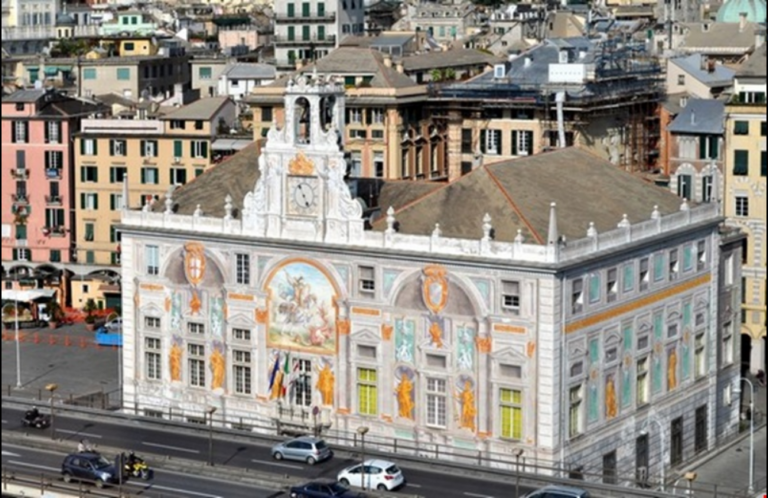
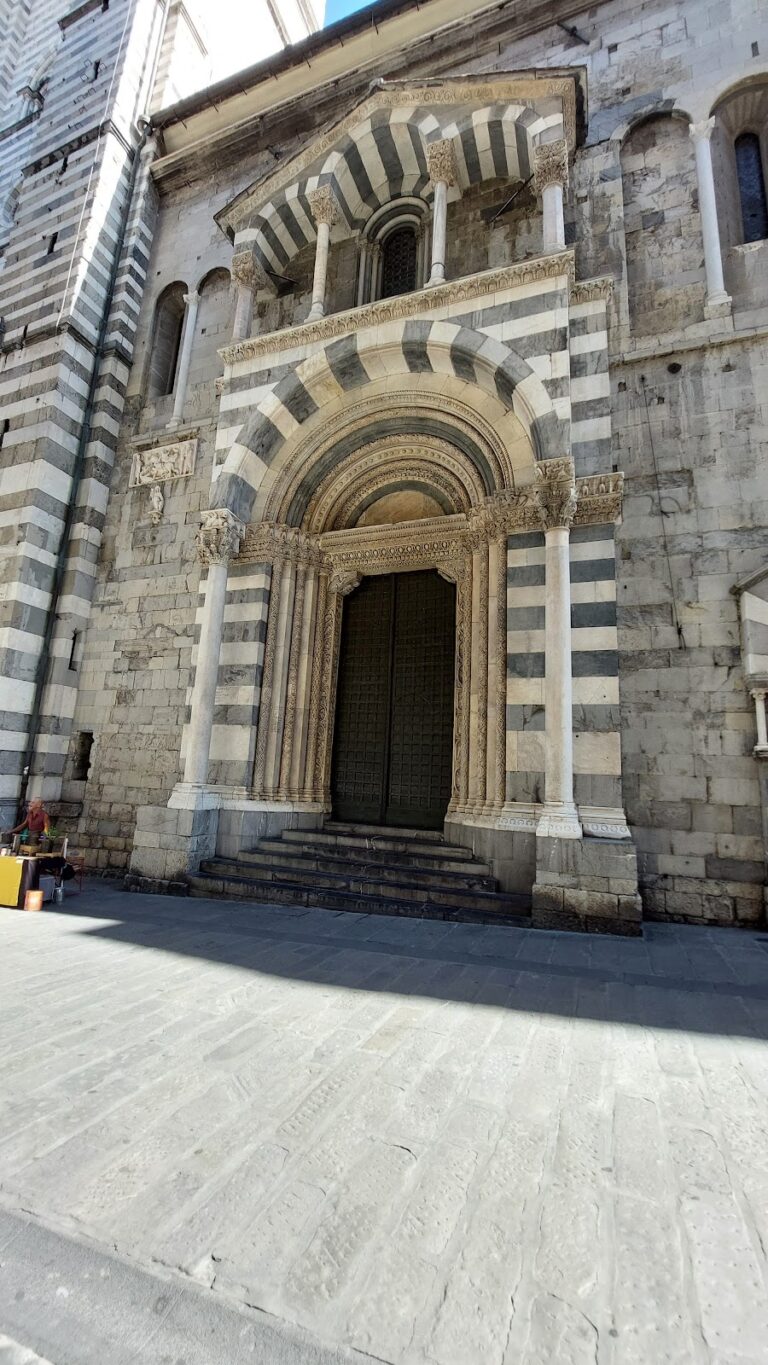
The palace stands between the San Giorgio market and the Ripa, Genoa’s historic waterfront district, and is now used for housing and offices. Its Baroque façade has a white-marble portal in the Ionic order, a classical architectural system recognized by the scroll-shaped forms on its capitals.
On the south side of Piazza Cattaneo, an octagonal pillar with a cubic capital carries a bas-relief of Saint George and the dragon. The feature visibly connects the building with the long presence of the Cattaneo della Volta family. The upper façade levels along Via delle Grazie preserve traces of squared decoration and frescoes provisionally attributed to the late Middle Ages.
Painted interiors
In 1739, Nicolò Cattaneo commissioned the Bolognese painter Giacomo Antonio Boni to decorate a drawing room. Its vault bears frescoes of Diana, the Roman goddess associated with the hunt and the moon, and Endymion, the mythological figure famed for eternal sleep and Diana’s or Selene’s love.
A separate drawing room associated with the Van Dyck portraits contained quadrature, an illusionistic painting technique using architectural forms and framing to organize or extend a room’s visual space. Giacomo Antonio Boni designed this decoration to display the family’s portrait collection.
Surviving portraits
The dispersed collection included the Portrait of a Lady with Golden Chain, traditionally called Giovanna Cattaneo, now in The Frick Collection in New York. It also included the Portrait of Marchesa Elena Grimaldi Cattaneo and portraits of her children Filippo Cattaneo and Maddalena Cattaneo. The two child portraits are dated 1623 and are now held by the National Gallery of Art in Washington.