Lengberg Castle: A Medieval Administrative Castle in Austria


Site at a Glance
- Rating
- 4.8
- Popularity
- Very Low
- Country
- Austria
- Primary era
- Medieval
- External website
- Open
- Eras represented
- Medieval, Modern
- Civilizations
- Holy Roman Empire
- Site type
- Military
- Remains
- Castle
On this page12 sections
History
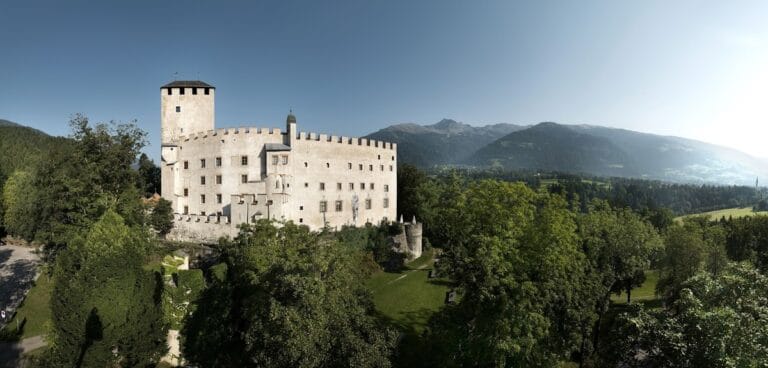
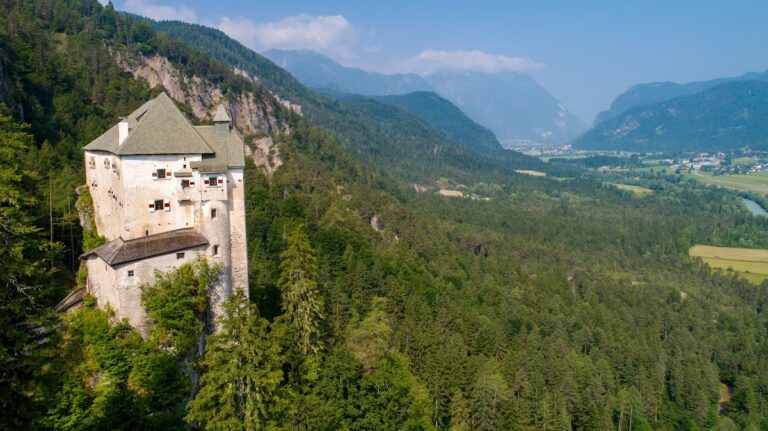
Lengberg Castle is a medieval castle in Austria, near Nikolsdorf in East Tyrol, whose origins probably lie in a twelfth-century Romanesque building established by the Counts of Lechsgemünde. It stands on a small hill on the northern side of the Drava Valley, about 13 kilometres east of Lienz. The castle was first mentioned in 1190 and appears to have been created to administer the counts’ possessions.
Transfer to Salzburg
In 1207, Count Heinrich of Lechsgemünde transferred Lengberg, together with the lordships of Matrei and Mittersill, to Archbishop Eberhard of Salzburg. Heinrich retained the right to use all three lordships for life, but after his death in 1212 Lengberg became part of the secular territory ruled by the Prince-Archbishopric of Salzburg. This was the archbishop’s territorial government, distinct from the ecclesiastical institution of the Archdiocese of Salzburg.
The archbishop appointed a castle administrator, judge, or bailiff to govern the lordship and exercise judicial authority. The Lengberg court also held lower jurisdiction. Several noble families performed these duties during the following 150 years. The recorded administrators included Alram of Matrei in 1223, the brothers Otto and Weringand of Matrei in 1241, and Burgrave Friedrich of Lienz, who undertook to administer Lengberg between 1273 and 1284.
Late-medieval rebuilding
In 1419, Peter and Andre Mosheimer received Lengberg for life. Peter held it until 1453 or 1454, Andre until 1465, and Andre’s son Peter Mosheimer until 1480. That year, Virgil von Graben became burgrave and castle administrator for life. Between 1480 and 1485, he carried out major Gothic alterations that enlarged and reshaped the medieval building.
After Virgil von Graben died in 1507, his sons, including Lukas von Graben zum Stein, surrendered Lengberg to Archbishop Leonhard von Keutschach of Salzburg in exchange for a substantial payment. The administrative office later passed to other noble families. During the seventeenth and eighteenth centuries, repeated repairs were needed, and the administrators often sought financial help from the Archbishop of Salzburg. By the end of the eighteenth century, the castle had deteriorated so badly that Judge Josef Franz von Getzinger moved to the Getzenhof below it and held court there.
Changing ownership and uses
The dissolution of the Archdiocese of Salzburg in 1803 placed Lengberg within the Electorate of Salzburg, ruled by Ferdinand of Tuscany of the Habsburg dynasty. During the Napoleonic period, the area came under French administration. The Lengberg court was abolished in 1812. When Austrian rule returned in 1816, its district was incorporated into the Lienz regional court and assigned to the County of Tyrol.
Lengberg entered private ownership in 1821. It was used as an altar workshop and as a hospital during the cholera epidemic of 1831. After several proposed uses, including a children’s holiday home, Karl Count Lodron-Laterno acquired the castle around 1913. Dutch banker Paul May bought the dilapidated building in 1920 and renovated parts of it enough to make it habitable. Members of the May family were associated with the Dutch royal house, and Queen Wilhelmina of the Netherlands spent summer holidays at Lengberg.
After Austria’s annexation to Nazi Germany, the May family’s property, including Lengberg, was confiscated and placed under the German Reich. The castle’s use during that period is unknown. British occupation forces used it as quarters in 1945, and the property was returned to its owners in 1948.
Restoration and present association
The May family sold the badly damaged castle to the Province of Tyrol in 1956. The Tyrolean parliament assigned it to Aufbauwerk der Jugend, a Tyrolean youth and social-welfare organization. With help from many volunteers, the building was restored. It first operated as a youth hostel and later provided accommodation for an agricultural school. The 1976 earthquake caused serious damage and led to further repairs. Since the mid-1970s, Lengberg has been associated with the work of Aufbauwerk der Jugend.
A comprehensive renovation began in 2008 under the involvement of the Federal Monuments Authority. Archaeological investigation during the work recovered material from the castle’s vault-spandrel fill and added evidence about its medieval and early modern use. Since January 2010, the renovated castle has been used and inhabited by participants and staff of Aufbauwerk der Jugend. Lengberg remains protected as a historic monument.
Remains
Lengberg Castle developed around a Romanesque residential and administrative building enclosed by a thick ring wall. Gothic work between 1480 and 1485 added further storeys, wings, and defences, while later restoration altered parts of the interior. Archaeological material recovered during the 2008 renovation provides evidence of activities at the castle from the fourteenth to the eighteenth century.
Romanesque core and Gothic defences
Palas and ring wall
The original castle consisted of a two-storey palas, the principal residential and administrative building of a medieval castle, enclosed by a ring wall 2.20 metres thick. Its Romanesque construction used massive masonry and comparatively simple forms. The building had no separate keep, or fortified tower. This arrangement is understood as consistent with Lengberg’s administrative purpose rather than with a primarily military role.
Gothic wings and outer wall
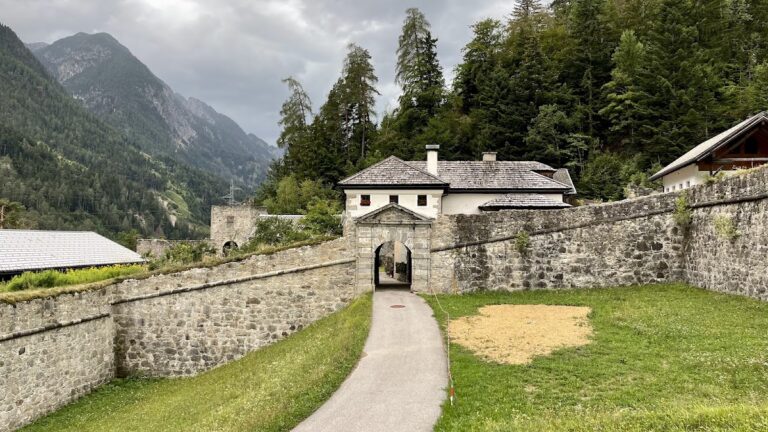
Virgil von Graben’s Gothic alterations added a third storey, a west wing, and an east wing. The fortification wall was raised and accompanied by an outer defensive wall. Lowering the courtyard level required changes to the entrance, leaving the castle gate approximately three metres lower than it had previously stood.
Chapel and later interior changes
A chapel was established in the west wing and consecrated in 1485 to Saint Sebastian and Saint Nicholas, Christian saints associated here with places of worship. Pietro Carolo, Bishop of Caorle, performed the consecration, which his secretary Paolo Santonino described in the travel diary Itinerarium. During the 1956 restoration, this historic chapel was demolished and the room was converted into a kitchen. A replacement chapel was then created in the basement, in a former fodder chamber, according to plans by architect Hubert Völlenklee. Its end wall bears a large fresco showing the death of Saint Sebastian and his catacomb tomb.
Archaeological and textile finds
Material recovered from vault-spandrel fill during the 2008 renovation included coins, playing cards, glass and ceramic objects, shoes, shirts, and other clothing remains. Approximately 2,700 medieval textile fragments were found wrapped in a blanket. The group also included a medieval one-handed flute, which can be viewed at Lengberg Castle.
Several linen bras were recovered among the textiles. Four are described as bras, including one that closely resembles the modern form and has traces of lace-making around its edges. Radiocarbon dating placed examples in the fifteenth century, including a range of approximately 1440 to 1485. These garments are among the earliest preserved examples and show that functional bras existed centuries before the nineteenth-century date traditionally associated with their invention. The textiles were probably deposited accidentally during the castle’s expansion around 1480, and their discovery has contributed to the history of women’s clothing.
Modern restoration
The renovation begun in 2008 combined building work, restoration, and archaeological investigation. It also made the entire castle accessible without barriers and added an extension on the castle wall. The surviving building therefore incorporates the Romanesque core, Gothic additions, later interior changes, and modern conservation work within the protected historic monument.
Nearby sites