Palais Strozzi: A Historic Summer Palace in Vienna
Site at a Glance
- Rating
- 4.9
- Popularity
- Very Low
- Country
- Austria
- Primary era
- Early Modern
- External website
- Open
- Eras represented
- Early Modern, Modern
- Civilizations
- Habsburg, Holy Roman Empire
- Site type
- Domestic
- Remains
- Palace
On this page9 sections
History
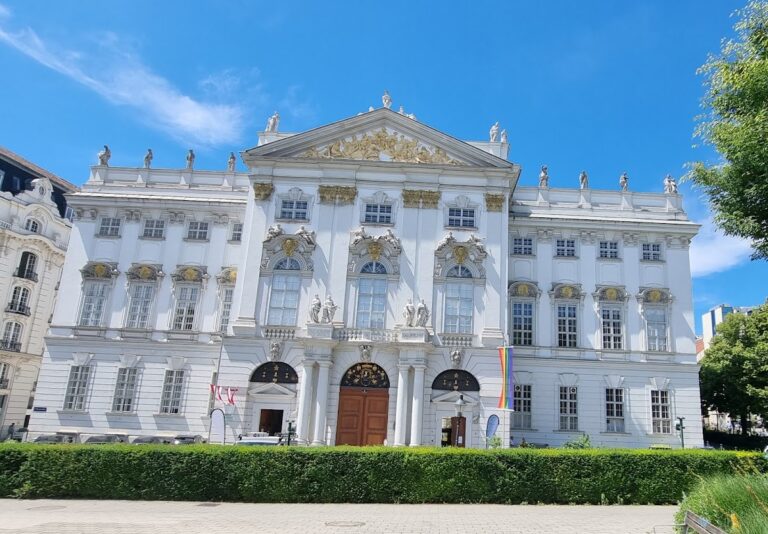
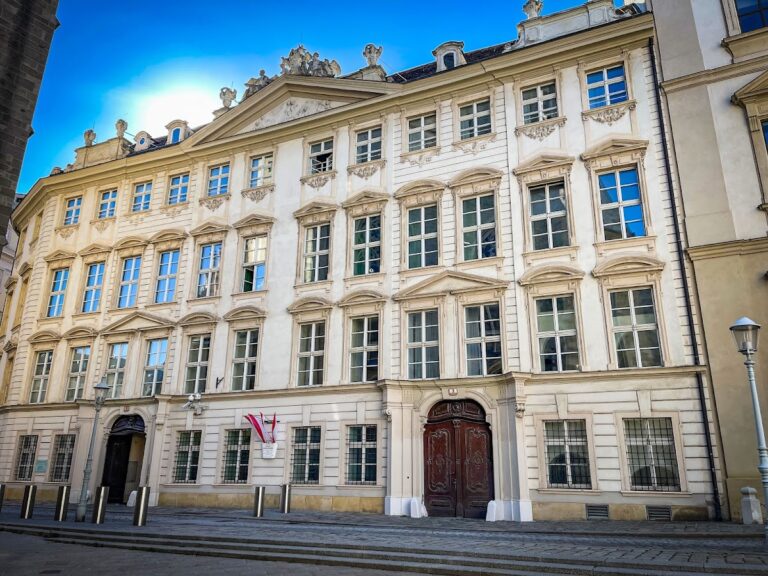
Palais Strozzi is a historic palace in Vienna, Austria, built between 1699 and 1702 for Countess Maria Katharina Strozzi, née Khevenhüller, as a modest summer residence. Its architect is unknown, although the design may have originated in the circle of Johann Lukas von Hildebrandt, a prominent Austrian Baroque architect. The building later passed through aristocratic, imperial, educational, medical, and administrative uses before becoming a home for research institutions.
From aristocratic residence to imperial property
After Maria Katharina Strozzi died in 1714, her nephew, Colonel Johann Ludwig Graf Khevenhüller, inherited the property. He sold it in 1716 to Antonio Francesco Folco de Cardona, Archbishop of Valencia, who had served as an adviser to Emperor Charles VI, a Habsburg ruler of the Holy Roman Empire. Folco enlarged the summer palace and later left it to the emperor.
In 1753, Charles VI’s daughter, Empress Maria Theresa, gave the palace to her court chancellor, Johann Graf Chotek. Plans for further expansion, together with the pressures created by the Seven Years’ War, led Chotek to sell large parts of the garden. The property nevertheless remained with the Chotek family until 1840. During this period, parts of the palace were rented, including to the painter Friedrich von Amerling.
Public and institutional uses
When a cholera pandemic reached Vienna in 1831, Palais Strozzi was used as a cholera hospital. In 1840, the state purchased the building and established the Civil Girls’ Boarding School there, a college for women teachers. The palace was too small for this purpose, so it was enlarged and extensively modernized.
A new wing erected in 1877 and 1878 separated the girls’ college from cavalry barracks that then stood opposite the palace. The college moved out in 1919, after which the Municipality of Vienna used the building to care for disabled people. From 1940 until 7 December 2012, Palais Strozzi housed the tax office serving Vienna’s 8th, 16th, and 17th districts. The office subsequently moved to the Wien Mitte financial center.
Research center and protected monument
The Institute for Advanced Studies announced its move to Palais Strozzi in February 2015, and its research center opened there in November of that year. The Complexity Science Hub Vienna established premises in the palace in May 2016. Palais Strozzi is protected as an Austrian historic monument.
Remains
Palace and grounds
Original main wing
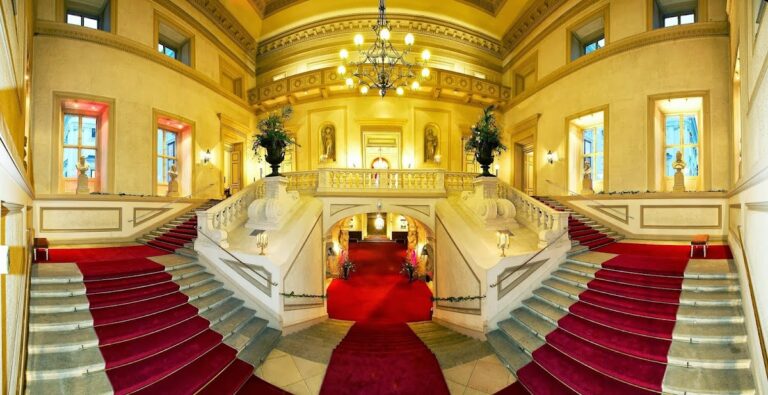
The original residence consisted of the present palace’s one-storey main wing. The building is painted pink and white and stands behind a plain building from 1877 and 1878. An open staircase projects from the garden side, while the symmetrical staircase that once faced the courtyard has been demolished.
Garden and later additions
The countess’s elaborately designed garden originally extended as far as Piaristengasse. During Antonio Francesco Folco de Cardona’s enlargement, side wings were added to the palace, together with a forecourt separated from the street by a wall. These additions changed the arrangement of the original summer residence and formed the broader palace complex that survives in altered form.
Sala terrena decoration
The palace’s original interior furnishings have not survived. A general renovation carried out between 1995 and 1998 uncovered frescoes in the Sala terrena, a ground-level garden room common in Baroque palaces. Created around 1740, the frescoes belong to grotto-style decoration that imitates natural caves through rough masonry, shells, and coral.
Nearby sites