Schloss Haltenbergstetten: A Castle and Palace Complex in Germany
Site at a Glance
- Rating
- 4.4
- Popularity
- Very Low
- Country
- Germany
- Primary era
- Early Modern
- External website
- Open
- Eras represented
- Medieval, Early Modern
- Civilizations
- Holy Roman Empire
- Site type
- Domestic
- Remains
- Palace
On this page9 sections
History
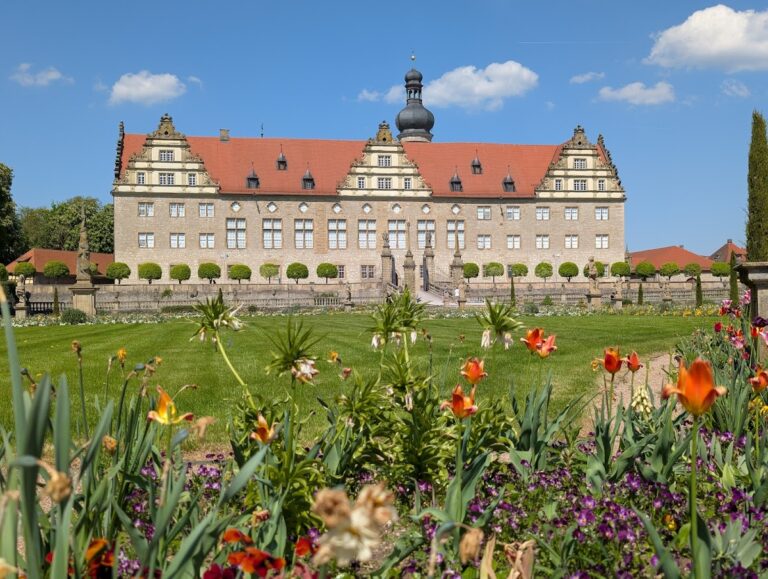
Schloss Haltenbergstetten is a castle and palace complex in Germany near Niederstetten, built around 1200 by the House of Hohenlohe, a German noble dynasty that held extensive territories and residences in the region. The medieval complex was converted into a palace during the sixteenth century, incorporating elements of the Late Gothic and early Renaissance styles.
Hohenlohe origins
The lands at Haltenbergstetten probably originally belonged to Pfitzingen Castle in a neighboring settlement. Konrad von Pfitzingen, recorded in 1136 and 1141, was probably the father of Konrad von Weikersheim, who appears in 1153 as the progenitor of the House of Hohenlohe. This connection places the origins of Haltenbergstetten within the early territorial history of the Hohenlohe family.
Changing ownership
Feudal-law transfers in the medieval period and later inheritances brought a succession of owners. After the Lords of Hohenlohe, the complex passed to the Counts of Castell, the Schenks of Limpurg, and the Lords of Rosenberg. The Counts of Hatzfeld held it from 1641 to 1794, followed by the Prince-Bishopric of Würzburg, an ecclesiastical principality ruled by a prince-bishop. From 1803, the Princes of Hohenlohe-Jagstberg became its owners and continue to own the palace.
Religious and cultural use
The Chapel of Maria Immaculata served as Niederstetten’s parish church for Catholics until 1966. The parish church of St. John the Evangelist was built in Niederstetten in 1965 and 1966. The palace formerly contained a natural history museum, while parts of the east and south wings now house a hunting museum with hunting trophies, taxidermied wild animals, and collections of native and exotic birds. The castle, church, and hunting museum continue to support public cultural use, including occasional musical performances.
Remains
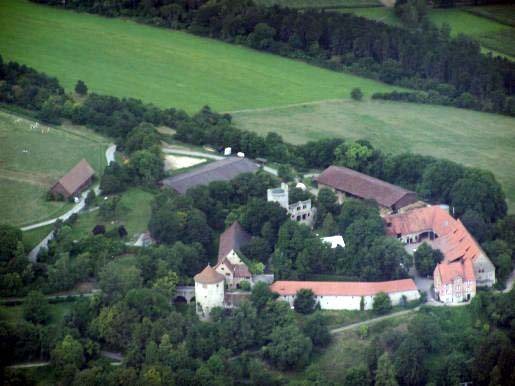
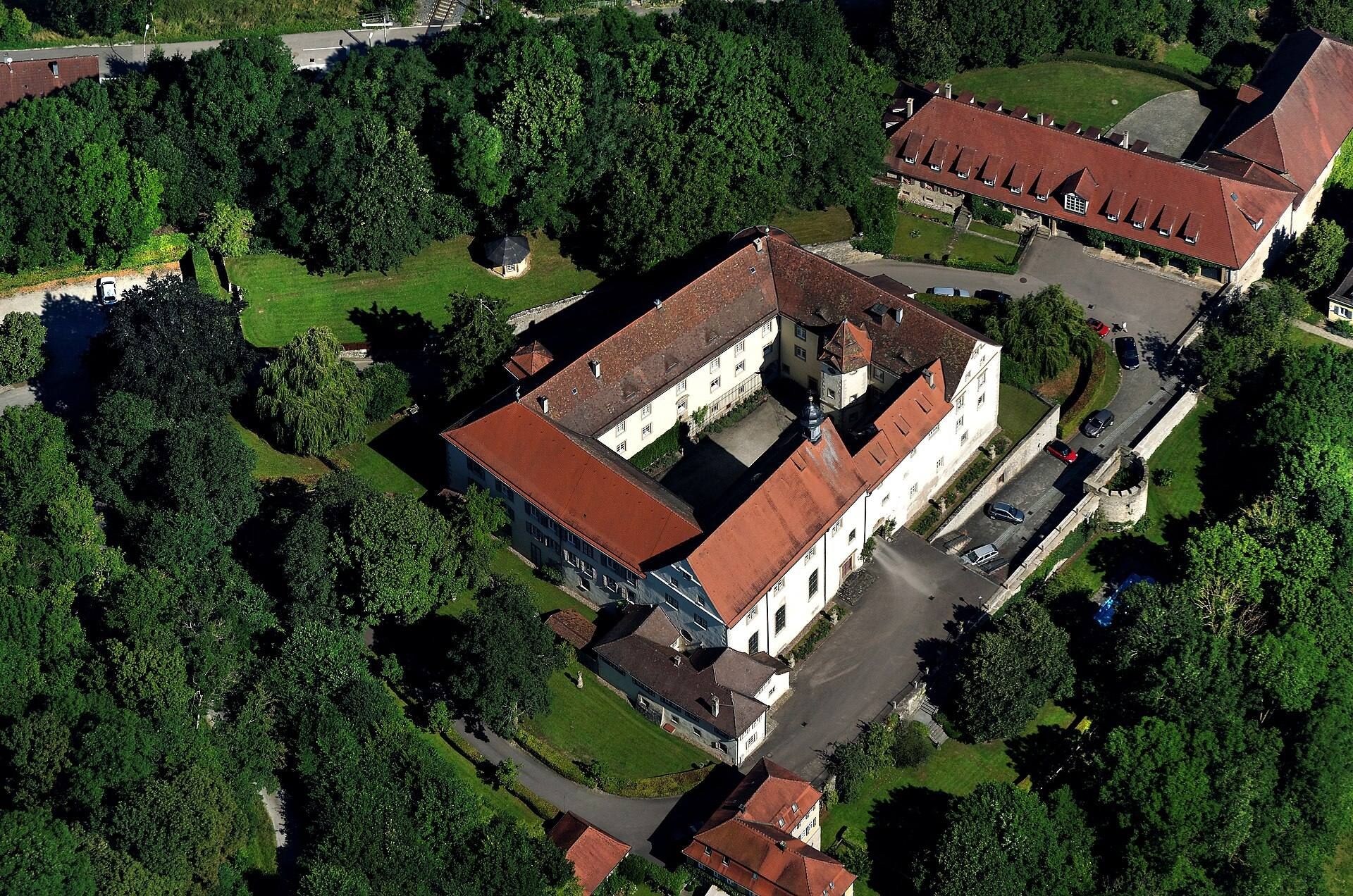
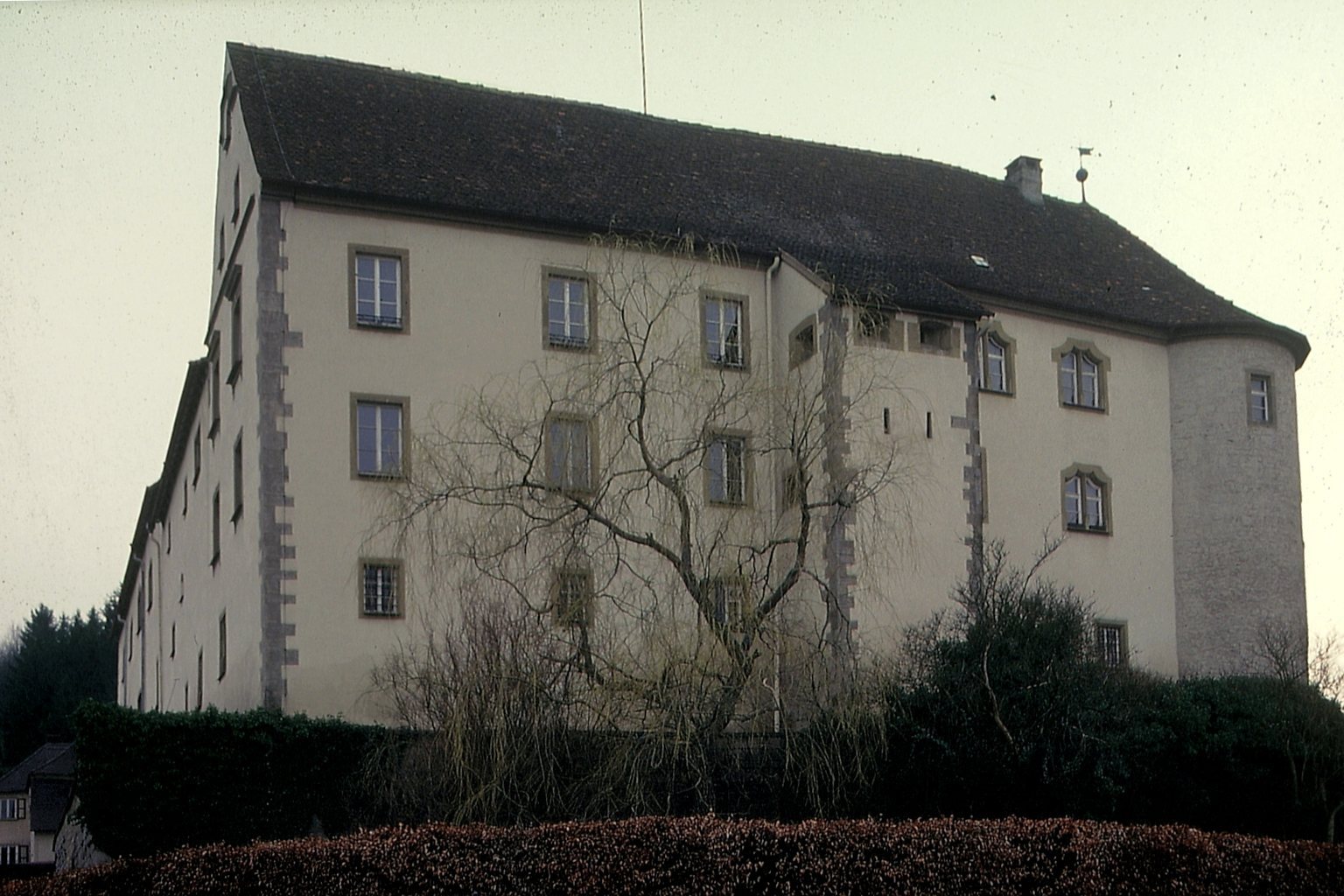
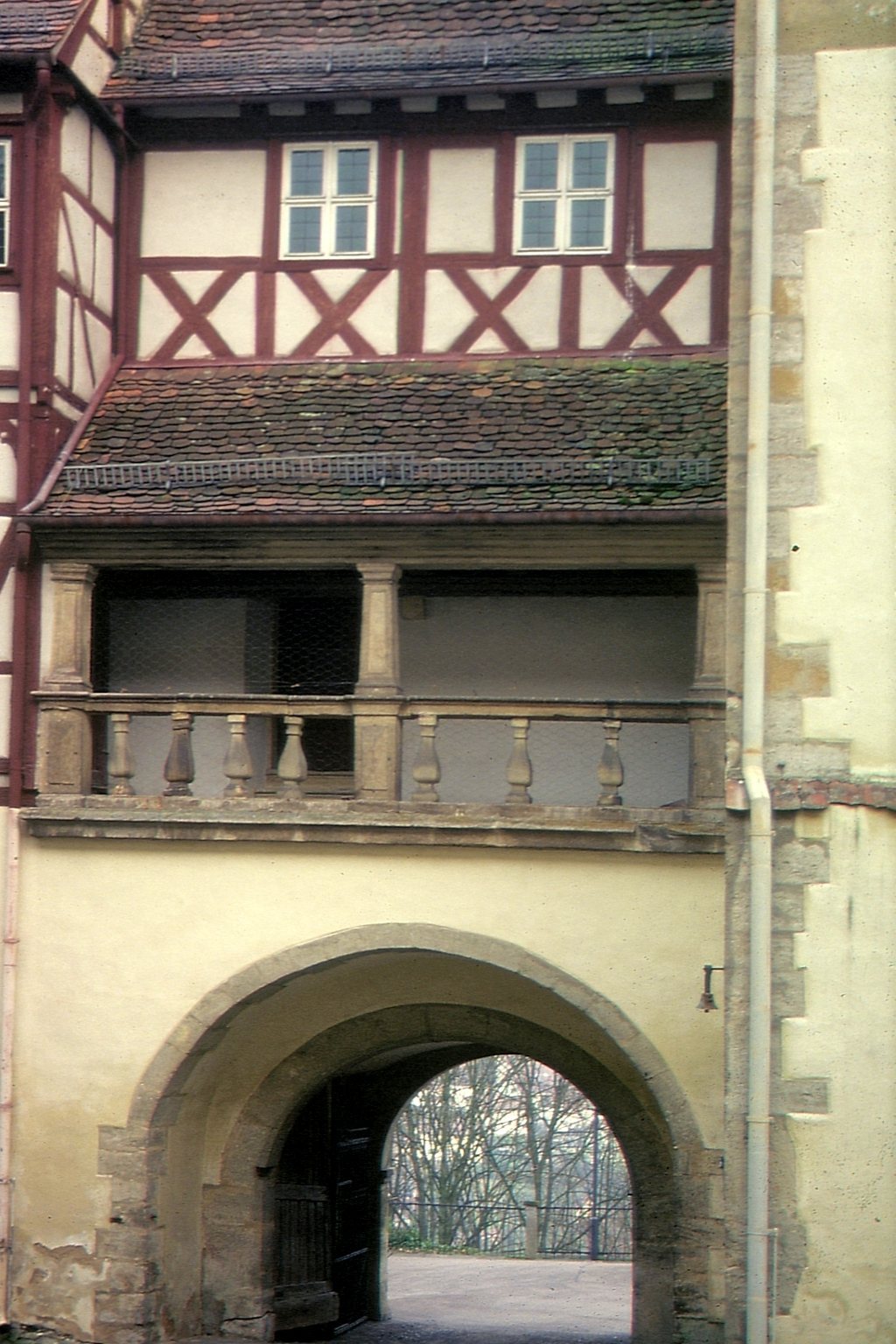
Schloss Haltenbergstetten stands at about 350 metres above sea level on the lower spur of the Lämmerberg. The spur separates the Vorbach, which runs north through Niederstetten, from the side valley of the Frickentalbach. The complex forms an irregular quadrangle, and its buildings combine Late Gothic, early Renaissance, Baroque, and Rococo elements.
Castle quadrangle
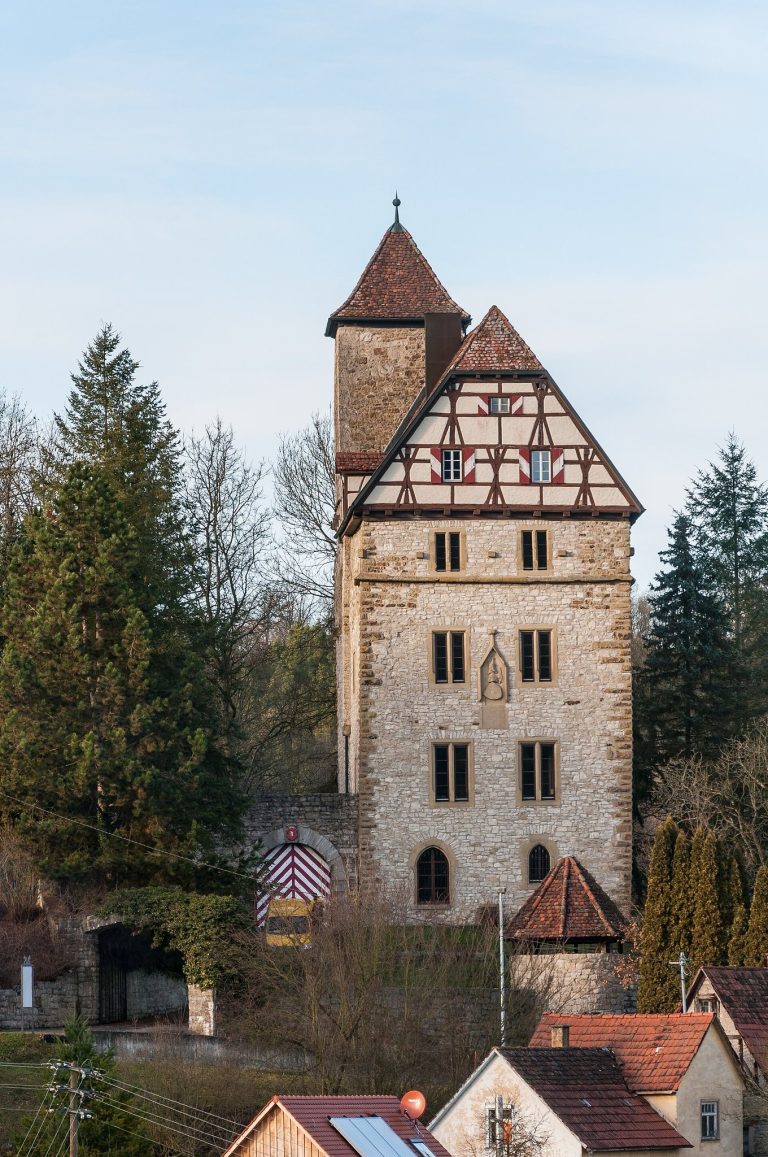
The main entrance to the courtyard lies beside the east wing. A round tower marks the northwest corner, while a polygonal stair tower projects from the courtyard side of the north wing. The north, west, and south sides contain oriel-like projections, which are projecting windowed structures attached to upper storeys. Together, these features preserve the irregular form of the former castle complex after its transformation into a palace.
Palace church
The Baroque palace church is built into the southern part of the east wing. It is the younger component of the ensemble and fits inconspicuously into the irregular quadrangle. Inside, Rococo furnishings accompany a princely box, an elevated or enclosed seating area reserved for a prince or another high-ranking patron.
Hunting museum
The hunting museum occupies parts of the east and south wings. Its collections include hunting trophies, taxidermied wild animals, and native and exotic birds, giving these sections of the palace a continuing cultural function.
Princess’s House
The Princess’s House forms part of the palace ensemble but stands slightly apart on the slope beyond the road. It is an angular building with a mansard roof, a roof form with two slopes on each side, the lower slope steeper than the upper one.
The palace stands near the settlement of Haltenbergstetten, within the boundaries of Niederstetten. The town itself was called Haltenbergstetten until 1807, providing the name by which the palace complex is known.