Burg Brattenstein: A High-Medieval Castle in Röttingen, Germany


Site at a Glance
- Rating
- 4.8
- Popularity
- Low
- Country
- Germany
- Primary era
- Medieval
- External website
- Open
- Eras represented
- Medieval, Early Modern
- Civilizations
- Holy Roman Empire
- Site type
- Military
- Remains
- Castle
On this page10 sections
History
Medieval Origins and Würzburg Rule
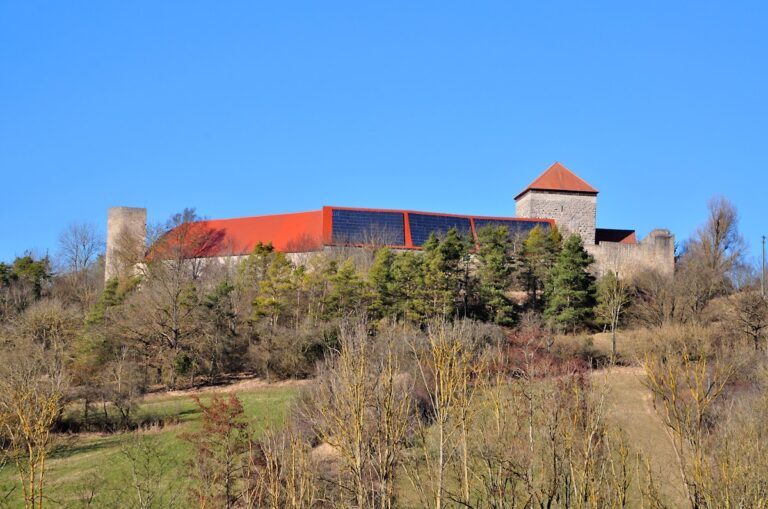
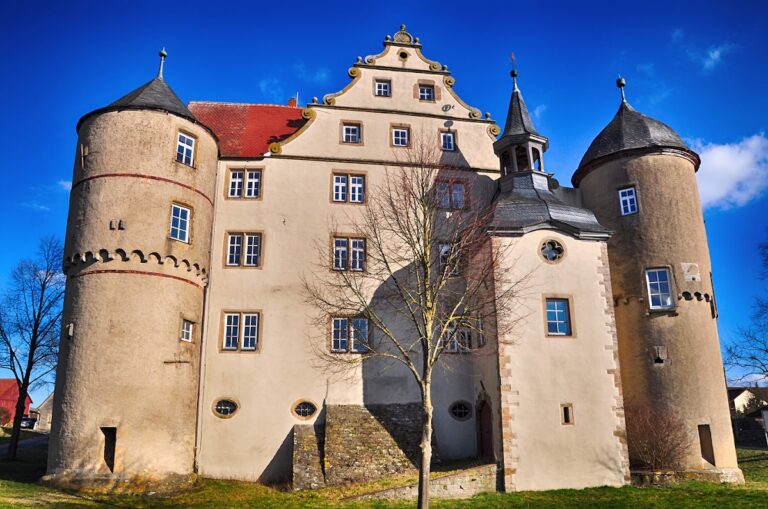
Burg Brattenstein is a high-medieval castle complex in Röttingen, Germany, at the northeastern corner of the town wall in the Tauber Valley. It was probably built during the twelfth or thirteenth century and was first documented in 1230. The castle belonged to the Lords of Hohenlohe until 1345, when they sold it to the Prince-Bishopric of Würzburg, an ecclesiastical principality whose ruler combined religious authority with territorial government.
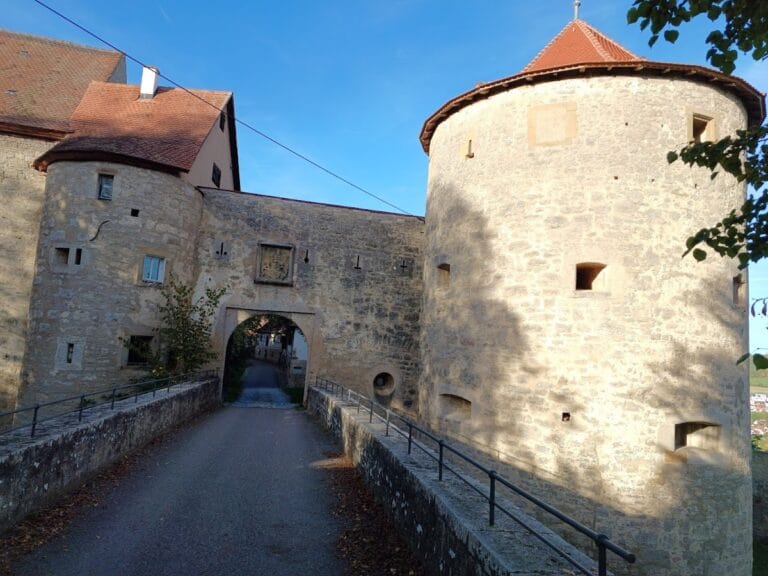
The castle was conquered in 1438, and its existing wall circuit was expanded afterward. In 1440, the complex, which had previously stood outside the town’s defenses, was incorporated into Röttingen’s fortifications. Around 1500, a tithe barn was added in the southern corner. Such buildings stored agricultural produce paid as tithes, a traditional form of dues.
Administrative Use and Early Modern Expansion
From 1520, Burg Brattenstein served as the residence of an official representing the Prince-Bishop of Würzburg. The official administered local affairs on the bishop’s behalf. Expansion and rebuilding followed in the early seventeenth century, maintaining the castle’s role within the town’s administrative and defensive structure.
Secular Administration and Twentieth-Century Change
The Prince-Bishopric of Würzburg’s Röttingen office was abolished in 1803. Afterward, the castle became the seat of the Bavarian revenue office and remained in that administrative role until the First World War. During this period, the keep at the northeastern corner was demolished.
From 1939 to 1945, during the Second World War, the castle was used by the Reich Labour Service, a state labour organization of Nazi Germany responsible for public works and related assignments. After 1945, the complex became a refugee camp and later housed a clothing factory from Aschaffenburg.
Collapse, Reconstruction, and Cultural Use
On 5 November 1971, the eastern wing collapsed while a rubble-filled dog kennel beside the castle wall was being dismantled. The kennel had provided the outer wall’s last structurally effective support, while earlier interior alterations had enlarged the rooms. Four employees of the textile company died in the collapse. The destroyed wing was rebuilt and restored during the following years.
The castle courtyard also acquired a role in Röttingen’s cultural life. In 1952, the expellee Kurt Freudinger wrote a three-act local-history play about Röttingen and its citizens. Its subjects were the Peasants’ War, the major uprisings in the German-speaking lands during 1524 and 1525, the Swedish War of 1626 within the wider Thirty Years’ War, and the plague. The play premiered in the courtyard in 1954, performed by amateur actors from Röttingen with the tithe barn as its backdrop. Its original manuscript is preserved in Röttingen.
The Frankenfestspiele, a regional theater festival, have been held in the castle courtyard since 1984. The rebuilt eastern wing was formally inaugurated in June 2018 by the Veitshöchheim Army Music Corps. Burg Brattenstein is protected as an architectural heritage monument in Bavaria under monument number D-6-79-182-23.
Remains
Castle Layout and Enclosing Walls
Burg Brattenstein is an urban castle integrated into the northeastern corner of Röttingen’s town fortifications. Its surviving complex is organized around a courtyard enclosed by castle walls, with the eastern wing and the southern-corner tithe barn forming documented parts of the layout. The castle retains substantial historic fabric, while the former keep at the northeastern corner has been demolished.
Eastern Wing
The eastern wing was part of the castle’s built enclosure until its collapse in 1971. Structural support had been weakened when a rubble-filled dog kennel at the castle wall was dismantled, and earlier interior changes had enlarged the rooms. The wing was subsequently rebuilt and restored, and its reconstruction was formally inaugurated in June 2018.
Southern Tithe Barn
Built around 1500, the tithe barn stands in the southern corner of the castle complex. It was a storage building for agricultural dues and remains part of the architectural monument. In 1954, the building served as the backdrop for the first performance of Kurt Freudinger’s local-history play in the castle courtyard.
Courtyard and Cultural Setting
The courtyard is a central surviving space within the castle complex and continues to provide the setting for theatrical performances. It hosted the 1954 local-history play and has accommodated the Frankenfestspiele since 1984, linking the preserved castle enclosure with Röttingen’s continuing cultural use of the site.