Belvédère Château: A Neo-Palladian Royal Residence in Belgium

Site at a Glance
- Rating
- 3.1
- Popularity
- Very Low
- Country
- Belgium
- Primary era
- Classical
- External website
- Open
- Eras represented
- Classical, Modern
- Civilizations
- Habsburg, Holy Roman Empire
- Site type
- Domestic
- Remains
- Palace
On this page6 sections
History
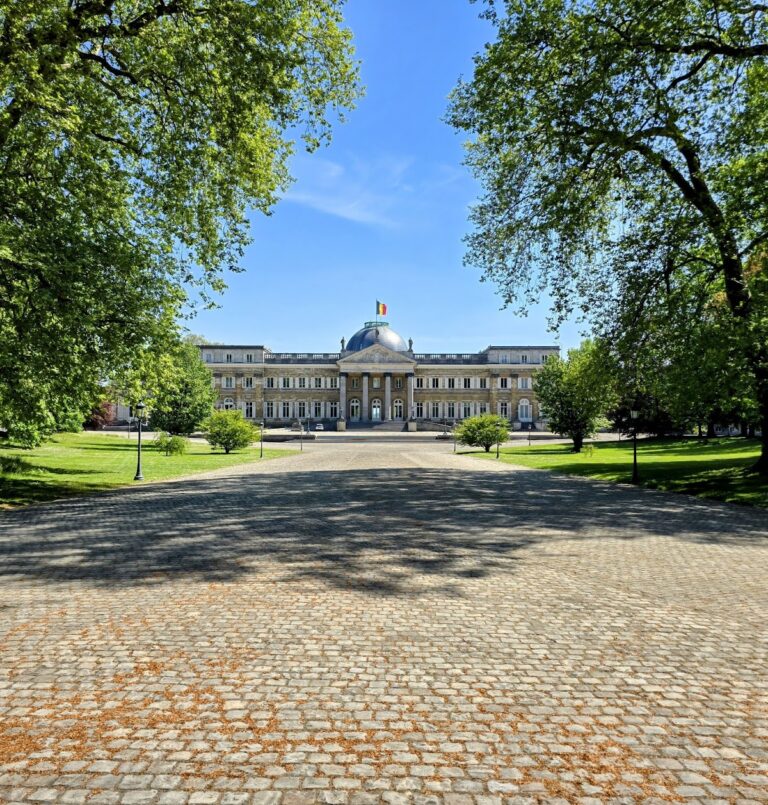
Belvédère Château is an eighteenth-century residence in Brussels, Belgium, built in 1788 for Édouard de Walckiers, an official of the Austrian Netherlands. Designed by the Belgian architect Antoine Payen the Elder, it was conceived in the Neo-Palladian style, which adapts the classical forms and balanced proportions associated with Andrea Palladio. The château began as a country pavilion on the Caillou hillside and later became one of the royal residences associated with Laeken.
Walckiers and the first owners
Walckiers served as receiver-general and councillor of Finance for the Austrian Netherlands. While living in exile in Paris, he financed the Brabant Revolution, an unsuccessful revolt against Austrian rule, and died ruined. His heirs subsequently sold the Laeken residence to Jean-Baptiste Cartinel.
Cartinel enlarged the estate to eight hectares and called it “the little Laeken.” After his death in 1854, the property passed to François-Philippe de Haussy, a Belgian lawyer and businessman who later became the first governor of the National Bank of Belgium. De Haussy expanded the rear of the villa, added annexes, and built a domed belvedere, an elevated architectural feature designed to provide a view.
Royal ownership and transformation
On 29 October 1867, King Leopold II purchased the property for 500,000 gold francs. He initially considered installing his sister, Empress Charlotte, there during the winter, but de Haussy continued to live in the residence until his death. Leopold later reduced the estate substantially so that part of the grounds could be incorporated into the Royal Park of Laeken.
During the restoration of the Royal Palace of Laeken after its major fire in 1890, Leopold II and Queen Marie-Henriette lived at Belvédère. The château became the property of the Donation royale in 1903. This Belgian royal property institution manages estates and properties assigned to the Belgian state or royal family. At the beginning of the twentieth century, Princess Clémentine occupied the residence before her marriage to Prince Victor Napoléon.
Royal residence in the twentieth century
During the 1958 Brussels World’s Fair, Belvédère Château served as a reception venue for the commissioner general, Baron Moens de Fernig, and housed the administration responsible for organizing the event.
Since their marriage in 1959, Prince Albert and Princess Paola have made Belvédère their principal residence. Their three children, Prince Philippe, born in 1960, Princess Astrid, born in 1962, and Prince Laurent, born in 1963, were born there. When Albert and Paola became King Albert II and Queen Paola in 1993, they chose to remain at Belvédère rather than move to the Royal Palace. Their official receptions took place at the Royal Palace of Brussels and the Royal Palace of Laeken. The château remains a residence of the Belgian royal family.
Remains
Villa and belvedere
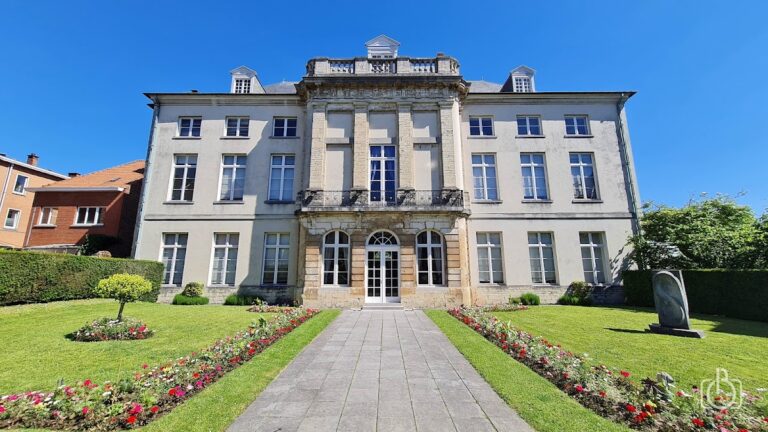
Belvédère Château stands in Laeken, in the City of Brussels, near the Royal Palace of Laeken. The eighteenth-century building is a neoclassical residence in the Neo-Palladian style. Its original form was a country pavilion with a large rotunda, a circular building or room. Payen designed it with inspiration from the Villa Capra at Vicenza, Andrea Palladio’s celebrated Italian design. De Haussy later enlarged the rear of the villa and added ancillary buildings together with a belvedere topped by a dome. This elevated addition gave the château its present name. The residence and grounds were subsequently reduced when part of the estate became part of the Royal Park of Laeken.
Nearby sites