Schloss Lankowitz: A Historic Castle in Austria
Site at a Glance
- Rating
- 4.2
- Popularity
- Very Low
- Country
- Austria
- Primary era
- Early Modern
- External website
- Open
- Eras represented
- Medieval, Early Modern
- Civilizations
- Duchy of Styria, Habsburg, Holy Roman Empire
- Site type
- Domestic
- Remains
- Castle
On this page11 sections
History
Schloss Lankowitz is a historic castle in Maria Lankowitz, Austria, whose present form developed during the sixteenth and seventeenth centuries from origins in the middle of the fifteenth century. It stands in the Voitsberg district of western Styria and has served successively as an aristocratic residence, an administrative center, a prison, and a local-history museum.
Early Fortifications and the Gradner Residence
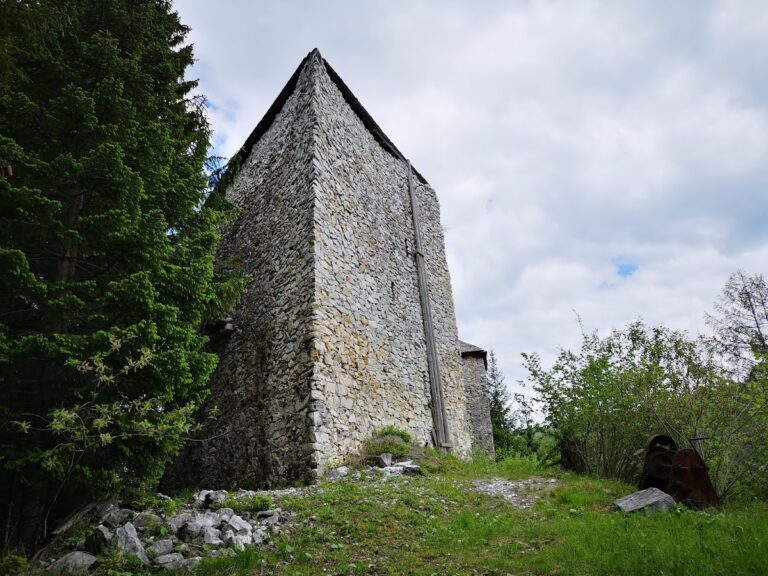
In 1000, the medieval Holy Roman Emperor Otto III granted land in the area of present-day Maria Lankowitz to Margrave Adalbero of Eppenstein. Adalbero probably entrusted a dependent noble and military administrator with building a fortification on Franziskanerkogel. Known as Primaresburg, this early stronghold later passed from the Eppenstein family to the Lords of Wildon, who placed the lordship under the administration of the Lords of Graden.
After the Wildon family joined a feud against Duke Albert I, Lankowitz passed to the territorial sovereigns. Primaresburg was probably destroyed by fire around this period. The Gradner family then built a smaller residence below Franziskanerkogel. In 1415, Duke Ernst the Iron authorized Alexander and Peter Gradner to construct a residence above the village of Lankowitz. Georg Gradner acted on this authorization in 1440, beginning the construction of the present castle on land held as a fief, meaning property granted by a superior lord in return for allegiance and service, from the Counts of Montfort.
Habsburg Ownership and Herberstein Control
In 1459, Georg Gradner sold the castle, together with its hunting grounds, to Emperor Frederick III. Frederick removed Count Hermann of Montfort’s feudal authority and in 1460 granted the lordship of Lankowitz to Andreas of Greißenegg. Andreas later joined the Baumkircher feud, a conflict involving nobles opposed to Frederick III, and was executed in 1471. The emperor confiscated his possessions and subsequently pledged the Lankowitz estate first to Thoman Rottaler and then, in 1479, to Wolfgang Lembacher. Hans Geumann leased the estate in 1491.
On the orders of King Maximilian I, a Habsburg ruler, Geumann surrendered the lordship in 1500 to Jörg of Herberstein, who received it as pledged property. In 1590, Friedrich, Baron of Herberstein, converted the holding into freehold property by waiving the outstanding pledge sum. Under the Herberstein family, the castle was probably enlarged and remodeled as a moated complex.
Ecclesiastical Administration and State Ownership
In 1634, Christof Moritz, Baron of Herberstein, exchanged the lordship of Lankowitz with Stainz Abbey for Vasoldsberg. Stainz Abbey, the ecclesiastical institution that administered Lankowitz, joined the estate to the Leonroth property, and Schloss Lankowitz became the administrative seat. In 1671, the Lankowitz district court held a witch trial in which all five accused people were executed.
Emperor Joseph II dissolved Stainz Abbey in 1782, after which Lankowitz became a state lordship, an estate administered by the state rather than by a private or ecclesiastical lord. In 1848, the castle was converted into a penal and correctional institution. It later served as a women’s prison and as an outpost of the Graz-Karlau prison institution. After the prison closed, the property entered private ownership.
Modern Reuse
The castle was revitalized in 1993, when its interior was divided into apartments and offices. Since 1998, the former castle chapel has housed a local-history museum, while the building has also hosted exhibitions and events. The former Graz-Karlau outpost is now located in the buildings of the Lankowitz forestry district. Schloss Lankowitz remains privately owned.
Remains
Castle Layout and Main Entrance
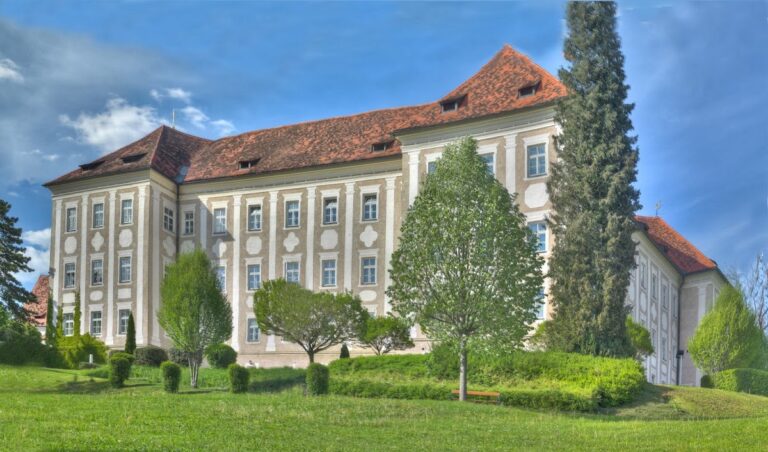
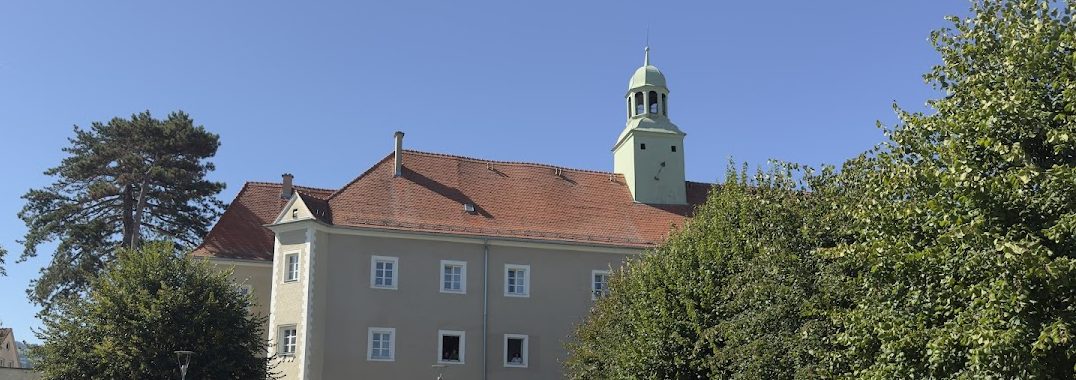
Schloss Lankowitz stands within the built-up area of Maria Lankowitz on a gravel terrace south of the parish church. Its present structure is a regular three-storey building with four wings arranged around a rectangular plan. The wings enclose a large courtyard lined with columned arcades, or passages formed by a series of arches. Some arches were once blocked and were later exposed again.
Entrance Tower
The principal entrance is set in a square tower that projects one bay from the front of the castle. Its round-arched gate has rustication, a masonry treatment that emphasizes individual stone blocks. Coats of arms belonging to former owners and a sundial are placed above the gate. A small roof turret rises over the entrance front and functions as a clock and bell tower.
Chapel and Former Fortifications
Former Castle Chapel
The former castle chapel contains frescoes and a princely gallery. Since 1998, the space has been used for the local-history museum, giving the chapel a continuing cultural function within the castle complex.
Moat and Defensive Setting
Until the end of the seventeenth century, Schloss Lankowitz formed a fortified complex surrounded by a broad moat. A drawbridge, a movable bridge controlling passage across the moat, provided access, and a wooden bridge was also used from the sixteenth century. A defensive wall behind the moat was reinforced with round towers, while a glacis, a deliberately sloping area of ground intended to expose approaching attackers, extended beyond the moat. Outside this defensive zone stood a large horseshoe-shaped agricultural building and a single-storey steward’s house.
Nearby sites