Château de Roncourt: An Eighteenth-Century Seigneurial Residence in France


Site at a Glance
- Rating
- 4.8
- Popularity
- Very Low
- Country
- France
- Primary era
- Early Modern
- External website
- Open
- Eras represented
- Early Modern
- Civilizations
- Duchy of Lorraine, French, Holy Roman Empire
- Site type
- Domestic
- Remains
- Manor House
On this page8 sections
History
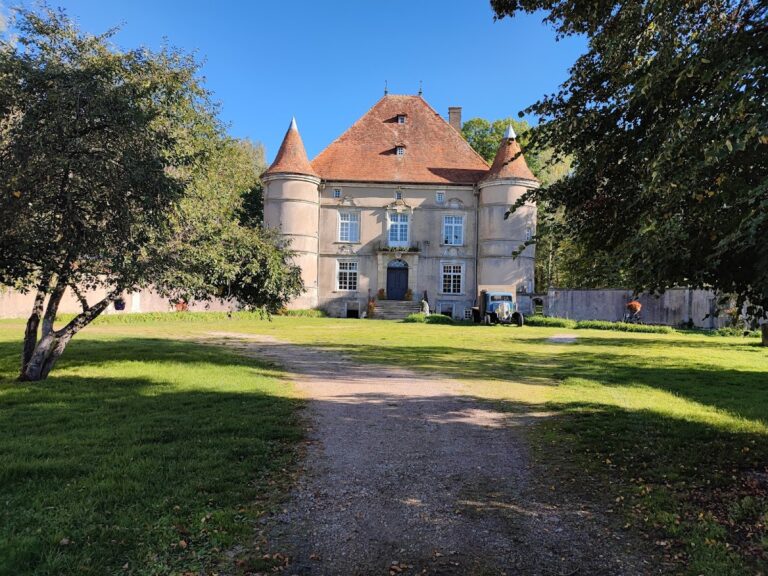
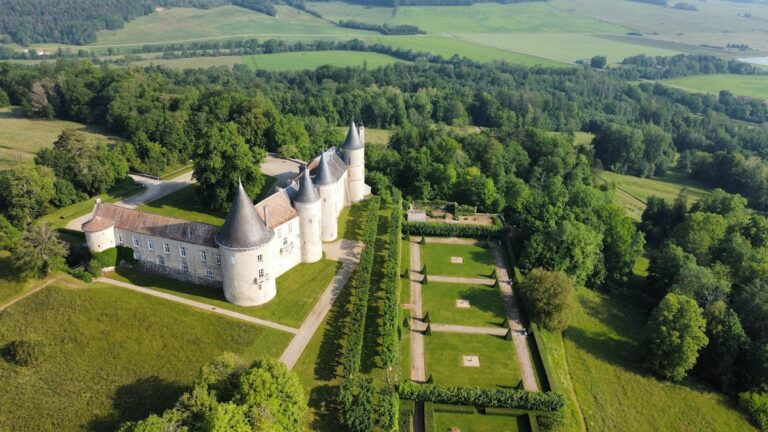
Château de Roncourt is an eighteenth-century manor house in France, in the hamlet of Roncourt, now part of Hagnéville-et-Roncourt in the Vosges. It was built as a seigneurial residence, the dwelling of a lord who exercised authority over a territorial lordship under the ancien régime, in the former Duchy of Lorraine.
The Menu lordship
The lordship of Roncourt belonged to the Menu family from 1583. On 16 July that year, Étienne Menu was ennobled by Charles III, Duke of Lorraine. On 25 September, he received the lordship from René d’Anglure, Lord of Lignéville and Bourlémont and governor of La Mothe, as a reward for his services. The family later adopted the name Roncourt and held the lordship until the middle of the eighteenth century.
Hennequin and Stack ownership
Around 1760, Nicolas Hennequin, Count of Fresnel, became lord of Roncourt. He was the son of Nicolas-François Hennequin, Count of Curel and Fresnel, and Catherine-Élisabeth de Roncourt, who had married Nicolas-François in 1727. Nicolas Hennequin sold the lordship in 1784 to the Sieur de Stack, an Irishman. Members of the Stack family and their descendants occupied the château during the nineteenth and twentieth centuries.
Later families and modern use
The estate passed to the de Fleury family through the marriage of Françoise-Josèphe-Pauline de Stack to Joseph-Richard de Fleury. It later passed to the de Bigot family when Victoire-Marie-Thérèse-Amélie de Fleury married Louis de Bigot in 1864. Yann Wehrling bought the château from Yvan Bihr in 2006. Wehrling, a French illustrator and politician, is one of the current owners, together with Marc Tournier.
Since 2011, the château has operated as a guest house, with guest rooms and hosted meals on some evenings. The cemetery of the hamlet lies north of the estate along the departmental road and contains the tombs of members of the de Fleury family who owned the château.
Remains
The château and commons
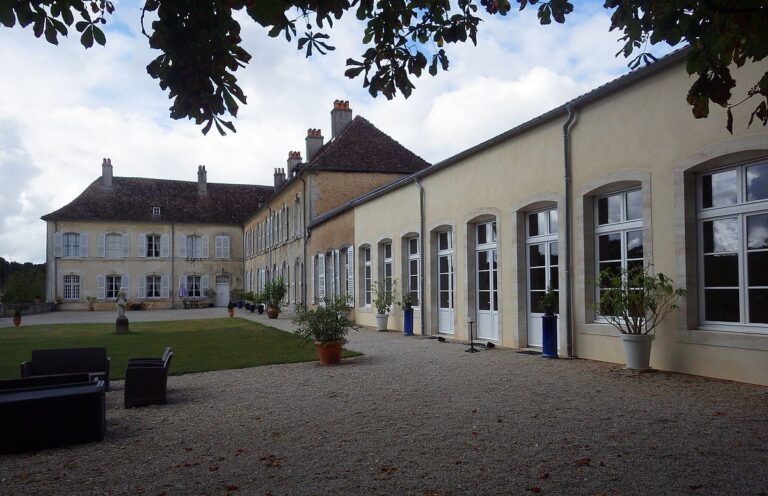
The château is a rectangular building arranged over three levels. Its two first-floor salons and library retain nearly all of their original condition. To the northeast, on the right side of the main building, stand the commons, which include a circular dovecote. Such buildings housed pigeons, a practice historically associated with the privileges of landholding.
Park and cultivated grounds
A two-hectare park surrounds the château. Its planted trees include oak, chestnut, and walnut. Beside the park are an orchard, a vegetable garden, an herb garden, and a poultry yard. The poultry yard contains chickens, geese, ducks, and pigs, forming part of the estate’s surviving cultivated and domestic grounds.
West of the château, a hill rises to 491 metres and contains the Bois des Roches. This elevated wooded area forms the immediate backdrop to the estate.
Church of the Assumption of Our Lady
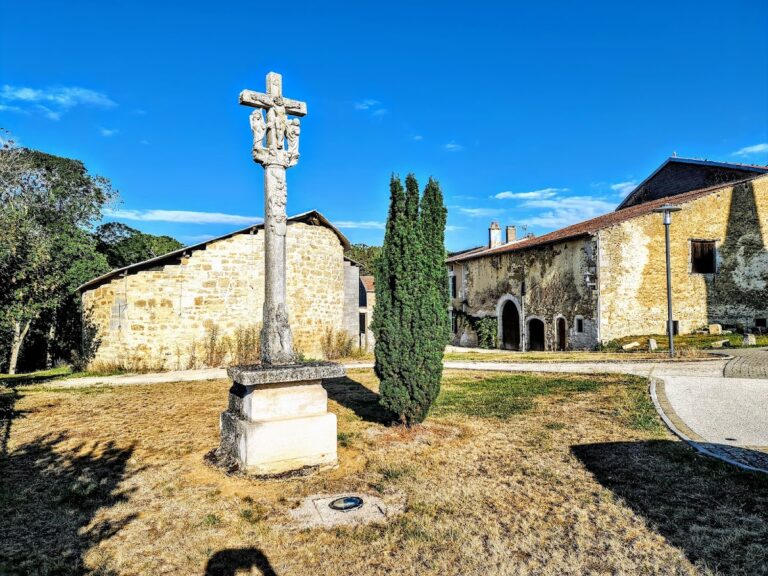
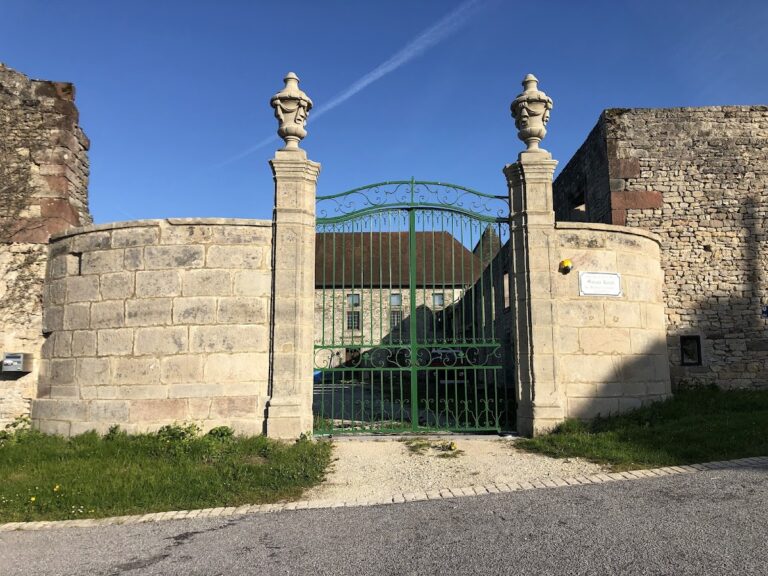
The Church of the Assumption of Our Lady stands directly in front of the château, to the left of the entrance gate. Built in 1854 as the village’s former parish church, it remains associated with the feast of the Assumption, when Masses are celebrated there. Its northern entrance passes through a bell tower topped by a timber spire. The church has a single nave of two bays, a small choir at the south end, and a sacristy attached west of the nave’s second bay.
Nearby sites