Château de Saint-Floret: A Medieval Castle in France
Site at a Glance
- Rating
- 4.6
- Popularity
- Very Low
- Country
- France
- Primary era
- Medieval
- External website
- Open
- Eras represented
- Medieval
- Civilizations
- French
- Site type
- Military
- Remains
- Castle
On this page7 sections
History
Medieval origins
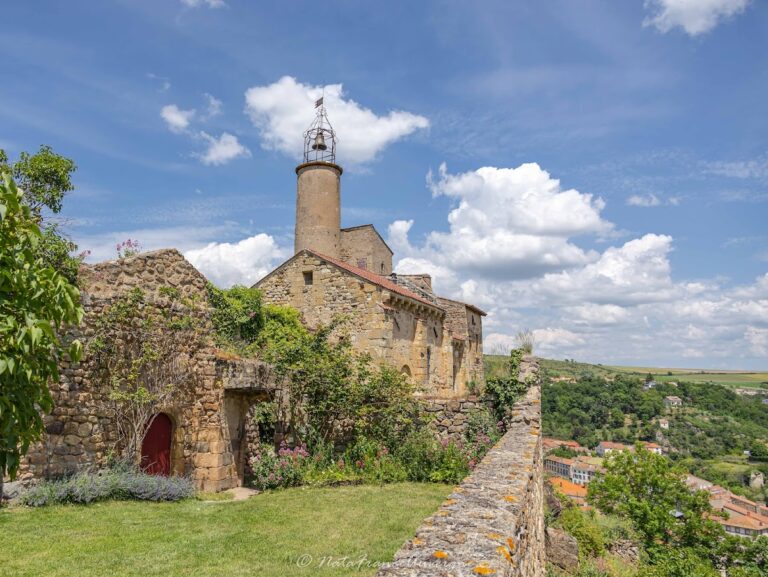
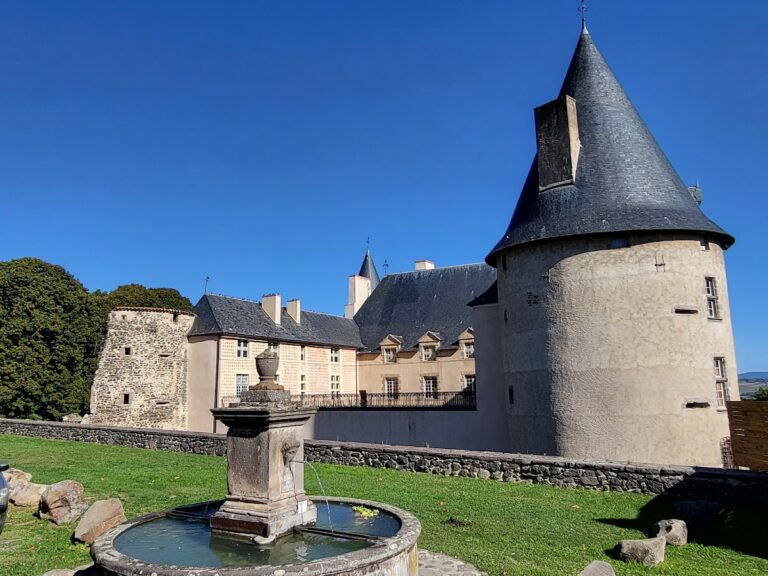
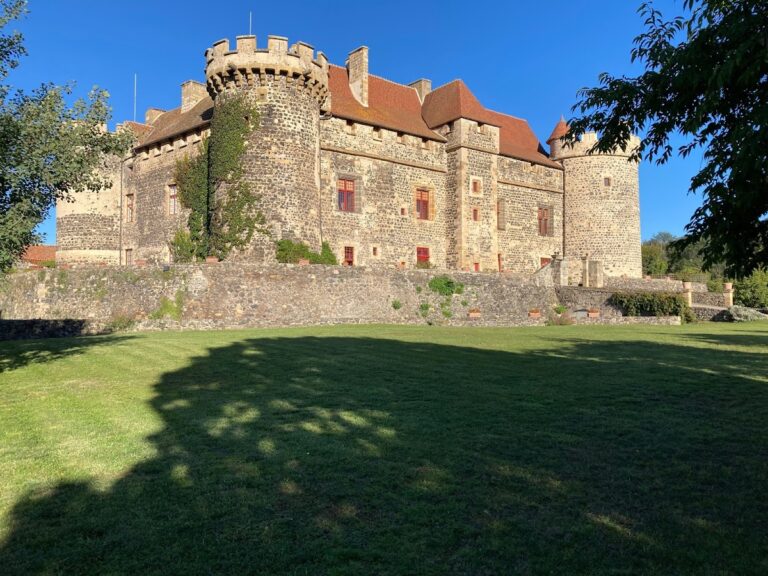
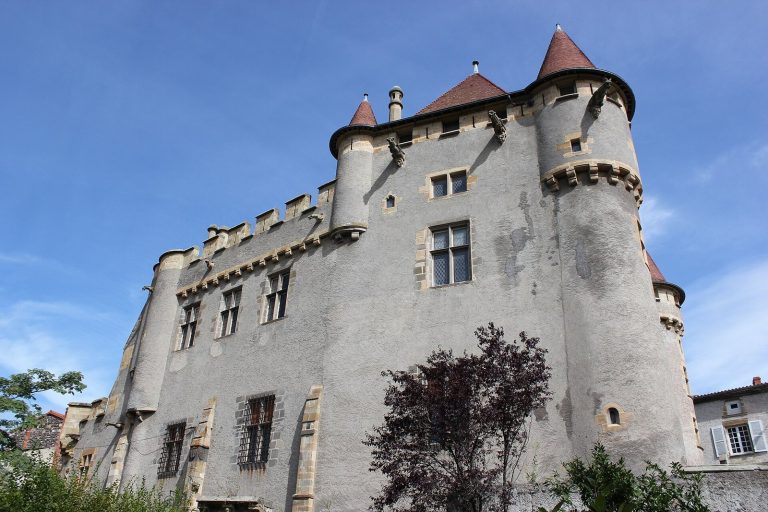
Château de Saint-Floret is a medieval castle in France, dated uncertainly to the twelfth or thirteenth century, with construction also recorded as beginning in the thirteenth century. Its fourteenth-century Gothic hall formed the principal ceremonial space of the residence.
Rediscovery and preservation
The hall’s frescoes were rediscovered in 1862 by the Italian artist Antonius Mayoli during restoration work at the abbey church of Saint-Austremoine in Issoire, where he was employed by Anatole Dauvergne. Around 1960, Paul Deschamps and Marc Thibout entrusted the identification of the paintings’ legends to Mario Roques.
A study of the costumes by Michèle Beaulieu dated the paintings to approximately 1364–1370. Their patronage has been attributed either to Athon de Saint-Floret and his second wife, Galiane de Châlus, or to Jehan de Bellenaves. The castle was classified as a French historic monument by decree on 15 March 1909, and the frescoes received the same protection. The French state purchased the castle in 1930 to safeguard the paintings, which were restored in the late 1990s.
Remains
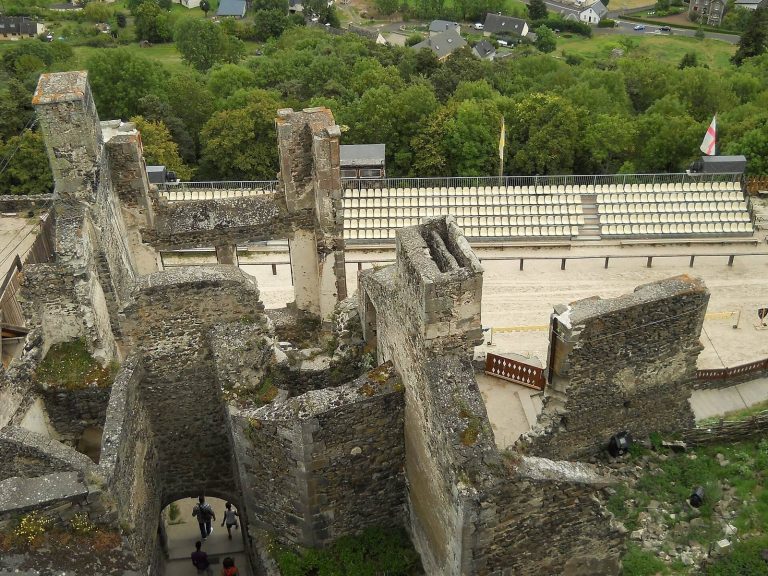
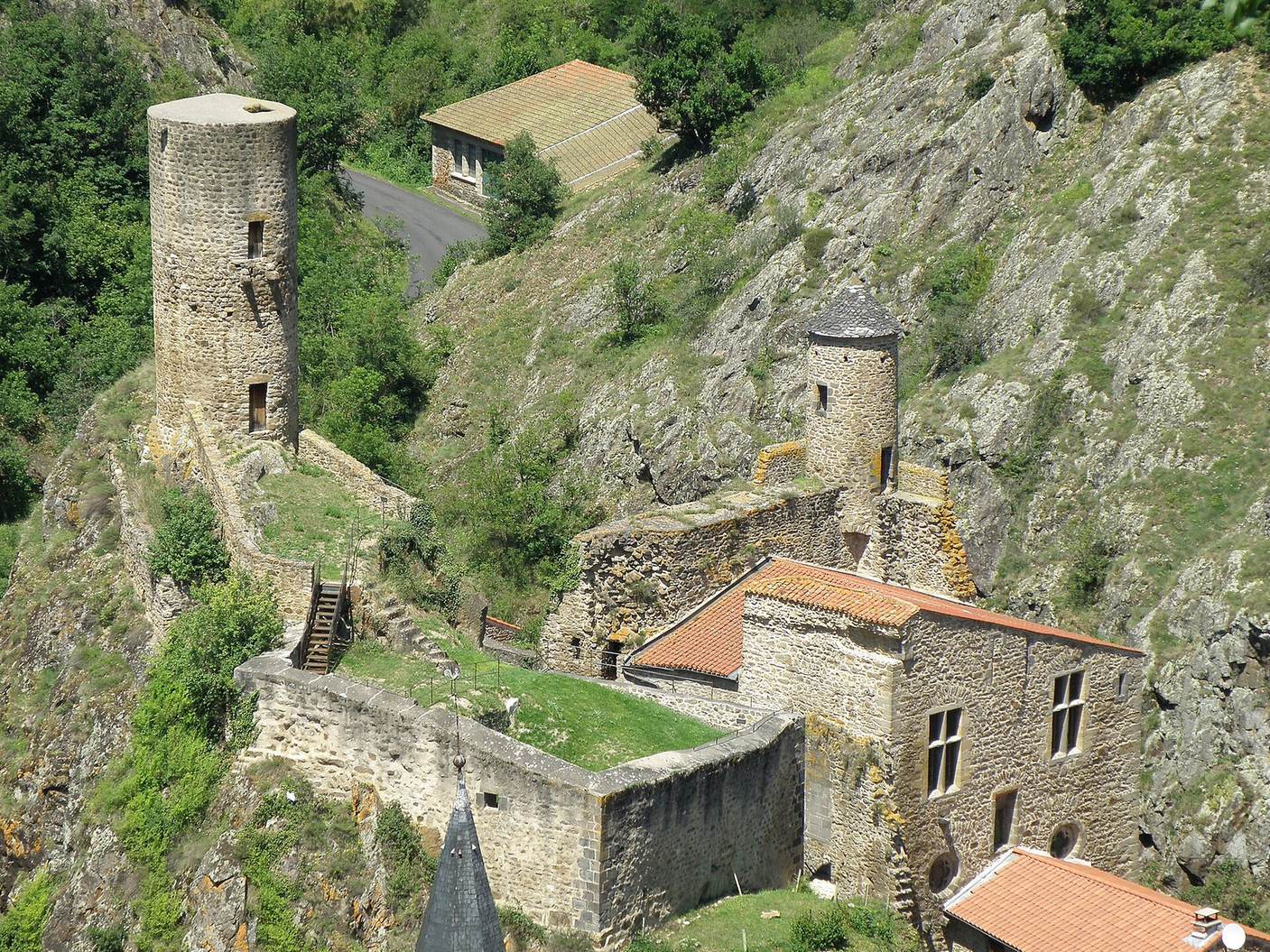
The castle complex is dominated by its keep, while its principal architectural feature is a square Gothic ceremonial hall. The hall measures 6.9 metres on each side and is covered by a ribbed stone vault whose twelve ribs meet at a central keystone carved with a sun. The ribs descend onto carved corbels, projecting supports from which architectural elements spring.
Keep and ceremonial hall
Keep
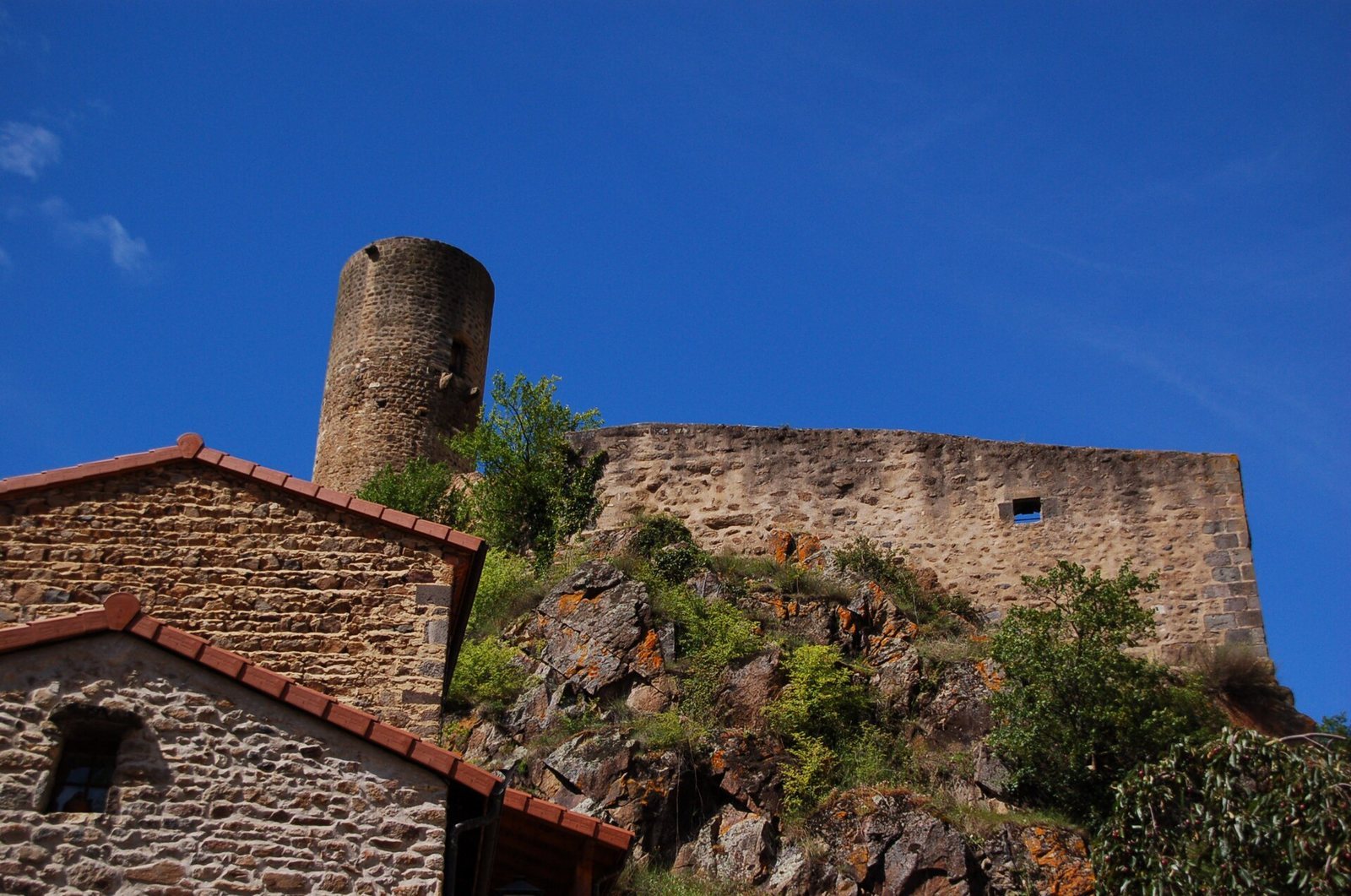
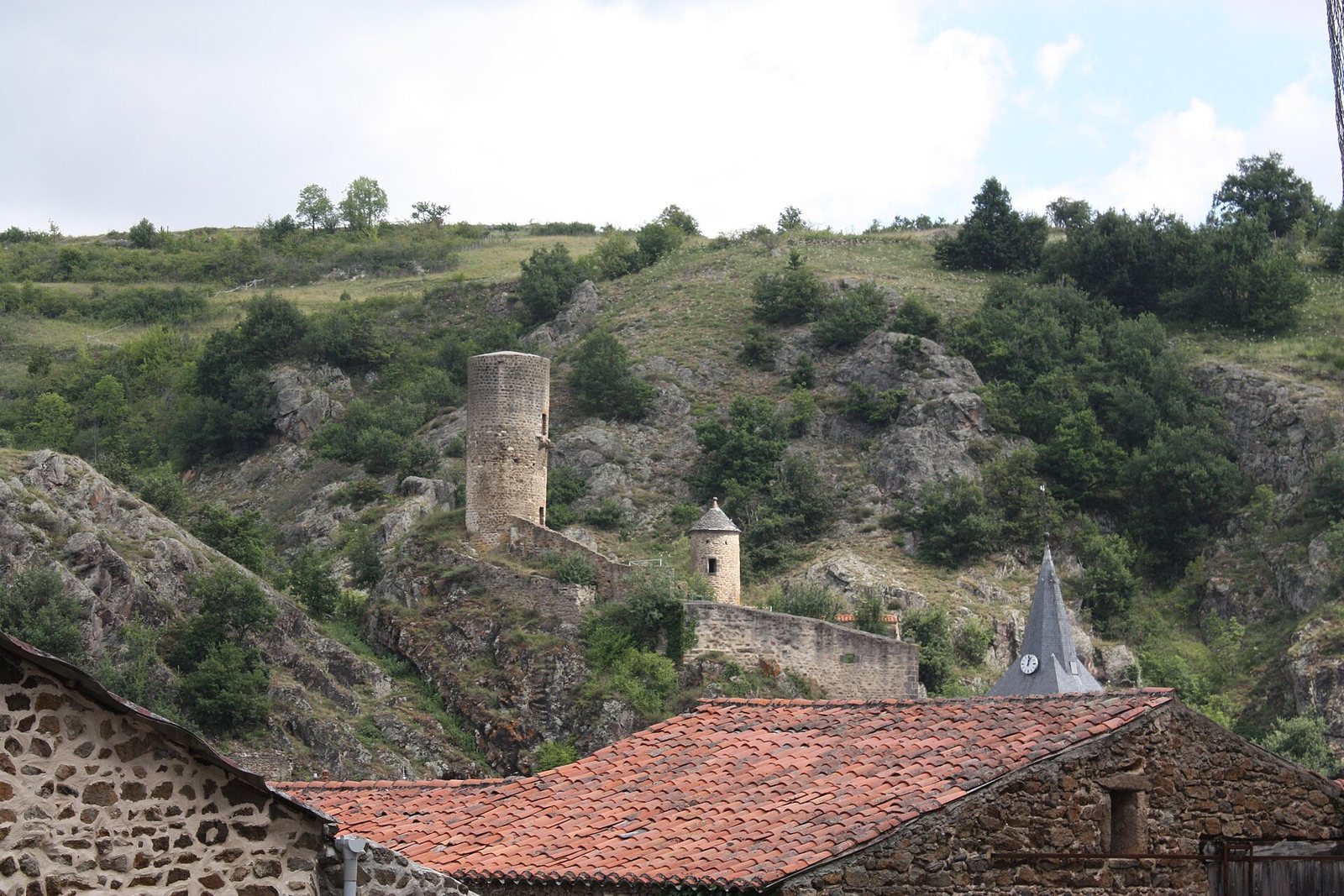
The keep stands as the dominant element of the castle complex and served as its principal fortified tower.
Gothic hall
Frescoes originally filled the spaces between the vault ribs. Twelve remain visible, arranged in superimposed panels separated by a frieze. They depict the legend of Tristan and Iseult, the medieval story of two legendary lovers, drawing more specifically on Meliadus, an Arthurian compilation composed between 1270 and 1273 by Rusticien de Pise. In subject and presentation, the paintings are comparable to the late-fourteenth-century frescoes of the Torre di Frugarolo in Piedmont, which also portray Arthurian legend and use long explanatory captions in Old French.