Elizabeth of Russia’s Palace in Sokolniki: An Imperial Estate and Charitable Institution


Site at a Glance
- Rating
- 4.7
- Popularity
- Low
- Country
- Russia
- Primary era
- Early Modern
- Eras represented
- Early Modern
- Civilizations
- Russian
- Site type
- Domestic
- Remains
- Palace
On this page6 sections
History
Elizabeth of Russia’s Palace in Sokolniki is a historic palace in Moscow, Russia, built for the Russian imperial court in the eighteenth century. It stands on the site of an estate in the former village of Pokrovskoye-Rubtsovo, where the Rybinka River once flowed. The land belonged to the sixteenth-century landowner Protasiy Vasilyevich Yuryev before passing to the Romanov dynasty, which ruled Russia from 1613 to 1917.
Imperial estate
A wooden palace already stood on the estate before the present building. Elizabeth of Russia, also known as Elizabeth Petrovna, lived there during the reign of Anna Ioannovna, empress from 1730 to 1740. A serious fire damaged the palace in 1737, and Elizabeth commissioned a new building on the riverbank in 1739.
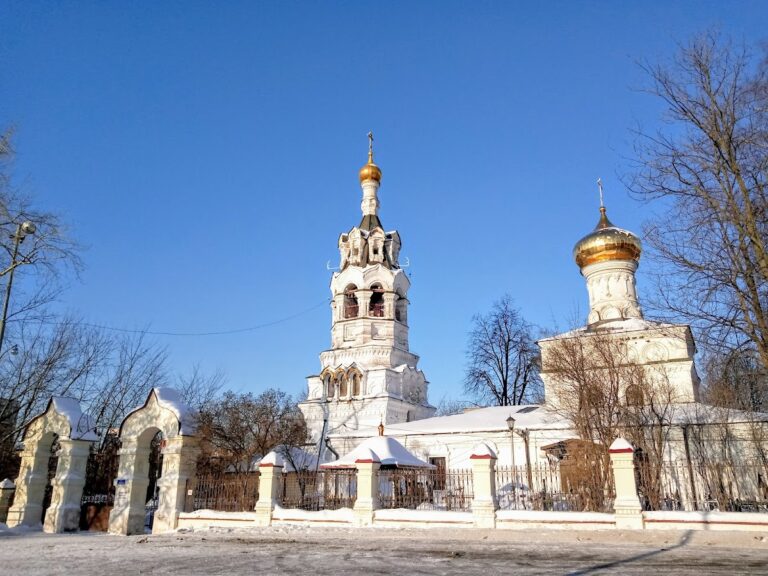
The estate was expanded in 1752, when a park was laid out and the Church of the Resurrection of Christ was attached to the palace. The church was abolished in 1790. After Elizabeth’s death, the estate declined and fell into neglect.
Charitable community and later uses
In 1872, the property passed to the Pokrovskoye Community of Sisters of Mercy, a charitable institution in which women cared for sick and vulnerable people. The palace was remodeled, and the community operated a school, orphanage, hospital, and pharmacy on the estate.
The community closed in 1920, after which the building was converted into communal apartments. In 1980, the pond was filled in and Gastello Street was laid across the former estate area. In the twenty-first century, the palace has housed the State Research Institute for Restoration. It is recognized as a cultural-heritage site of federal significance in the Russian Federation.
Remains
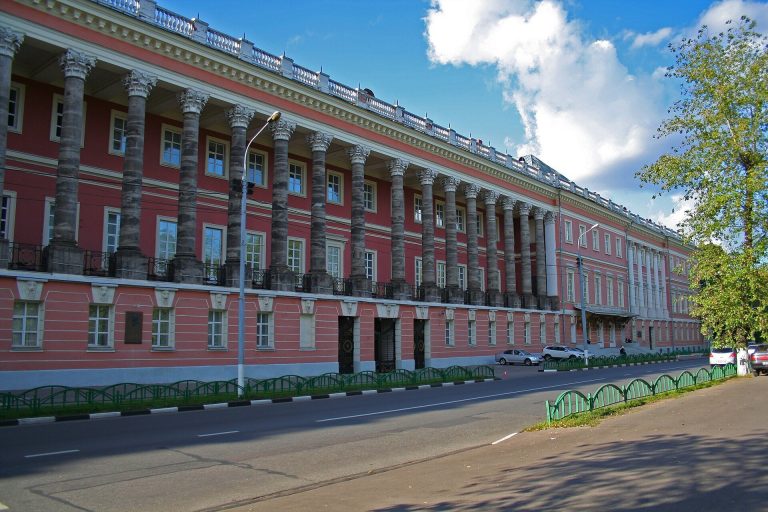
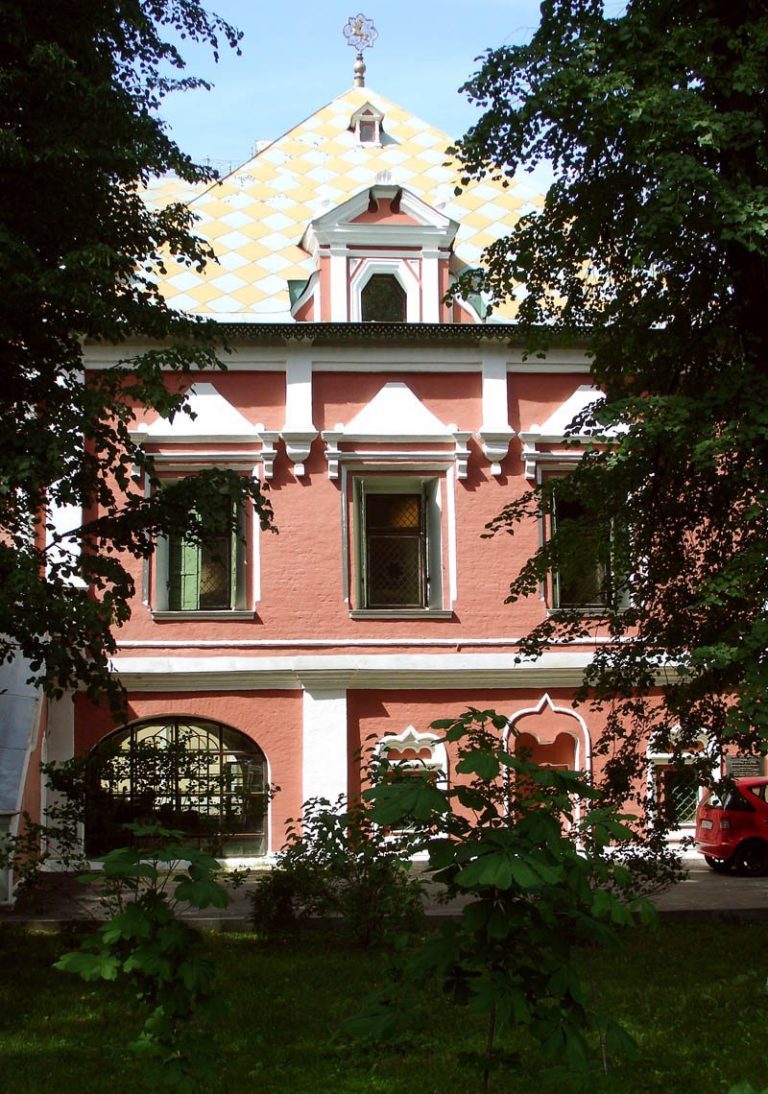
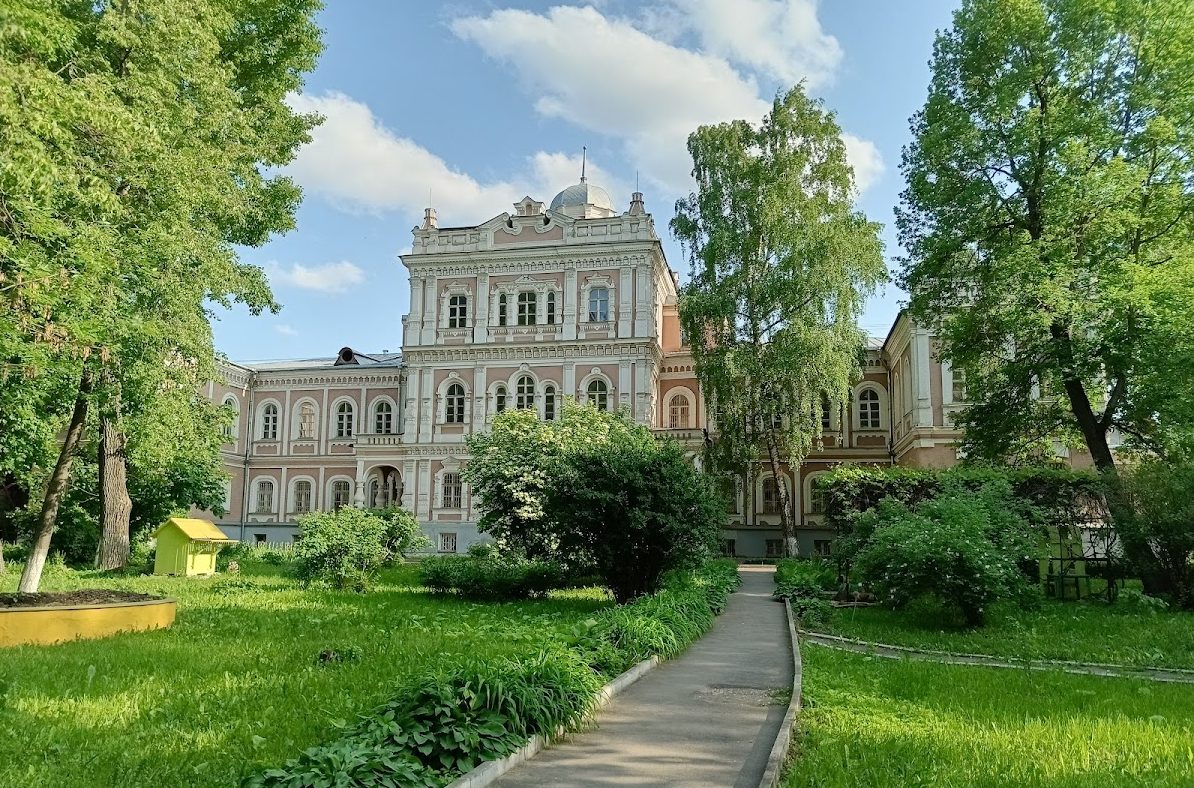
The surviving palace is a one-story building with a double-height hall, a room extending through two floor levels. Its design is attributed to Bartolomeo Francesco Rastrelli, an Italian-born architect who worked for the Russian imperial court and is associated with the elaborate Baroque architecture of eighteenth-century Russia.
Palace building
The palace’s historic interiors were executed in Japanese and Chinese styles. The building was remodeled in 1872 during its conversion for use by the Pokrovskoye Community of Sisters of Mercy, under the direction of architect Pavel Skomoroshchenko.
Former church
The Church of the Resurrection of Christ was formerly attached to the palace. It formed part of the estate’s eighteenth-century development after the park was laid out in 1752, and it was abolished in 1790.