Schloss Hungen: A Castle Complex in Germany
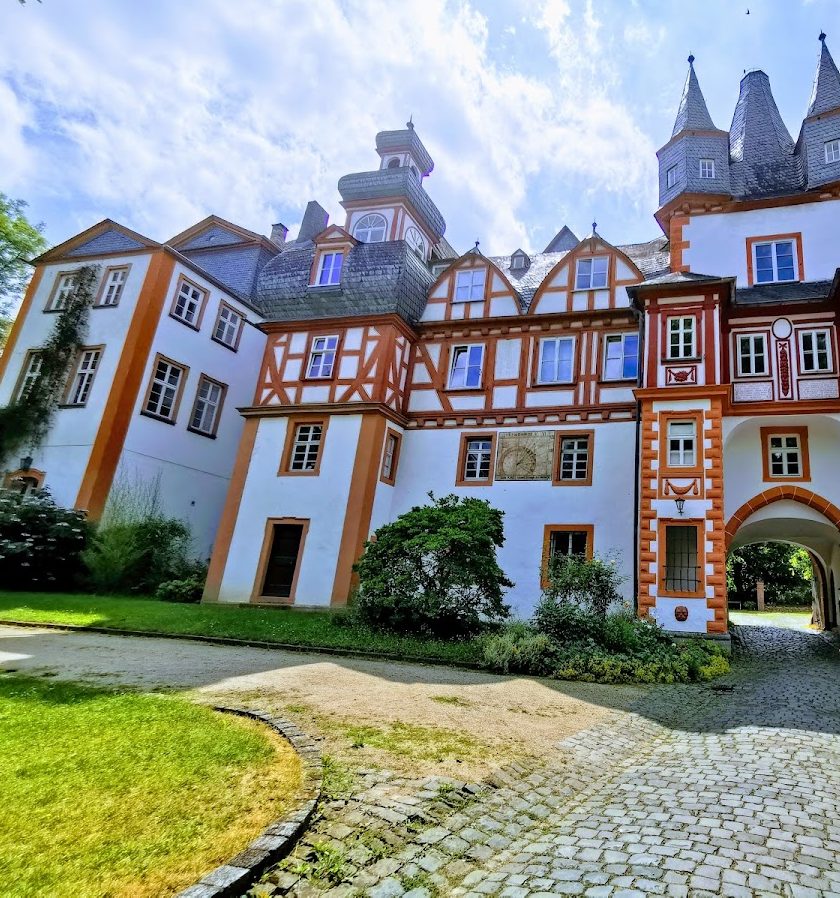


Site at a Glance
- Rating
- 4.5
- Popularity
- Low
- Country
- Germany
- Primary era
- Medieval
- External website
- Open
- Eras represented
- Medieval, Early Modern
- Civilizations
- Holy Roman Empire
- Site type
- Military
- Remains
- Castle
On this page7 sections
History
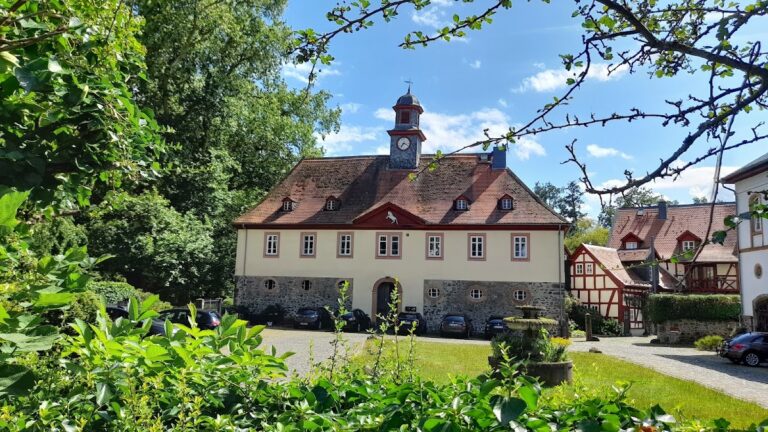
Schloss Hungen is a castle complex in Hungen, Germany, whose history reaches back to a castle belonging to the Falkenstein family in 1383. It was probably built after Hungen received town rights in 1361. The complex was enlarged and remodelled by the Solms family during the late medieval and early modern periods.
From Falkenstein to Solms
When the Falkenstein family died out in 1418, parts of its possessions, including the castle at Hungen, passed to the Counts of Solms. Around 1455, Bernhard II of Solms-Braunfels built a larger castle on the site, probably reusing material from the earlier structure. Bernhard III, another member of the Solms-Braunfels line, expanded the complex between 1487 and 1492. Count Philipp later remodelled it, demolishing parts of the earlier complex in the process.
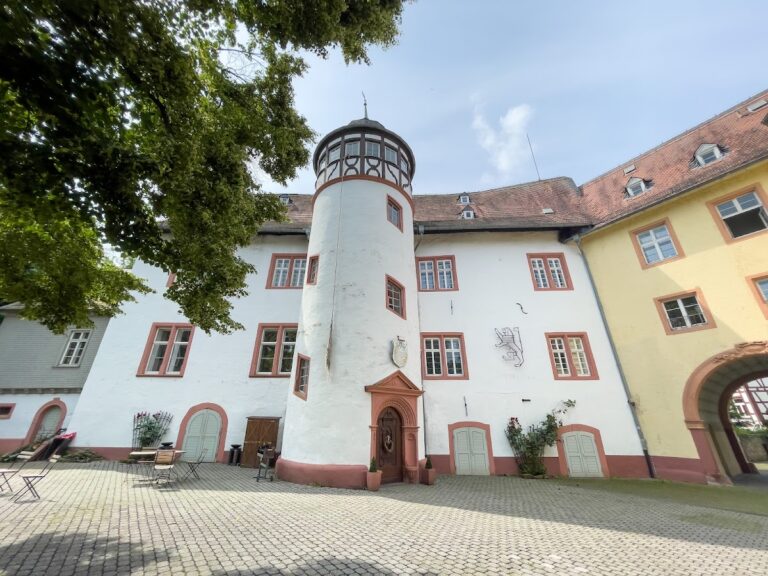
The castle continued to develop in the early modern period. A stair tower, which provided vertical access between the floors, was added in 1574. In 1616, a town wall and ramparts were built at Hungen, extending the defensive setting associated with the castle.
Wartime and Postwar Uses
During the Second World War, Schloss Hungen was used by the Institute for Research into the Jewish Question. This was an institution of the Nazi Party’s Advanced School, a research and educational centre intended to promote National Socialist ideology. The castle served as a collection point for Jewish cultural property looted in western Europe, particularly libraries.
After the war, the complex was used first as a retirement home and later as housing for Turkish guest workers. In 1970, Hans Georg von Oppersdorf inherited the castle from his father-in-law, Prince Georg Friedrich of Solms-Braunfels. In 1974, he donated the dilapidated complex to a community of owners, which restored the buildings.
Remains
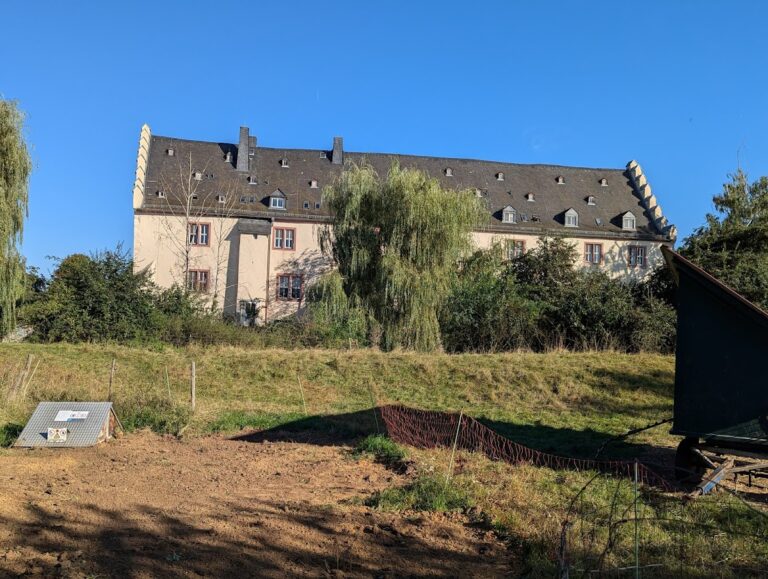
The present castle occupies the site of the earlier castle complex documented in 1383. Its surviving buildings represent successive phases of construction and alteration, including the larger late medieval castle erected around 1455, later remodelling, and the stair tower added in 1574. The complex was in a dilapidated condition before restoration followed the 1974 donation.
Castle Buildings and Defences
Castle Buildings
The larger castle built around 1455 probably incorporated building material from its predecessor. Parts of the complex were demolished during Count Philipp’s remodelling, while the stair tower added in 1574 provided movement between the building’s floors. The castle buildings were restored after the community of owners received the complex in 1974.
Town Wall and Ramparts
A town wall and ramparts were constructed in 1616. The rampart was later breached when the Gießen-Gelnhausen railway line was built through Hungen, altering the defensive works associated with the town and castle.
Nearby sites