Château des Roches: A Historic Residence and Victor Hugo Museum


Site at a Glance
- Rating
- 4.7
- Popularity
- Low
- Country
- France
- Primary era
- Early Modern
- External website
- Open
- Eras represented
- Early Modern, Modern
- Civilizations
- French
- Site type
- Domestic
- Remains
- Castle
On this page12 sections
History
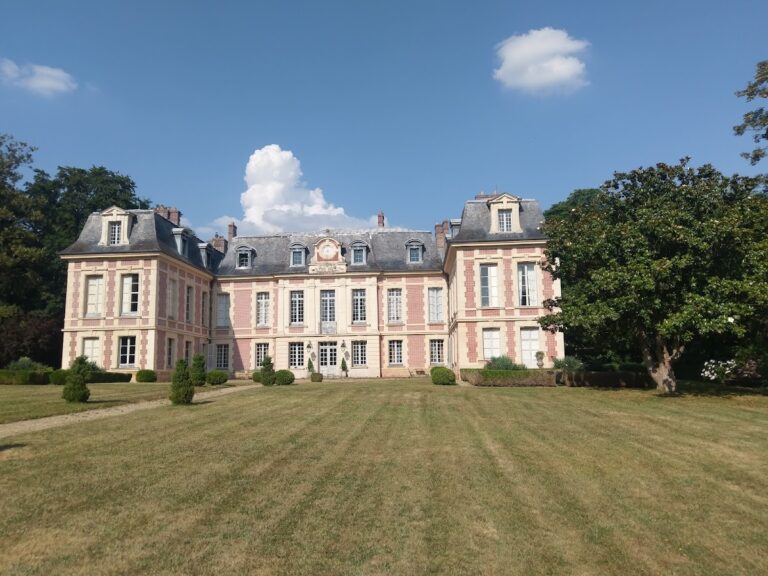
Château des Roches is a château in Bièvres, France, developed as a country residence during the eighteenth and nineteenth centuries in the former province of Hurepoix, a historic region south and southwest of Paris. Its north and east wings, along with the service buildings, were constructed around 1740, while the west wing was added at the beginning of the nineteenth century. The estate lies about 15 kilometres southwest of Paris.
An eighteenth-century country estate
From the eighteenth century, Bièvres attracted affluent residents from Paris and Versailles who established country residences in the locality. Les Roches appears on historical maps made by Delagrive, Cassini, and Trudaine, reflecting the estate’s place within the area’s developing network of rural properties.
On 6 April 1808, the journalist Louis-François Bertin acquired the Les Roches estate. Bertin founded and directed the Journal des débats, and he gradually consolidated the property into a country house surrounded by an extensive landscaped park. During his ownership, Château des Roches became a literary salon, a private gathering for literary, intellectual, and artistic exchange.
The Bertin salon
The residence hosted figures including Victor Hugo, the nineteenth-century French poet, novelist, and dramatist, as well as Charles Gounod, Hector Berlioz, Franz Liszt, Jean-Auguste-Dominique Ingres, and François-René de Chateaubriand. In a letter dated 14 May 1840, Hugo praised the park’s spring scenery, flowers, and views. These gatherings gave the estate a lasting association with the literary and artistic life of nineteenth-century France.
Transformation into a château
Louis-Joseph Graux and his wife, Josèphe-Pauline Marly, acquired the estate in 1877. They enlarged the country house and transformed it into a château, adding a monumental terrace and a tower in the park. They also converted the poultry yard into a pheasantry. Jules Barbet-Massin purchased the estate in 1896, after which it remained in his family for four generations.
During the Second World War, German forces and then American forces successively occupied the château. The site was registered as a protected site in 1966, and the château entered the General Inventory of Architectural Heritage in 1987. After the estate was divided into separate parcels in 1968, the Association culturelle Soka de France acquired the château in 1989 and undertook the reunification and complete restoration of the estate.
A literary museum
Under the impetus of Daisaku Ikeda, a Japanese Buddhist leader and president of Soka Gakkai International, the château was restored and converted into a cultural institution devoted to Victor Hugo. The Maison littéraire de Victor Hugo opened as a private museum on 21 June 1991. The building therefore moved from its original residential function to its present role as a museum operated by the Association culturelle Soka de France.
Remains
The château and its interiors
Main body and wings
The château’s main body is built of millstone, a hard porous stone formed from siliceous sedimentary material and widely used in historic construction around the Paris region, together with rendered limestone. It rises three storeys above a U-shaped basement. The north wing has two glazed bays and a south-facing window opening onto a terrace. A mansard storey, set within a steeply sloping roof, completes the wing beneath a slate-and-zinc covering.
The narrower west wing has three levels, with its upper storey contained within a mansard roof. A square tower with a weather vane rises at its southern end. Above the projecting ground-floor section, a balustraded terrace is arranged at second-storey level. Six windows appear on both the western and eastern sides across the three levels, with another window at the southern end. The facade is finished with a broken triangular pediment, whose central section interrupts the triangular gable.
Entrance hall and restored rooms
The entrance hall receives light through a glazed roof and contains a mezzanine reached by a double staircase. Several salons and a library have been restored in the Romantic style, the nineteenth-century movement associated with emotion, imagination, and historical or picturesque subjects. A statue of the young Victor Hugo stands in the entrance hall, alongside a statue of Louis-François Bertin.
Park, waterworks, and collections
Landscaped grounds
The park preserves lace-like decorative features near the entrance, garden follies, and a tower. Garden follies are ornamental structures placed in landscaped grounds mainly for visual effect or picturesque composition. Two artificial lakes were formed by diverting the Bièvre River, which flows south of the park. These water features belong to the landscaped setting developed around the residence.
Victor Hugo collections
The Maison littéraire de Victor Hugo houses original editions, manuscripts, autograph letters, nineteenth-century photographs, engravings, and sculptures. Several documents in the collection are protected as historic monuments. Together with the restored salons and library, these materials connect the surviving residence with the literary and artistic circles that gathered there during the Bertin period.