Palazzo Zuckermann: A Historic Civic and Museum Building in Padua


Site at a Glance
- Rating
- 4.4
- Popularity
- Low
- Country
- Italy
- Primary era
- Modern
- External website
- Open
- Eras represented
- Modern
- Civilizations
- Italian
- Site type
- Domestic
- Remains
- Elite Residence
On this page16 sections
History
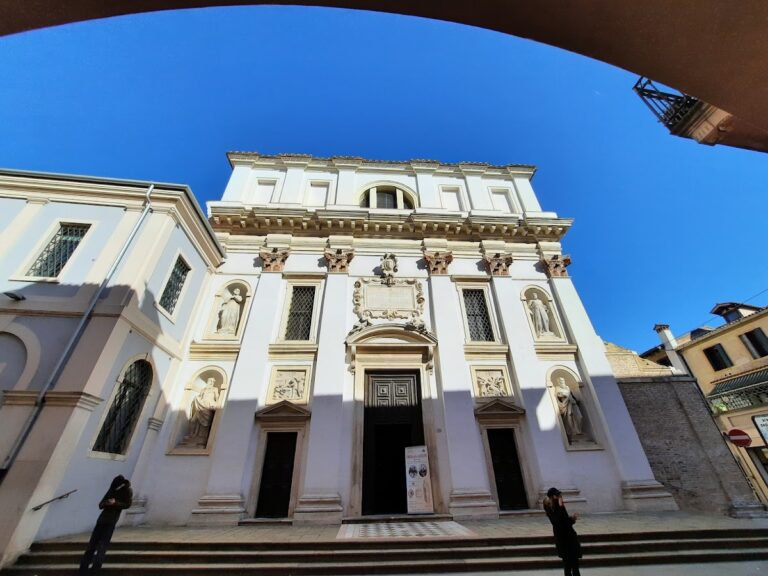
Palazzo Zuckermann is an early twentieth-century urban palace in Padua, Italy, built during the city’s expansion toward the railway station. Designed in a broadly nineteenth-century character with neoclassical and Liberty elements, it was constructed between 1912 and 1914 for the industrialist Enrico Zuckermann. The building later became part of the Civic Museums of Padua and now houses the Museum of Applied Arts and the Museo Bottacin.
Padua’s northern expansion
The palace emerged from a major reorganization of Padua’s northern approach. A plan approved in 1868 promoted expansion beyond the historic center, including the demolition and replacement of buildings beside the former navigable Piovego canal. It also established a direct route between the city center and the railway station. This route became Corso Garibaldi and, farther north, Corso del Popolo.
Palazzo Zuckermann was intended to contribute to the representative character of the new avenue. Its scale and theatrical exterior decoration expressed the progressive image associated with this urban transformation.
Construction and early use
Enrico Zuckermann, a progressive industrialist and co-owner of Zedapa, commissioned the palace. The company, located near Padua railway station, manufactured small metal goods using advanced technology. Zuckermann’s employment contracts also gave workers a bonus when company profits increased.
Zuckermann submitted the construction application to Padua’s municipal technical offices in 1912, when work was beginning on the adjoining Central Post Office. Engineers Gino Farini and Alessandro Peretti, responsible for the two neighboring projects, signed a preliminary agreement that defined the boundary between them and prevented the construction firms from obstructing one another.
The Milanese architect Filippo Arosio designed Palazzo Zuckermann. Construction continued from 1912 to 1914 and was completed by the Padua firm Benetazzo. Afterward, the local press praised the building’s exterior decoration, generous interior light, and elegance.
Changing institutional roles
Part of the palace operated as a public telephone office for more than twenty years. In the immediate postwar period, the American army used rooms on the upper floors as a gymnasium and installed a radio station on the terrace. Murals from this period remain in the attic.
The Ministry of Posts and Telecommunications acquired the building in 1953 and installed offices of the State Telephone Company. In 1985, Palazzo Zuckermann passed into the use of the Posts and Telegraphs and underwent extensive restoration before its conversion to museum use.
The museum installation opened in 2004. The Museum of Applied Arts occupies the ground and first floors, while the Museo Bottacin occupies the second floor. The Museum of Applied Arts preserves more than 2,000 examples of artistic craftsmanship from the Middle Ages to the contemporary period. The Museo Bottacin developed from the collections donated to Padua in 1865 by Nicola Bottacin, a Trieste-based merchant and collector of coins, medals, and related forms of currency.
Remains
Building and interior circulation
Palazzo Zuckermann is a large, block-like building contiguous with the Central Post Office. It faces the Cappella degli Scrovegni and the Museo agli Eremitani across Corso Garibaldi. Its monumental facade combines abundant neoclassical ornament, requested by Zuckermann, with references to the Liberty style, the Italian form of Art Nouveau known for flowing lines and integrated decorative design.
Entrance courtyard
The main entrance opens onto a courtyard where surviving remains of Padua’s old city walls can be seen. These traces connect the modern palace with the earlier defensive fabric of the city.
Marble staircase
A staircase in Carrara marble leads from the entrance to the first floor. Natural light enters through a large skylight and a three-arched glazed window. A smaller staircase continues to the second floor.
Attic murals
The attic is used for storage, and its walls retain murals depicting sporting activities. United States military personnel executed the paintings during the postwar period, linking the surviving interior decoration with the building’s temporary military use.
Museum of Applied Arts
The Museum of Applied Arts occupies the lower two floors and brings together more than 2,000 works of artistic craftsmanship. Its holdings range from the Middle Ages to the contemporary period, presenting objects whose materials and making traditions form part of the museum’s collection.
Crafts, furnishings, and dress
The displays include sixteenth-century ceramics, eighteenth-century furniture with inlaid decoration, and men’s and women’s clothing from the eighteenth and nineteenth centuries. Accessories and jewelry extend the collection’s coverage of personal and decorative objects.
Sculptural works
Objects displayed in the palace include plaster statues of Dante Alighieri and Giotto by Vincenzo Vela, together with a plaster copy of Terpsichore by Antonio Canova. Dante was a major medieval Italian poet, while Giotto was a leading painter and architect of the late medieval period.
Museo Bottacin
The Museo Bottacin occupies the second floor and preserves the collections given to the city by Nicola Bottacin in 1865. Its holdings grew from his interests as a merchant and collector and include coins, medals, paintings, sculptures, ancient weapons, and relics associated with Archduke Maximilian of Habsburg, a friend of Bottacin.
Coins and medals
The historical numismatic collection, meaning the study and collection of coins, medals, and related currency, includes Greek coins; Roman and Byzantine coins and medallions; medieval and Renaissance coins; and Italian coinage through the present day. A particularly developed section concerns coinage in the Veneto region and medals by Giovanni Cavino, a sixteenth-century Paduan engraver and medallist.
Paintings and sculptures
The museum contains paintings and sculptures by Antonio Rotta, Felice Schiavoni, Antonio Zona, Cristoforo Dall’Acqua, Gerolamo Induno, Pietro Magni, and Vincenzo Vela. Other works include Portrait of a Young Woman by Achille Astolfi, Portrait of Maria Brillo by Augusto Caratti, Portrait of Alessandro Petrettini by Alessandro Longhi, and Portrait of Carlo Scapin by Gaetano Prana.
The displays also include Saint Anthony the Great by a Flemish painter; The Drinkers and The Smoker, associated with imitators of David Teniers the Younger and with Stephan Kessler; and Concert with a Curtal and Violin Concerto from the workshop of Jacob Toorenvliet. A curtal was a Renaissance and early modern wind instrument, also known as a dulcian.
Further works include Kessler’s The Banquet of Herod, The Temptation by an anonymous Venetian painter, Landscape with Three Figures beneath a Large Tree, a silver-and-gold plate by Wenzel Jamnitzer, and The Virgin and Child with Angels from the school of Bartolomeo Bellano.
Canova’s doge portrait
The Museo Bottacin also displays Canova’s Bust of Doge Paolo Renier. A doge was the elected head of state of the former Republic of Venice, and Paolo Renier was one of its doges.