Basilica del Carmine in Padua: A Carmelite Sanctuary and Minor Basilica


Site at a Glance
- Rating
- 4.6
- Popularity
- Low
- Country
- Italy
- Primary era
- Early Modern
- External website
- Open
- Eras represented
- Medieval, Early Modern, Modern
- Civilizations
- Habsburg, Holy Roman Empire, Venetian
- Site type
- Religious
- Remains
- Basilica
On this page14 sections
History
The Basilica del Carmine is a Roman Catholic church in Padua, Italy, founded in 1212 during the medieval period at the prompting of the Paduan community. Originally dedicated to the Purification of the Virgin, it stood in the area historically known as the Isola di San Giacomo, close to the city’s important mill center by Ponte Molino.
Foundation and Carmelite administration
The church was initially entrusted to Benedictine nuns. In October 1300, responsibility passed to the Carmelite Order, a Catholic religious order formally dedicated to the Blessed Virgin Mary of Mount Carmel. The Carmelites incorporated the church into a large religious complex and rededicated it to the Blessed Virgin of Mount Carmel. They administered the complex until 1806.
Construction and alteration continued during the fourteenth and fifteenth centuries. The church was consecrated in 1446, and further enlargement took place in the early sixteenth century. A roof collapse in 1491, caused by snowfall and an earthquake, led to a major rebuilding campaign. Work attributed to Lorenzo da Bologna included the enlargement of the nave and the reconstruction of its side walls, which were articulated by apsidal side chapels. This phase was completed in 1523.
Damage and rebuilding
The building continued to undergo repair and restoration. An earthquake damaged the nave roof again in 1696. In 1800, a fire caused by fireworks during the visit of Pope Pius VII burned out the cupola. The Napoleonic suppressions removed the church from Carmelite administration. When the nearby church of San Giacomo was suppressed in 1810, the Carmine became a parish church, inherited San Giacomo’s parish title, and received many of its furnishings, artworks, and devotional practices. The former convent complex survived while being put to different uses.
The basilica suffered serious wartime damage in the twentieth century. On the night of 29 December 1917, an incendiary bomb dropped by a German bomber struck the cupola and caused a severe fire. Bombing damaged the cupola again in 1944, and it was rebuilt during the first postwar period.
The Madonna dei Lumini devotion
From 1576 until 1868, the church was the destination of a solemn public vow and procession held on 12 October. The rite began during Padua’s plague of 1575 and 1576. The Carmelite provincial Felice Zuccoli and the captain Alvise Zorzi reportedly dreamed that the Virgin announced the epidemic’s end and requested that her image be transferred to the Carmine.
After prayers, fasting, and official approval, the image was detached from a house owned by the Salvazzi family behind the walls of the Capitaniato court, a civic and governmental complex in Padua. It was temporarily placed on an altar in the captain’s court. On 12 October 1576, Venetian rectors together with civic and religious authorities carried it to the Carmelite church by torchlight, candlelight, and lamplight. The subsequent cessation of deaths and disappearance of the contagion were attributed to the miraculous image.
The image, also called the Madonna dei Lumini, remains venerated by Paduans and is invoked for the health of Padua and its territory. The public procession ended in 1868, after which the devotion became concentrated within the church. The parish community continues to celebrate it with solemn liturgies on 12 October, and the image still receives large offerings of wax. A separate processional statue of the Madonna del Carmine is traditionally carried through the surrounding streets on 16 July.
Parish and basilica status
In 1914, Pope Pius X elevated the church to the status of a sanctuary. In October 1960, Pope John XXIII granted it the title of minor basilica, a papal designation for churches of particular liturgical or historical importance. The basilica is the seat of one of Padua’s largest and most populous parishes.
The church contains the burials of Babone Naldi, a Florentine condottiero, or professional military commander; Tiberio Deciani, a jurist from Udine; Antonio Cappuccio, a grammarian from Spoleto; Pietro Trapolino, a philosopher and commentator on Aristotle; Bartolomeo Zacco, a legal scholar; and Ludovico Giustachini, a legal scholar and founder of the Accademia degli Speranti, an intellectual academy associated with Padua. Elisabetta Vendramini, a former parishioner who was later beatified, founded the order of the Elisabethine Sisters.
Remains
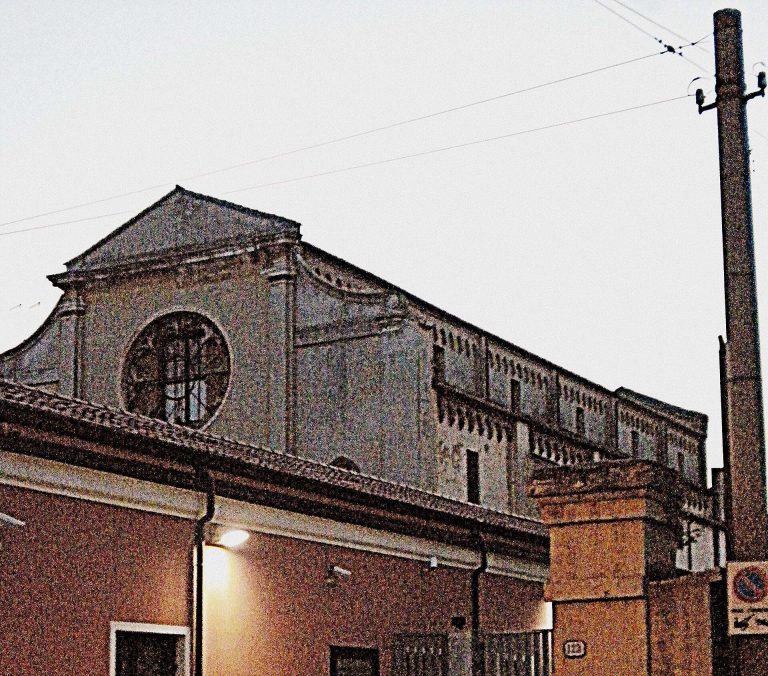
The basilica faces Piazza Francesco Petrarca, formerly a church forecourt and cemetery. Its surviving structure is organized around a single nave with substantial arches supporting the cupola, a projecting system of side chapels, and an eighteenth-century facade. The adjacent Scuola del Carmine and a sixteenth-century cloister form part of the surviving religious complex.
Exterior and entrance
The present facade dates from the eighteenth century and has only partial marble facing. It formerly included an open loggia. The main wooden door, made in 1412, is divided into square panels carved with acanthus leaves. Its portal was completed in 1737 and is surmounted by three statues made by Tommaso Bonazza in 1736. A statue of Francesco Petrarch, the fourteenth-century Italian poet and scholar, stands in the square, while plaques commemorating parishioners killed in the First and Second World Wars are placed beside the basilica.
Renaissance rebuilding and nave
The projecting external chapel system that animates the side walls was conceived by Lorenzo da Bologna during the rebuilding after the 1491 collapse. Its apsidal side chapels are described as an early example of Renaissance architecture in the Veneto hinterland. The arrangement resembles Brunelleschi’s unrealized project for Santo Spirito in Florence and Biagio Rossetti’s church of San Benedetto in Ferrara. Lorenzo da Bologna also designed the sacristy. The pavement is made of polychrome marble.
Interior furnishings and artworks
High altar and Madonna dei Lumini
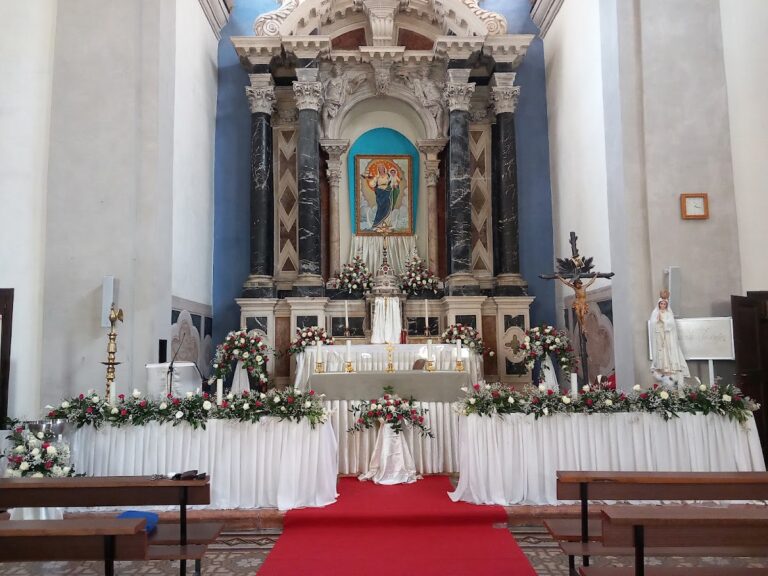
The elevated high altar is reached by a flight of steps and contains the detached fresco of the Madonna di dietro Corte, also called the Madonna dei Lumini. Stefano dall’Arzere painted the image, which was removed from its original house location in 1576 and installed in the church. Antonio Noale created the altar’s present arrangement in 1824. Its frontal contains an eighteenth-century bas-relief of the Last Supper, while the organ parapet on the left bears Battista Bissoni’s Stories of the Image of the Madonna of the Carmine.
Apse and nave decorations
Antonio Noale richly decorated the apse. Its upper walls carry large mid-seventeenth-century canvases showing Carmelite saints and events together with scenes from the Old Testament. Restoration of the central nave walls revealed Renaissance-style frescoed roundels depicting prophets and ancient sibyls, including a Moses with strongly Michelangelo-like features.
Side chapels and monuments
A chapel on the right side of the nave contains the processional statue of the Madonna del Carmine. Side niches hold ex-votos, devotional offerings given in gratitude for received graces. Statues by Giovanni Bonazza stand on the third altar on the right, while the altarpiece on the sixth right-hand altar depicts the Mother of the Zebedees before Christ and is by Padovanino, the professional name of the painter Alessandro Varotari. Francesco Segala sculpted the funeral monument of Tiberio Deciani, attached to the right pillar supporting the cupola.
Entrance and musical furnishings
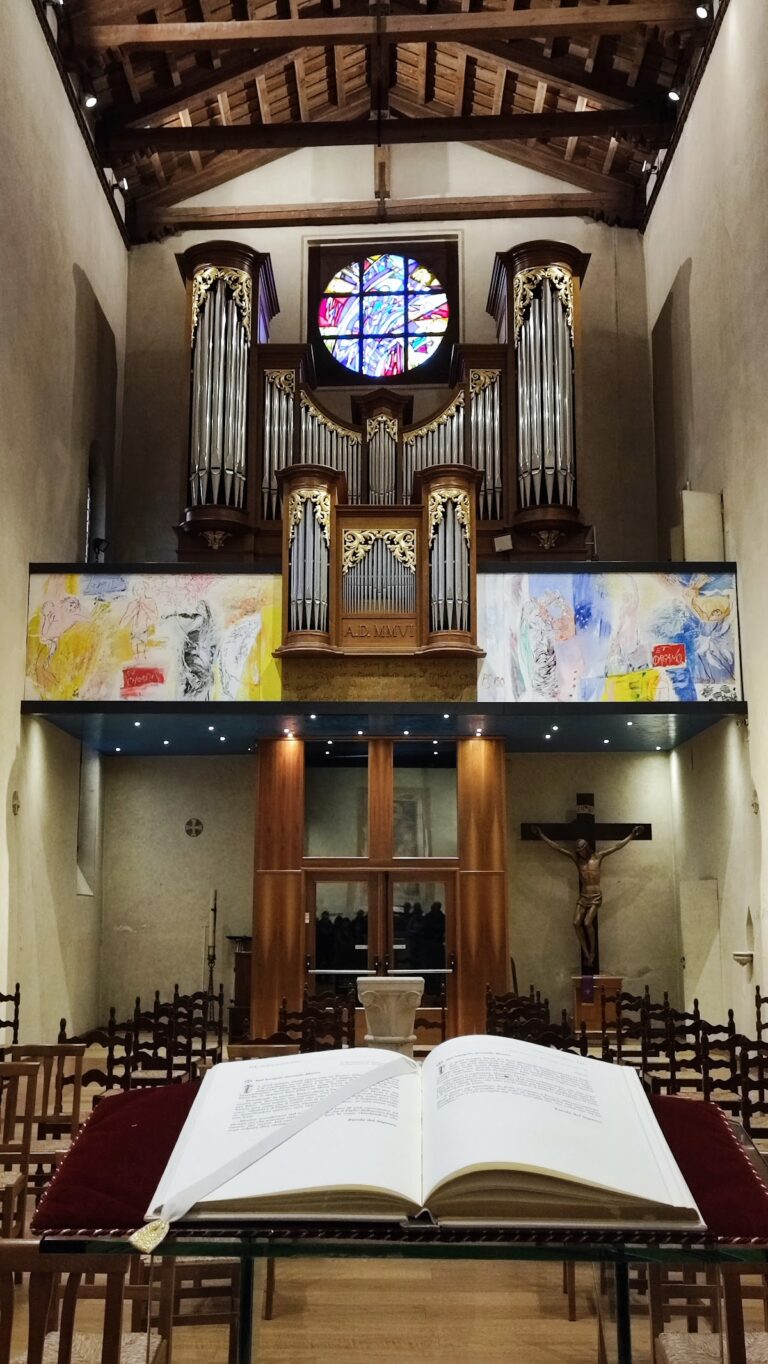
The counterfacade contains an Annunciation by Dario Varotari the Younger. Two holy-water fonts near the entrance were sculpted by Giovanni Bonazza. Two matching wooden choir lofts occupy the bay beneath the cupola. Both date from the eighteenth century and carry Baroque organ cases. The left case is empty because its Gaetano Callido organ was transferred to the church of San Michele Arcangelo in Ballo in 1933. The right case contains an organ built by Giovanni Battista De Lorenzi in 1877, with entirely mechanical action, one keyboard, one pedalboard, and 29 stops.
Scuola del Carmine and cloister
The adjacent Scuola del Carmine was formerly the seat of the Carmine confraternity. It contains sixteenth-century frescoes by Giulio Campagnola, Domenico Campagnola, Girolamo Tessari, and Stefano dall’Arzere. A sixteenth-century cloister survives beside the basilica and the Scuola. The church formerly housed Francesco Squarcione’s Polyptych of Lazarus, which is now in the Civic Museum of Padua.