Château de Charance: A Former Fortified Castle and Episcopal Estate in France


Site at a Glance
- Rating
- 4.7
- Popularity
- Low
- Country
- France
- Primary era
- Early Modern
- External website
- Open
- Eras represented
- Medieval, Early Modern, Modern
- Civilizations
- County of Provence, French
- Site type
- Domestic
- Remains
- Castle
On this page10 sections
History
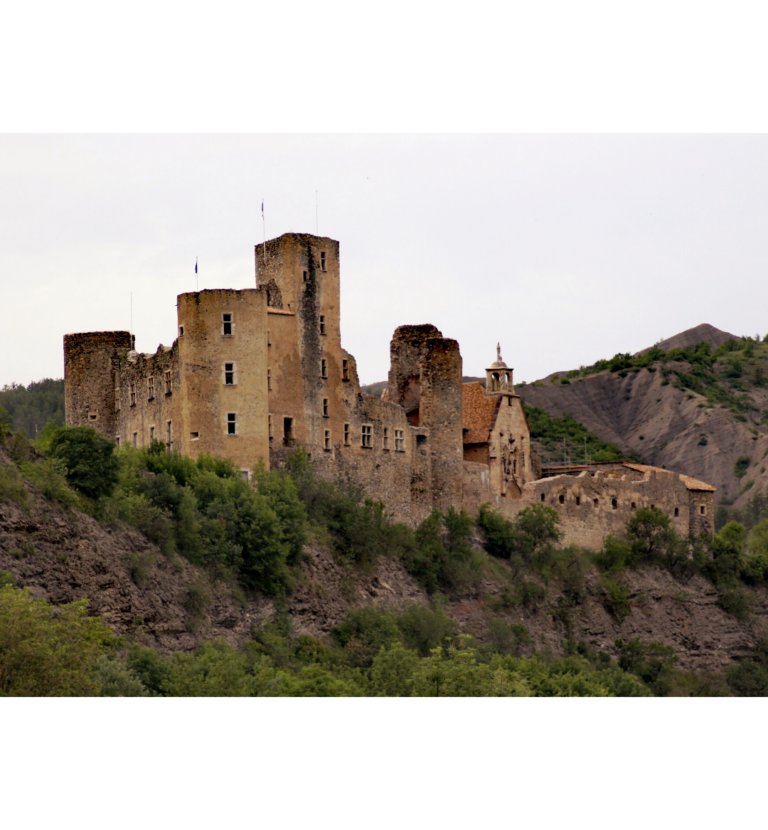
Château de Charance is a former fortified castle in France, about 3 kilometres northwest of Gap. Originating in the medieval period, it had towers and defensive moats and served as a residence of the viscounts of Gap, who were subordinate to the counts of Provence.
Episcopal ownership and transformation
The bishop of Gap, the senior Roman Catholic authority of the Gap diocese, purchased the estate on 12 May 1307. It remained episcopal property until the French Revolution, serving as a residence and administrative estate for the bishops.
During the sixteenth century, Bishop Gabriel de Sclaffanatis renovated the abandoned fortress and converted it into a large residence accompanied by several farm buildings. Protestant forces sacked the estate in 1569 during the French Wars of Religion, the conflicts between Catholics and Protestants in sixteenth-century France. Bishop Artus de Lionne restored it in 1644 and reshaped it as an extensive farming estate.
Rebuilding and episcopal residence
The estate suffered further devastation in 1692 during the conflict between the Duke of Savoy and Louis XIV. The bishops then rebuilt the property, and by the beginning of the eighteenth century it had acquired the general arrangement that remains recognizable today.
Bishops Jacques Marie Caritat de Condorcet and Jean Baptiste Marie de Maillé de la Tour Landry, his successor, substantially remodelled the château as a luxurious residence. They also gave particular attention to the terraced gardens, which became an important part of the estate’s design.
Revolutionary sale and later landscape
During the French Revolution, the château was confiscated as national property, meaning that the revolutionary state took possession of it and offered it for public sale. It was sold at auction on 26 February 1791, after which several owners held the estate during the nineteenth century.
In the nineteenth century, the upper part of the estate was laid out as an English-style garden. The work included numerous cascades, the enlargement of the lake, boat garages along its banks, and paths through wooded areas.
Municipal ownership and heritage protection
The municipality of Gap acquired the estate in 1973 and opened it to the public. From that year, the château housed the administrative services of Écrins National Park, a protected mountain-area institution in the French Alps, while the garden became the home of the Conservatory of Alpine Plant Species.
The château and associated buildings, agricultural structures, mills, icehouse, sawmill, terraced gardens, park, water features, and related elements were partially listed as French historic monuments by an order of 8 September 1987. In 2005, the park received the French “Remarkable Garden” label, which recognizes gardens notable for their design, history, or plant collections.
Remains
Château and estate buildings
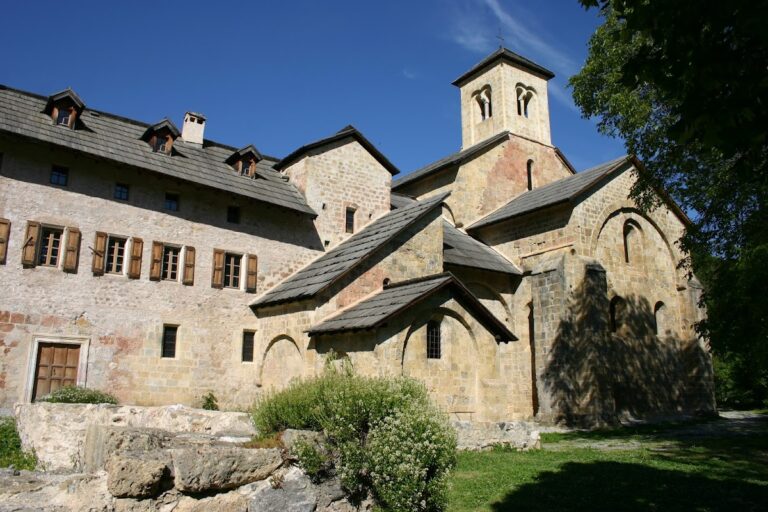
The estate lies in the Hautes-Alpes at approximately 1,100 metres above sea level, with the Gap Canal passing through the domain. The château developed from a fortified structure with towers and defensive moats into a complex containing the main residence, farm buildings, common buildings, and agricultural structures.
The former stables stand a few dozen metres from the château and now house the Environmental Documentation Centre of Écrins National Park.
Terraced gardens
The terraced garden covers 9,000 square metres. Its plants are arranged by terrace and include boxwood, holly, grasses, and daphnes. Lateral enclosure walls and retaining walls structure the terraces, while channels, cascades, and fountains carry water through them. The garden also contains fountains and a grotto.
An old-rose collection contains approximately 1,000 varieties, including the first yellow rose created in 1914 and a variety named “Domaine de Charance.” The estate also preserves old fruit-tree varieties, with approximately 800 pear trees and 500 apple trees.
Lake and English-style park
The former English-style garden extends around the lake through wooded and grass-covered areas. The lake was enlarged during the nineteenth century, and boat garages were built along its banks. Cascades, the Gap Canal, and other water bodies form part of the park’s surviving landscape features.
Industrial and agricultural remains
The estate retains the remains of mills, an icehouse, and a sawmill, together with its agricultural structures. These features preserve the material evidence of the property’s long use as a working farming estate alongside its residential and landscaped functions.