Castell d’Oló: A Medieval Fortification in Catalonia


Site at a Glance
- Rating
- 4.5
- Popularity
- Very Low
- Country
- Spain
- Primary era
- Medieval
- External website
- Open
- Eras represented
- Medieval
- Civilizations
- Unclassified
- Site type
- Military
- Remains
- Castle
On this page8 sections
History
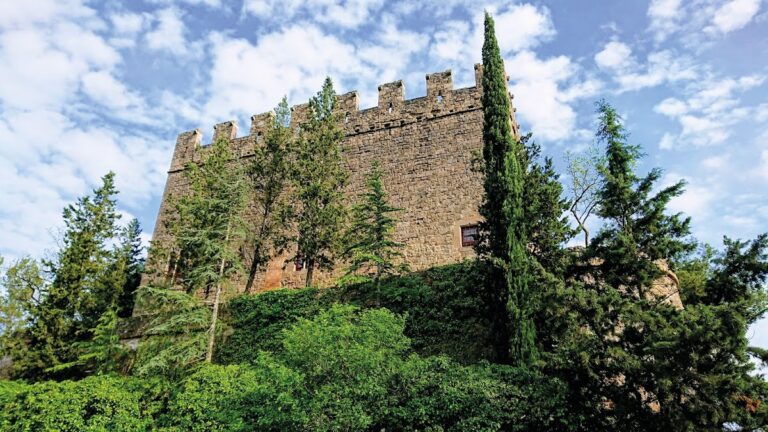
Castell d’Oló is a medieval fortification in Spain, at Santa Maria d’Oló in Catalonia. It controlled the defense and lordship of the present-day municipal territory of Santa Maria d’Oló and the territory of Estany. The name Oló appears in records from 889, its territorial jurisdiction was defined by 927, and the castle is explicitly mentioned in 931.
Comital administration and the Oló family
The counts held the castle in full and administered it through delegated officials. Their first representatives were vicars, officials who governed territory on behalf of a count, and later the authority passed to feudatories, who held power or property in return for obligations to a superior lord. The Oló family, descended from the viscounts of Girona, exercised this delegated lordship for much of the period and continued to do so into the fourteenth century.
Sesmond d’Oló served as a count’s vicar in 986. His son, Guillem de Mediona, became the second count’s vicar of Oló. Count Ramon Berenguer III, the count of Barcelona from 1082 to 1131, temporarily ceded the castle to his former tutor, Bernat Guillem de Gurb-Queralt. In 1097, Bernat Guillem entrusted its custody to two brothers from the Oló family. Their descendants received the castle and territory in pledge in 1202.
Transfer to the Montcada and Estany
Arnau d’Oló sold Oló, including the castle and its territory, to the Montcada family in 1333. The Montcada, a prominent Catalan noble family, also appear as owners of the castle in an eleventh-century document. In 1364, they sold Oló to Santa Maria de l’Estany, a religious canonry and monastery.
The people of Oló resisted the transfer because they sought to redeem themselves from the monastery’s lordship. Their popular revolt prevented the canons of Estany from taking possession. About thirty years of litigation and armed conflict followed. The abbot of Estany eventually sent troops that besieged and occupied Oló. The people of Oló then besieged Estany and forced its community to flee to Sabadell. Reorganized from Manresa, the monks attacked Oló again and conquered it definitively.
Royal jurisdiction and later transformation
The date and circumstances through which the monastery obtained full jurisdiction over Oló are not known. Estany held that jurisdiction, while royal lordship over Oló had disappeared. After the canonry of Santa Maria de l’Estany was secularized, the castle and territory passed to the Five Royal Dignities, five archdeaconries established by Philip II in the dioceses of Girona, Barcelona, and Vic. An archdeacon was a senior ecclesiastical official with administrative and disciplinary duties in a diocese.
In 1606, Oló was incorporated into Barcelona, returning it to the Crown, meaning royal government and jurisdiction. Repeated transformations over the centuries have made the castle’s original form difficult to reconstruct from the surviving fabric. The site was declared a monument on 8 November 1988 and is listed under heritage code RI-51-0005704.
Remains
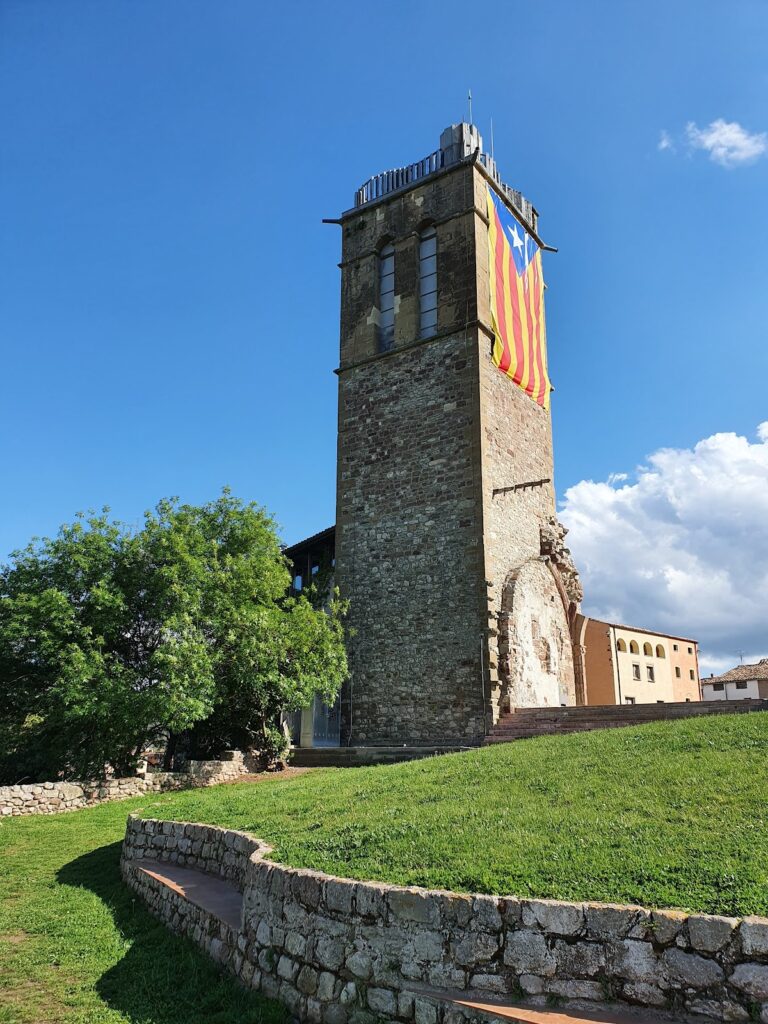
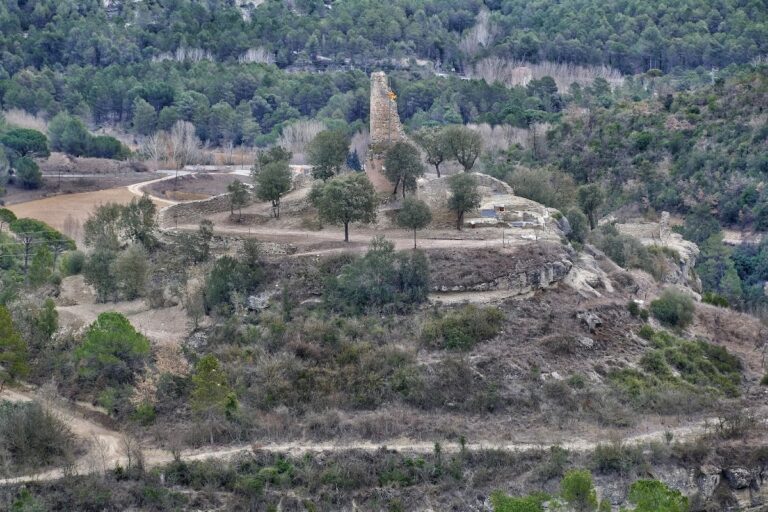
The castle occupies the summit of the old village of Santa Maria d’Oló, at the southern end of the area covered by the present settlement. Its relatively low position required a broader defensive and supervisory network that incorporated other castles and guard posts. Aguiló Castle formed part of this system but has completely disappeared, while several other towers are known by name at farmhouses in the surrounding territory.
Surviving castle fabric
Circular keep
A fragment of the circular keep survives, enclosed completely by later buildings that conceal and mask it. The keep was the principal fortified tower of the medieval castle. The identifiable section is approximately 8 metres high and 2.5 metres wide, providing the clearest surviving indication of the castle’s fortified vertical structure.
Rooms and walls
Additional fragments of the castle’s rooms remain inside more recent buildings. Sections of the castle walls also survive at various places in the village. These enclosed and dispersed remnants form the remaining physical evidence of a fortification repeatedly altered over the centuries.
Nearby sites