Lefktro Castle: A Late-Medieval Frankish Fortification in Greece


Site at a Glance
- Rating
- 4.3
- Popularity
- Very Low
- Country
- Greece
- Primary era
- Medieval
- Eras represented
- Medieval
- Civilizations
- Crusader, Principality of Achaea
- Site type
- Military
- Remains
- Castle
On this page6 sections
History
Lefktro Castle, also known as Beaufort, is a late-medieval Frankish fortification in Greece, near the modern village of Stoupa on the Mani Peninsula. Built around 1249, it formed part of the Principality of Achaea, the Crusader state established in the Peloponnese after the Fourth Crusade. Prince William II Villehardouin ordered the castle’s construction to control the area and to subdue or contain the Maniots, the inhabitants of the Mani, together with Slavic groups associated with Mount Taygetos.
Foundation under the Principality of Achaea
William II treated Lefktro Castle as a personal possession, in the same context as Kalamata. Its military purpose included controlling the Milingians, a Slavic group associated with Mount Taygetos, and the Tsakonians, a distinct regional Greek community. Local Taygetos groups were also said to have encouraged the castle’s construction. The work was entrusted to a Venetian engineer from Koroni, linking the fortification to the wider political and military networks of the Frankish principality.
Byzantine conflict and later rule
After the Battle of Pelagonia and the Byzantine recovery of Constantinople, Laconia was liberated from Frankish control. In 1262, Lefktro Castle passed to the Maniots, who were allied with the Byzantines.
Byzantine forces attacked and besieged the castle in 1304. John I, the baron-archbishop of Patras, assembled a relief army with Nicholas Mavros, Baron of Arcadia, Hugh II of Vostitsa, and George Ghisi of Chalandritsa. A hard-fought battle forced the Byzantine forces to abandon the siege.
Late in the fourteenth century, the Despotate of Mystras captured Lefktro Castle. This was a Byzantine polity in the southern Peloponnese centered at Mystras during the later medieval period. The castle later passed to Constantine Palaiologos, a succession possibly connected with the local tradition that calls it the “Castle of the Marble King.” Ottoman forces captured the fortress in 1458.
Remains
Castle rock and enclosure
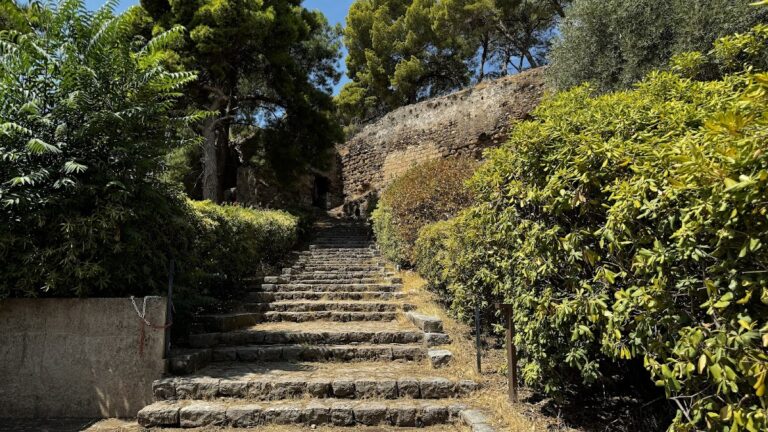
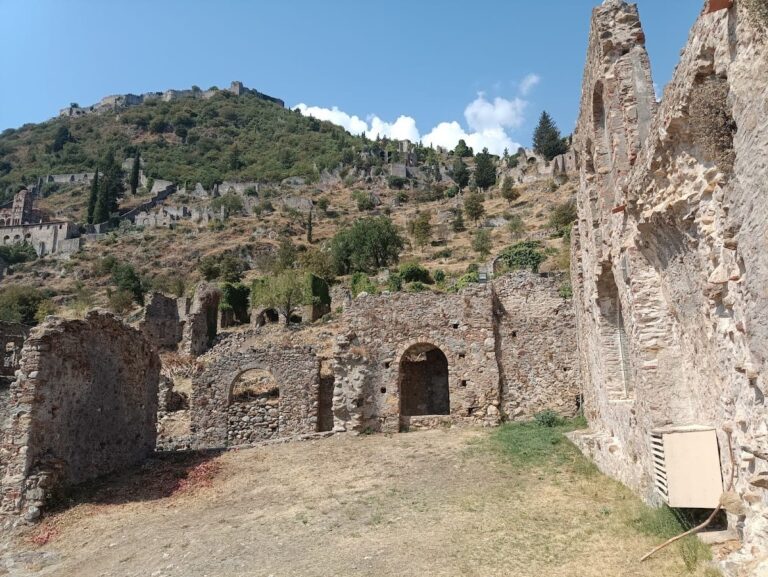
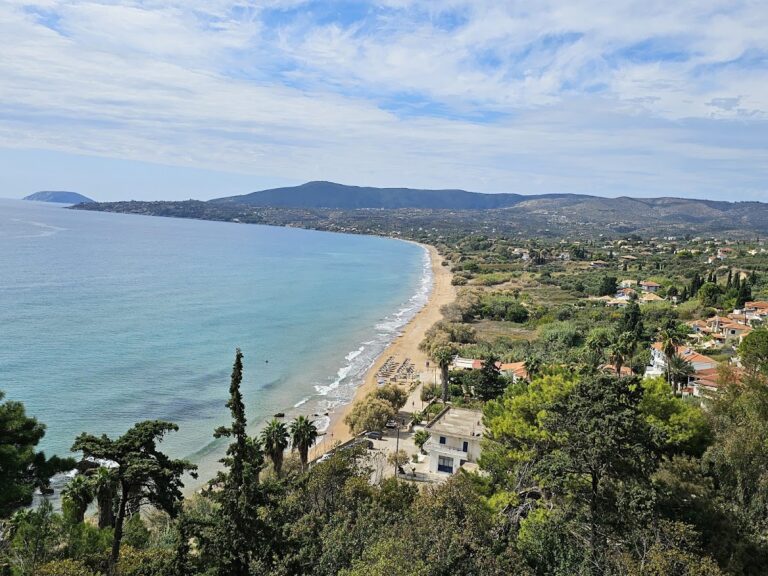
The ruins stand on a large rock above the eastern shore of the Messenian Gulf, near the ancient settlement of Leuktron and on the southwestern foothills of Mount Taygetos. The rocky platform extends approximately 120 metres from northeast to southwest, is about 50 metres wide, and rises approximately 80 metres high. In antiquity, the hill held the acropolis of ancient Leuktron. The medieval fortification was built over the ancient acropolis wall, a relationship reflected in the name Lefktro.
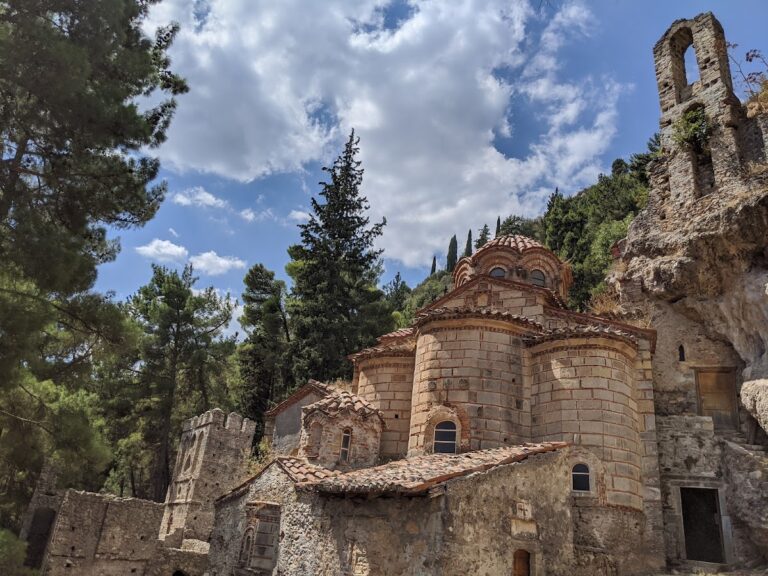
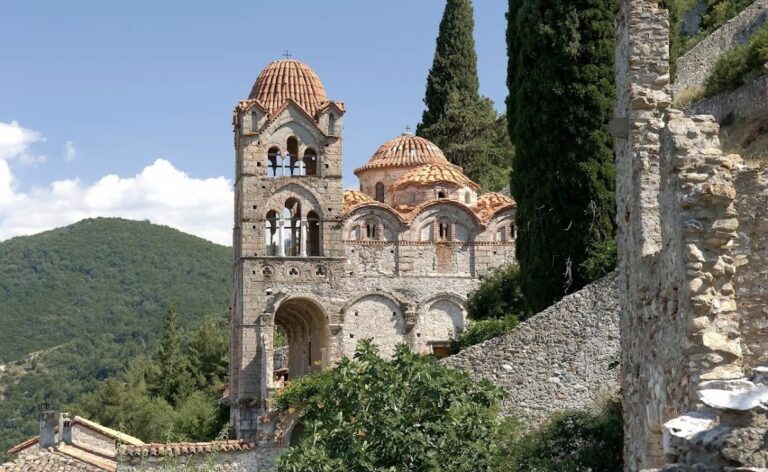
Only fragmentary remains survive. The curtain wall, the main enclosing defensive wall of a castle, is constructed from irregularly sized stones mixed with fragments of brick. Its surviving masonry preserves the basic defensive boundary of the medieval stronghold while also showing the reuse of the ancient hilltop setting.
Interior structures
Within the enclosure, the visible remains include a square keep, the principal fortified tower of a castle, and a cistern, a tank used to collect or store water. Together, these structures represent the castle’s central defensive element and its provision for water storage.
Nearby sites