Ruine Salmendingen: A Medieval Hilltop Castle in Germany


Site at a Glance
- Rating
- 4.3
- Popularity
- Very Low
- Country
- Germany
- Primary era
- Medieval
- Eras represented
- Medieval
- Civilizations
- Holy Roman Empire
- Site type
- Military
- Remains
- Castle
On this page7 sections
History
Ruine Salmendingen, also known as the Old Castle, is a ruined hilltop castle in Germany, immediately south of Salmendingen in the Burladingen area of Baden-Württemberg. Probably built in the thirteenth century by the Lords of Salmendingen as their ancestral seat, it was first mentioned in 1245.
The Lords of Salmendingen
The Lords of Salmendingen held property and rights at Salmendingen and near Erpfingen. They also owned Hohenerpfingen Castle, placing the family within a network of noble holdings in the surrounding region.
The Mansberg period and destruction
In 1350, Burkhard Schilling von Mansberg acquired the castle through his marriage to Agate von Salmendingen. Burkhard belonged to the lower nobility and served as a ministerial, a member of the medieval service nobility who held office or administered property for a higher lord.
Connections involving the Dukes of Teck, the Habsburg dynasty, and the Counts of Hohenberg repeatedly brought the Mansberg family into conflict with the Counts of Württemberg. Regional warfare in the fourteenth century destroyed Salmendingen Castle. From 1386, the abandoned stronghold was left to decay.
Transfers of rights and later ownership
In 1394, the children of Agate von Salmendingen and Burkhard von Mansberg surrendered their claims to the castle and village to Klaus and Wilhelm Ungelter. In 1401, King Rupert of the Palatinate, a major principality of the Holy Roman Empire, granted the castle site and its associated rights to Count Eberhard of Werdenberg.
The former Salmendingen territory, including Ringingen, Salmendingen, Melchingen, and Erpfingen, was assigned to the princely House of Fürstenberg after Württemberg’s victory. The House of Werdenberg administered it through Jehle of Trochtelfingen, a ministerial. The castle passed to the Counts of Fürstenberg in 1534, and in 1806 the ruin was owned by the Principality of Hohenzollern-Sigmaringen. The territories of Hohenzollern, Württemberg, and Salmendingen historically met at nearby Dreifürstenstein.
Remains
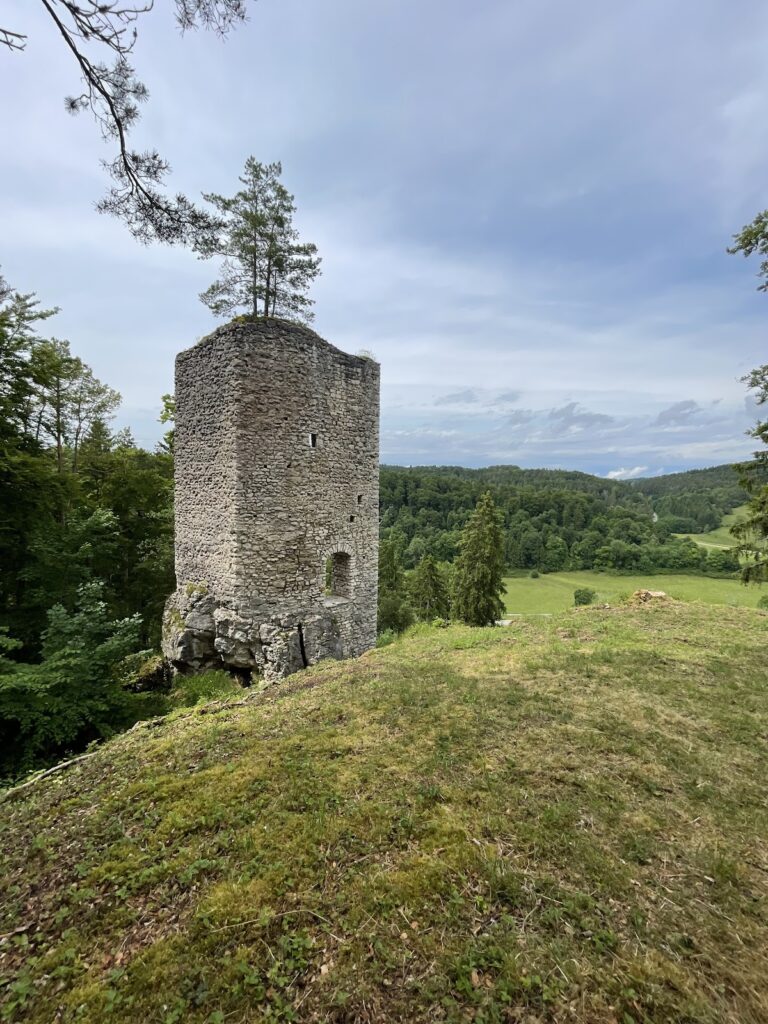
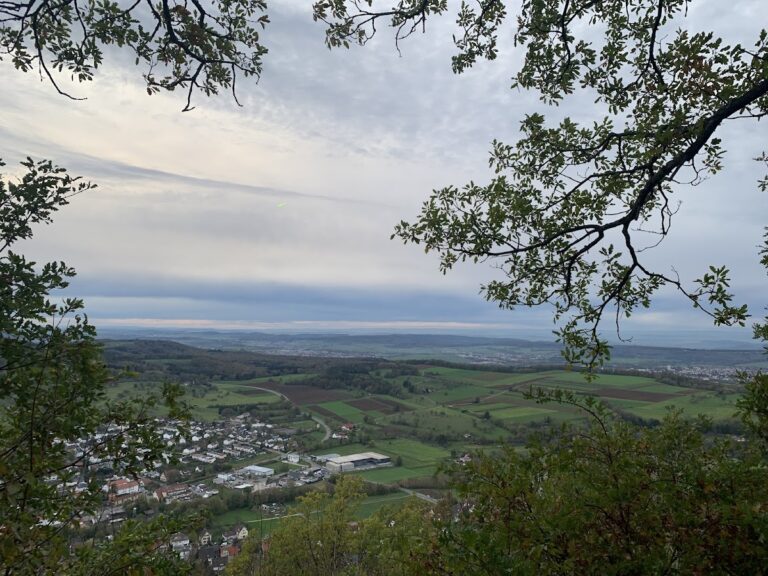
Ruine Salmendingen occupies an elevation about 845 metres high on a projecting spur immediately south of Salmendingen. The hilltop position formed the setting for a castle divided into an outer bailey and an inner bailey, each protected by its own ditch and rampart.
Castle layout
The former complex included the outer and inner defensive enclosures, a palas, or principal residential and representative building, a castle courtyard, and a bergfried, the main defensive tower and stronghold. These elements formed the organized plan of the hilltop castle, although the surviving physical evidence is concentrated in the tower remains.
Surviving tower
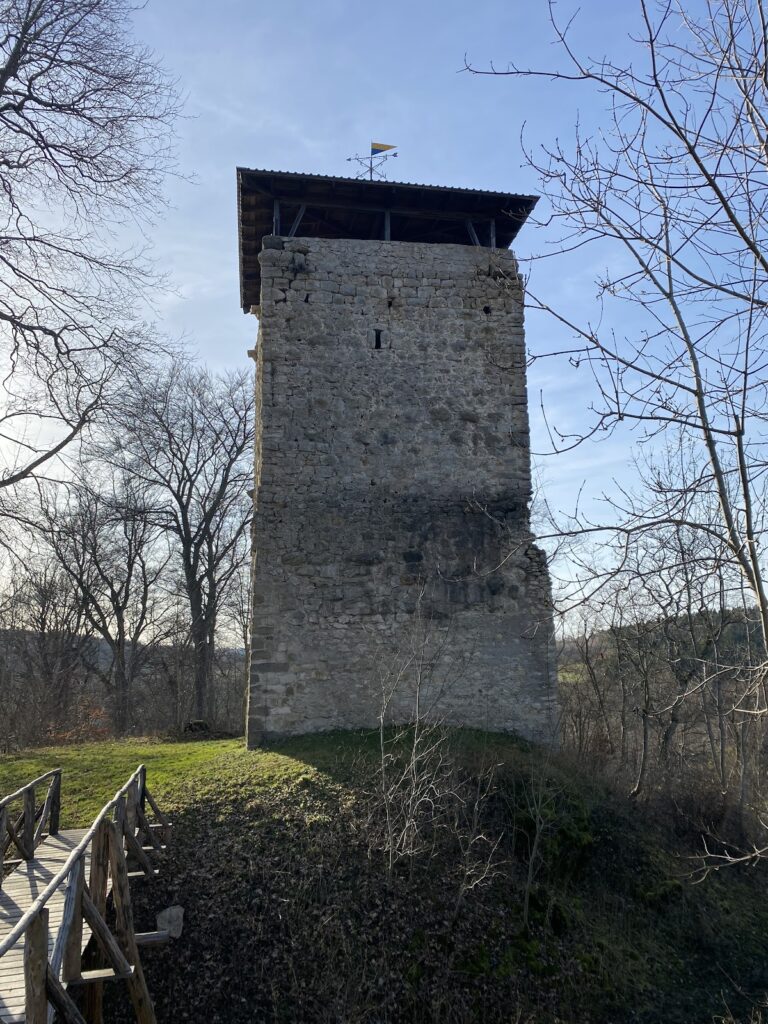
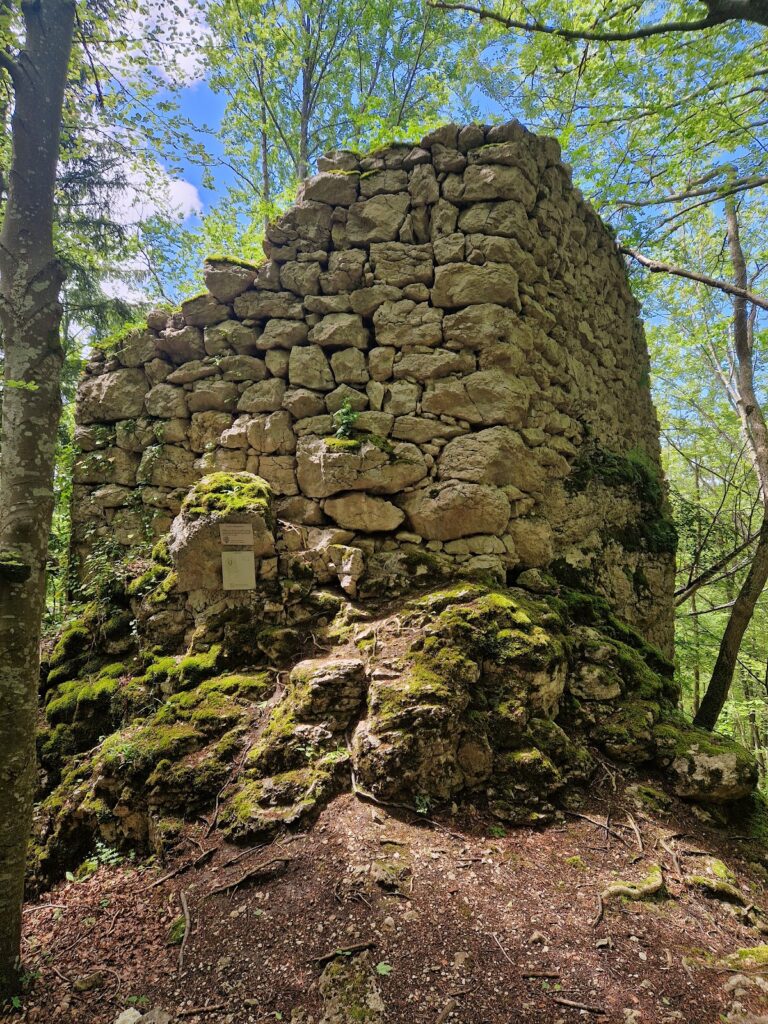
Only the remains of the bergfried survive. The tower occupied a footprint measuring 10.5 by 9.5 metres, while its walls were 3.2 metres thick. Its remnant stands on a rocky outcrop and is built from finely dressed ashlar together with smaller ashlar blocks.
Nearby sites