Şile Castle: A Coastal Watchtower in Turkey


Site at a Glance
- Rating
- 4.3
- Popularity
- Medium
- Country
- Turkey
- Primary era
- Medieval
- Eras represented
- Medieval
- Civilizations
- Byzantine, Genoese
- Site type
- Military
- Remains
- Castle
On this page4 sections
History
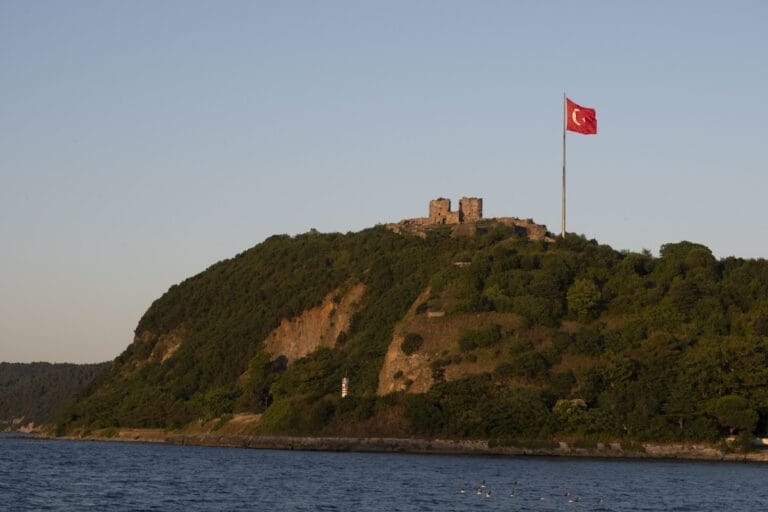
Şile Castle, also known as Ocaklı Ada Castle, is a coastal fortification in Şile, Turkey, whose uncertain origins are variously attributed to the Byzantine Empire and the Genoese. Built as a watchtower for observing the shore and monitoring possible attacks from the sea, it occupies a strategic position on Ocaklı Island in the Black Sea.
Uncertain Origins and Ottoman Conquest
The Byzantine Empire, the medieval continuation of the Roman Empire centered on Constantinople, is identified in one tradition as the castle’s builder. Other traditions associate its construction with the Genoese, a maritime trading and colonial power from the Italian city-state of Genoa whose fortified positions extended along important Black Sea routes. Some accounts place the structure’s age at more than 2,000 years, while another tradition describes Genoese control of a Byzantine-era fortification from 1305.
In the Byzantine-origin version of its history, the castle later came under Ottoman use. The Ottoman Empire, an imperial state that expanded from northwestern Anatolia, took control of the castle in 1396 under Sultan Bayezid I, who ruled from 1389 to 1402. The fortification was repaired at least twice during its history, preserving its role as a small military position overlooking the coast.
Restoration and Archaeological Work
A restoration undertaken in 2015 included archaeological excavations. The intervention changed the castle’s appearance substantially, prompting media criticism that its form resembled the cartoon character SpongeBob SquarePants. This modern controversy became part of the site’s later history, alongside the continuing uncertainty over its original builders and date.
Remains
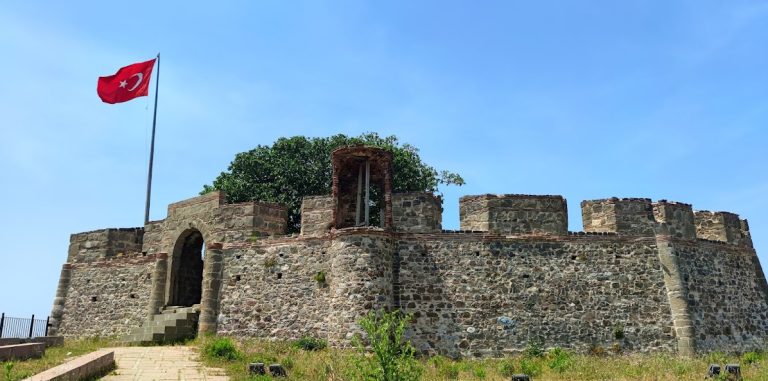
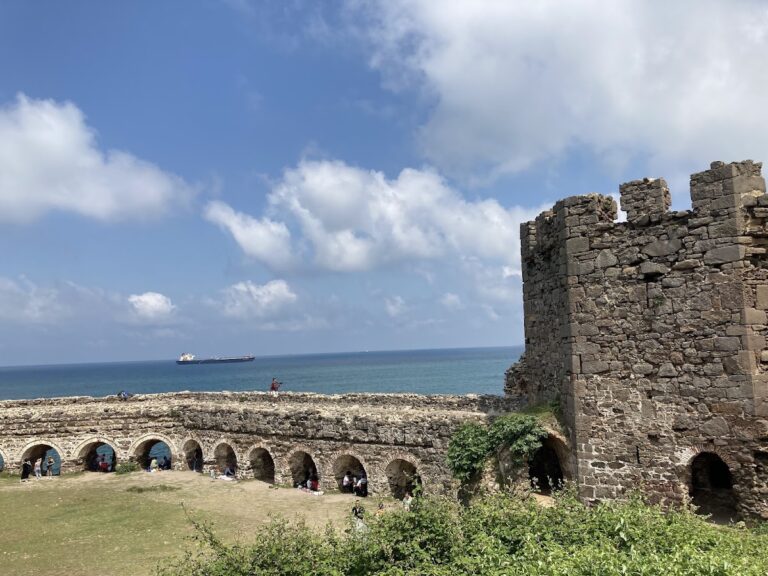
Şile Castle stands on Ocaklı Island near the coast of Şile district in Istanbul. The compact structure covers approximately 100 square metres, rises 12 metres, and has four floors. Its walls are built of white limestone, giving the fortification a simple, solid form suited to its function as a coastal observation post.
The first floor served for storing provisions. Above it, three floors were arranged as barracks capable of housing a military unit of 20 soldiers. These spaces combined storage and accommodation within the small tower, allowing a limited garrison to maintain a position on the island. The castle is described as being in good condition.
Nearby sites