Riva Castle: A Coastal Fortress on Istanbul’s Black Sea Shore


Site at a Glance
- Rating
- 4.3
- Popularity
- Medium
- Country
- Turkey
- Primary era
- Early Modern
- Eras represented
- Medieval, Early Modern
- Civilizations
- Byzantine, Ottoman
- Site type
- Military
- Remains
- Fort
On this page7 sections
History
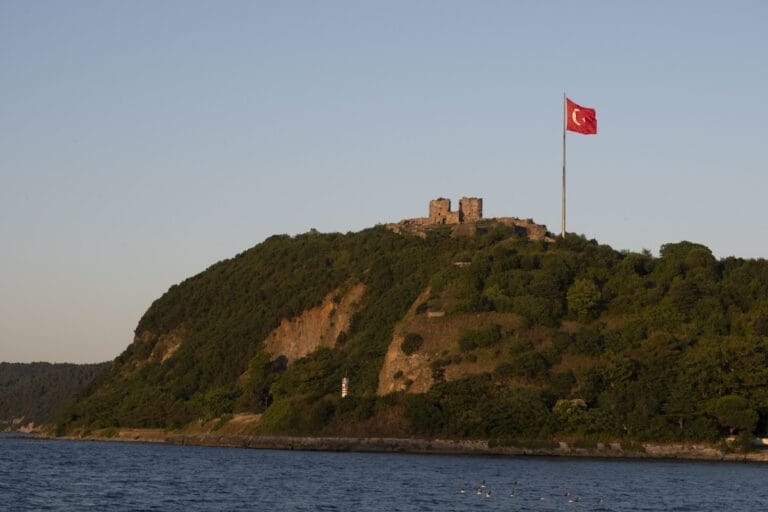
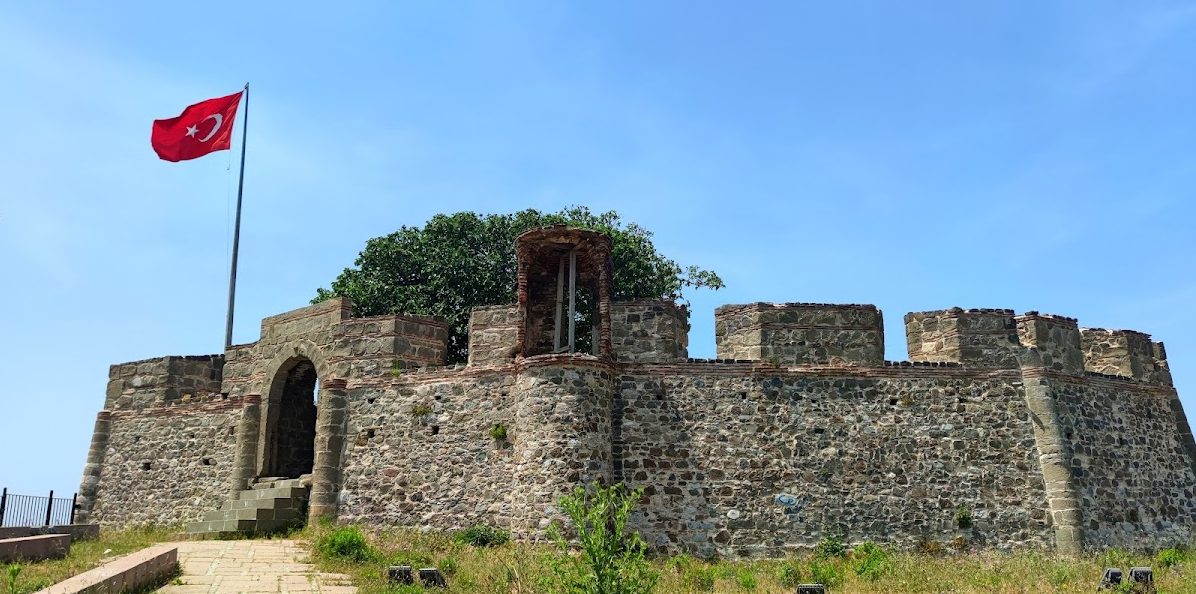
Riva Castle is a coastal fortress in Türkiye, standing at Riva in Istanbul’s Beykoz district on a hill above the point where Riva Creek meets the Black Sea. Its purpose was to control entry into the creek and strengthen coastal security. The castle’s origins remain uncertain: its form and materials have been associated with the Byzantine period, while other interpretations identify the surviving structure as an Ottoman fortress built around the seventeenth or eighteenth century, possibly on an earlier castle or its foundations.
Early traditions and uncertain beginnings
A local tradition links Riva Creek with Iason, better known in English mythology as Jason, the leader of the Argonauts in their search for the Golden Fleece. According to this tradition, he anchored in the creek, and the settlement was consequently associated with the name Ancyranum during the Byzantine, or Eastern Roman, period. The Byzantine Empire was the Roman state centered on Constantinople that continued in the eastern Mediterranean after the division of the Roman world.
The castle’s place in the late medieval military landscape is also debated. After the Ottoman capture of the neighboring fortresses of Yoros and Şile in 1391, Sultan Bayezid I reportedly stressed the importance of taking the castle. In 1399, the French military leader Boucicaut described capturing a fortress beside a stream flowing into the Black Sea. This account is sometimes connected with Riva Castle, although the identification is uncertain.
Ottoman coastal defense
Another interpretation places the construction of two fortresses, Bağdadcık and Revancık, in the reign of Sultan Murad IV, who ruled from 1623 to 1640. They were said to have been built in response to attacks by Cossacks and Russians on fortifications around the Bosporus. Riva Castle may correspond to Revancık in this account, although its earlier history remains unresolved.
Evliya Çelebi, the seventeenth-century Ottoman traveler and writer, described several fortresses around the Bosporus but did not mention a castle at Riva. The first Ottoman archival references to the fortress appear in the late eighteenth century, under the names Revan Kalesi and Revancık Kalesi. These references are dated variously to 1778–1779 and around 1781.
During the Ottoman period, the castle defended the coast against threats arriving from the Black Sea and received repeated maintenance and repairs. During the Russo-Ottoman War of 1768–1774, a conflict between the Ottoman Empire and Russia, Sultan Mustafa III’s government sought to strengthen the Bosporus because Istanbul faced provisioning difficulties. One thousand soldiers selected from the Black Sea region were assigned to defend the castle. Most were reportedly Laz and Chepni, peoples historically associated with the Black Sea region. Because the fortress lay far from Beykoz, these soldiers received privileges that included permission to marry, establish homes, and own gardens.
Damage and restoration
British forces damaged Riva Castle during the occupation of Istanbul. The fortress later served for a time as a cafeteria and was subsequently used for recreational visits. In 2016, a restoration project commissioned by Istanbul Metropolitan Municipality cleaned the walls and their joints, repaired masonry and brickwork, and filled cracks. The castle is now used for visits and recreation.
Remains
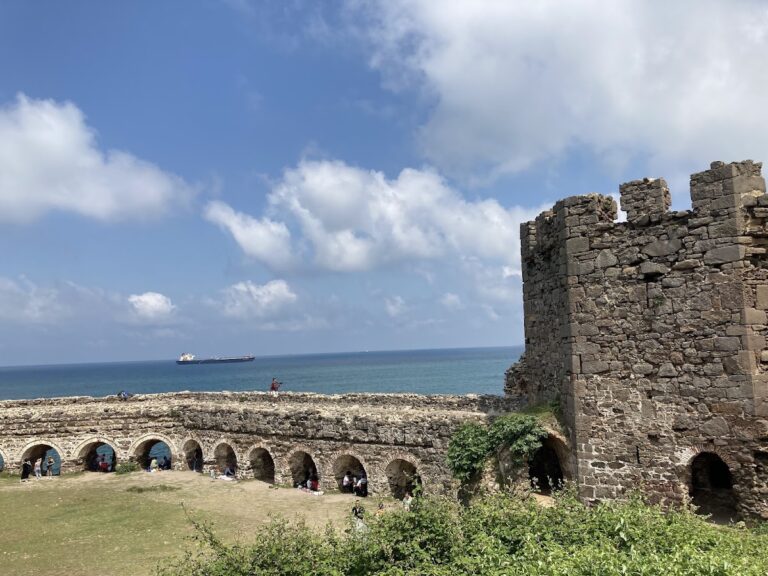
Riva Castle occupies a hill above the meeting point of Riva Creek and the Black Sea. Its surviving plan consists of inner and outer courtyards enclosed by walls built mainly from stone gathered from rocks in the Riva area, with brick used in some sections. The arrangement combines a western entrance, a smaller inner court, and a larger courtyard reached from it. Two towers are associated with the fortress, including one that survives in ruined condition.
Courtyards, walls, and defensive features
The entrance gate opens toward the west and has a round stone arch. Other gates also have round stone arches. Cellars form part of the interior, while broad loopholes, narrow openings through which defenders could observe or fire outward, remain among the castle’s defensive features. The masonry has prompted comparisons with fortresses in Istanbul dating from the eighteenth and nineteenth centuries, although other interpretations connect the architectural character with Byzantine construction.
Materials and water defenses
The building stones are andesitic lava, volcanic material from the Late Cretaceous period. Sand and stone from local streambeds, together with aggregate from quarries, were used in the mortar and plaster. These materials reflect the use of resources available around Riva.
Ottoman archival descriptions refer to the castle settlement as an island. A map from 1838 shows a moat along the southeastern side, crossed by a bridge. The moat is now filled. The 1962 film They Were Five Brothers, directed by Atıf Yılmaz, indicates that seawater once reached the lower slopes on the western side of the castle, adding evidence about the changing relationship between the fortress and the surrounding waters.
Nearby sites