Yoros Castle: A Strategic Byzantine and Ottoman Fortress on the Bosphorus


Site at a Glance
- Rating
- 4.5
- Popularity
- Medium
- Country
- Turkey
- Primary era
- Medieval
- Eras represented
- Medieval, Early Modern
- Civilizations
- Byzantine, Ottoman
- Site type
- Military
- Remains
- Castle
On this page12 sections
History
Yoros Castle is a ruined Byzantine fortress in Türkiye, near Anadolu Kavağı in Istanbul, built on a steep hill above the junction of the Bosphorus and the Black Sea. Its exact construction date is uncertain, but its Byzantine origins and strategic position gave it a lasting military and commercial role. Control of the fortress and the harbor below helped regulate shipping through one of the narrowest parts of the strait and enabled the collection of dues from vessels traveling to or from the Black Sea.
Before and during the Byzantine period
Phoenicians and Greeks settled the wider area before the Byzantine period for commercial and military purposes. The Greeks called it Hieron, meaning “sacred place.” Ancient religious activity included temples, an altar dedicated to the Twelve Gods, and sanctuaries associated with Apollo and Zeus. These cult sites and sacrificial areas extended across the surrounding landscape, including nearby Joshua Hill.
The fortress may have been built on the orders of Emperor Manuel Komnenos to protect Constantinople from hostile Varangian forces. Varangians were Norse and other Scandinavian warriors and traders who served in, or interacted with, the Byzantine world. This proposed origin places Yoros within the defensive concerns of the Byzantine Empire, the eastern Roman Empire centered on Constantinople.
A former entrance plaque recorded rebuilding in 1261 and displayed the dates 1261 to 1282. The dates probably related to Michael VIII Palaiologos, who recovered Constantinople from the Latin Empire in 1261 and established the Palaiologos dynasty. The Latin Empire was the crusader state that ruled Constantinople from 1204 to 1261.
Byzantine, Genoese, and Ottoman control
Byzantines, Genoese, and Ottomans repeatedly contested Yoros. Ottoman forces captured the fortress in 1305 but soon lost it. The Genoese took it in 1348 and used the position to strengthen their command of Black Sea trade routes. Ottoman forces recovered the site in the late fourteenth century, with Bayezid I’s seizure dated to 1391.
Bayezid I used Yoros as a military base while preparing for the siege of Constantinople. In 1395, the Ottomans constructed Anadolu Hisari, a fortress on the Anatolian shore of the Bosphorus. A Franco-Spanish force led by Marshal Boucicaut tried to storm Yoros in 1399 but failed. After destroying the settlement below the fortress, the force withdrew.
Ottoman occupation lasted until 1414, when the Genoese regained Yoros. This period gave rise to the common alternative name Genoese Castle. After Mehmed II conquered Constantinople in 1453, the Genoese presence at this strategic location was regarded as a threat to the Ottoman capital. The Genoese were expelled within a few years, after which Mehmed II repaired the walls and established a customs office, quarantine center, and checkpoint. A quarantine center restricted the spread of infectious disease among travelers and arriving populations.
Ottoman repairs and later decline
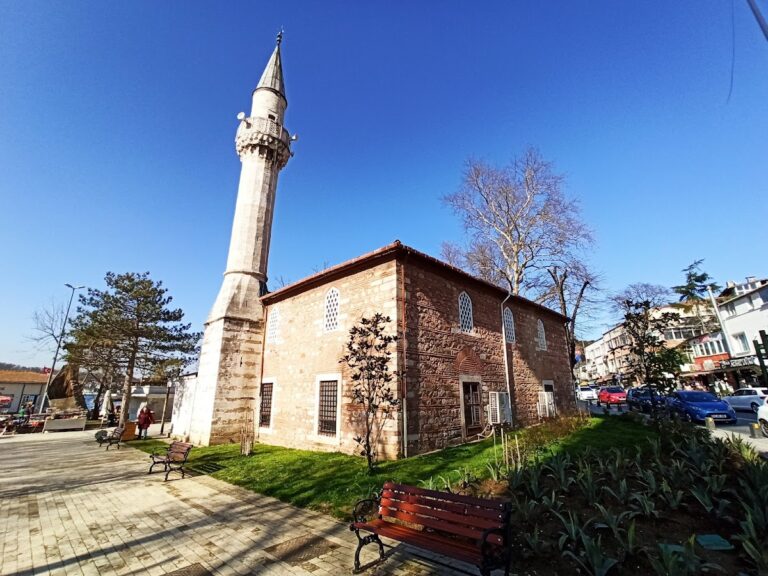
Bayezid II, who ruled from 1481 to 1512, restored Yoros and added a small mosque. The fortress commander Mehmed Aga later built a bath, indicating that the settlement supported a substantial resident population. A record from 1576 refers to repairs to the fortress mosque, water source, and bath.
An earthquake in 1509 badly damaged the walls and towers, which were later repaired. During the 1580s, the German traveler Michael Heberer found the fortress in good condition and recorded it in an engraving. In the seventeenth century, Cossack naval raids affected Ottoman defenses along the Bosphorus. After a fleet of 150 Cossack boats attacked settlements around the strait in 1624, Sultan Murad IV restored or strengthened Anadolu Kavağı as part of the regional defense system.
Yoros was fortified again during the reign of Osman III, from 1754 to 1757, and additional watchtowers were built in 1783 under Abdülhamid I. The fortress gradually fell into disrepair after this period and lost its military importance during the nineteenth century. It ceased to function as a fortress after the Turkish Republic was proclaimed in 1923. Archaeological excavations took place from 2018 to 2021.
Joshua Hill and its religious traditions
Joshua Hill retained a religious role after antiquity. During the sixth century, under Justinian, the ancient altar was placed under the protection of the Byzantine Church. Remains of a temple built around it were still visible in the nineteenth century.
In 1755, during the reign of Osman III, Grand Vizier Kucuk Mehmet Sait Pasha ordered the construction of a small mosque and a tekke, a lodge associated with Sufi religious practice, on Joshua Hill. A stone-and-brick enclosure was built around the tomb, and attendants were appointed to supervise it. Sultan Selim III later prohibited public recitations of Muhammad’s life at the site after disputes and crowding developed around the popular pilgrimage place.
The tomb complex was restored and renewed in 1863 on the orders of Sultan Abdülaziz after the earlier mosque had been damaged by fire. An Interior Ministry statistical report from 1885 to 1886 called the site the Yusha Aleyhisselam Dergah, or the lodge of a dervish. The identity of the tomb’s occupant belongs to religious tradition rather than established historical identification. Yusha ibn Nun is associated with the biblical Joshua, traditionally regarded as the successor of Moses as leader of the Israelites, and Christians, Jews, and Turkish Sufis visit the site. A later theory identifies Joshua Hill as the biblical Golgotha and Yoros as Jerusalem, but this interpretation remains controversial.
Remains
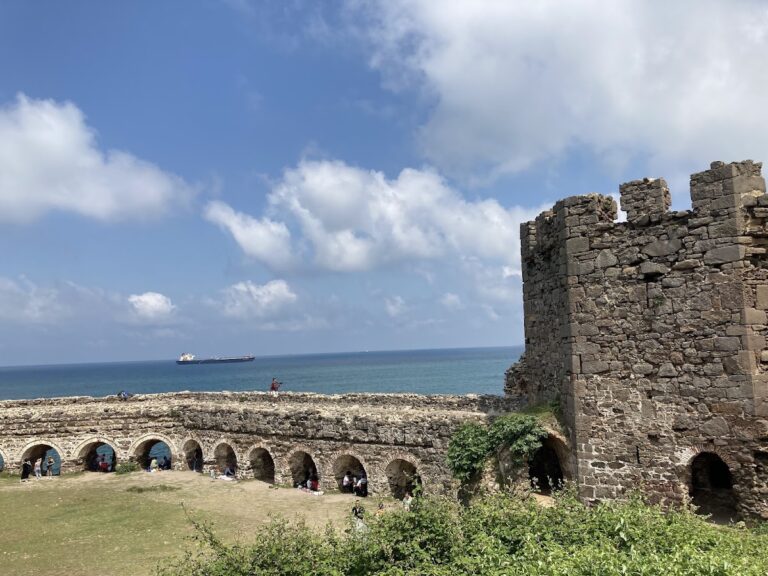
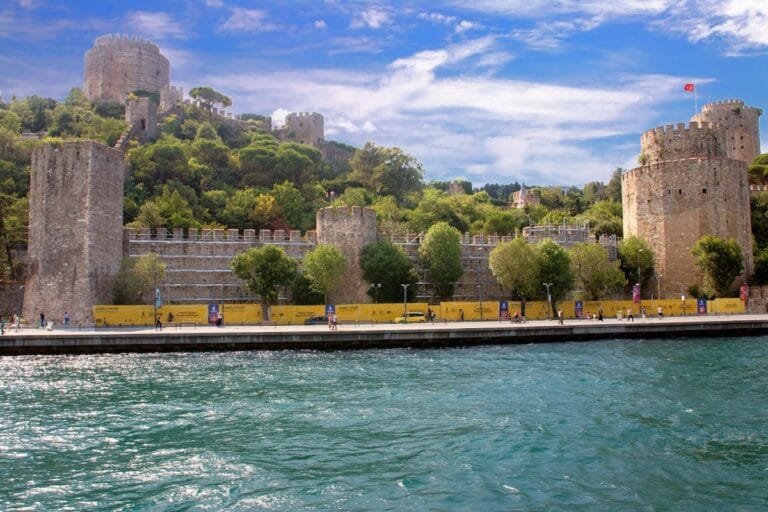
Yoros Castle occupied a high, steep-sided hill above the Bosphorus and the Black Sea. The fortified area extended for approximately 500 meters parallel to the Black Sea coast and ranged from about 60 to 130 meters in width. Its strongest side faced east toward Anatolia, where it defended against attacks from both the sea and the land. Anadolu Kavağı lies nearby, Joshua Hill is in the surrounding area, and Rumeli Kavağı stands on the opposite European shore.
The fortress
Citadel and surviving walls
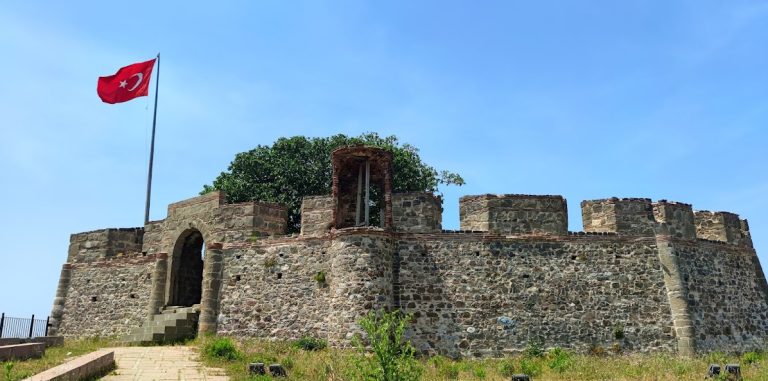
The surviving remains consist of the citadel and parts of the surrounding walls, with the eastern side surviving most substantially. This side includes two towers approximately 20 meters high and a gate. Greek inscriptions and carved symbols associated with the Palaiologos family remain on the walls. The Palaiologoi were the final ruling dynasty of the Byzantine Empire.
Gate and defensive features
The gate was filled with brick masonry on both its exterior and interior sides to prevent its arch from collapsing. The walls may once have descended toward the strait, where a landing place for ships and a lighthouse are associated with a historical engraving attributed to Thomas Allom. The fortress reportedly contained a Turkish residential quarter of 25 houses and a garrison of 20 guards under its commander, figures probably belonging to a peaceful period and mainly describing the upper part of the fortress.
A traditional chain is said to have extended between Yoros and a fortress on the opposite shore, restricting passage through the Bosphorus in a manner comparable to the chain once used across the Golden Horn to defend Constantinople. Rui Gonzalez de Clavijo found neither the chain nor an intact fortress on the opposite bank. The fortress walls and towers also carried Christian symbols, and copies of stone plaques bearing a cross and a crescent were placed on the tower buildings.
Joshua Tomb complex
Tomb mound
The nearby Joshua Tomb complex occupies a broad terrace with benches, a mosque, and the tomb itself. The tomb is a flat, rectangular earthen mound approximately 17 meters long and about 2 meters wide. Grass grows within its enclosure, together with several tall trees.
Enclosure and ritual features
A tall cast-iron grille surrounds the mound and is covered by additional iron mesh, preventing pilgrims from touching the sacred earth. Two round, cylindrical stones resembling small millstones stand at opposite ends. One has a square opening in its upper surface and a visible crack. A tall pole fixed to this stone rises from the ground and carries a gold or gilded disk with an Arabic inscription, resembling a ceremonial fan used in Christian worship.
A high stone wall surrounds the entire tomb enclosure. It contains two doors and several windows, with pilgrims traditionally entering through one door, walking around the tomb, and leaving through the other. The site is traditionally associated with healing from illness.
Nearby sites