Castelo de Lagos: Historic Fortress and City Walls in Portugal


Site at a Glance
- Rating
- 4.4
- Popularity
- Low
- Country
- Portugal
- Primary era
- Medieval
- Eras represented
- Medieval, Early Modern
- Civilizations
- Portuguese
- Site type
- Military
- Remains
- Wall
On this page13 sections
History
Castelo de Lagos is a historic defensive complex in Lagos, Portugal, whose fortifications developed through Islamic and Portuguese building phases from the medieval period onward. The site protected a settlement with deep antiquity and later supported Lagos’s role in the Portuguese expansion into North Africa and the early Age of Discoveries, the period of maritime exploration and overseas expansion that intensified from the fifteenth century.
Early settlement and Islamic Lagos
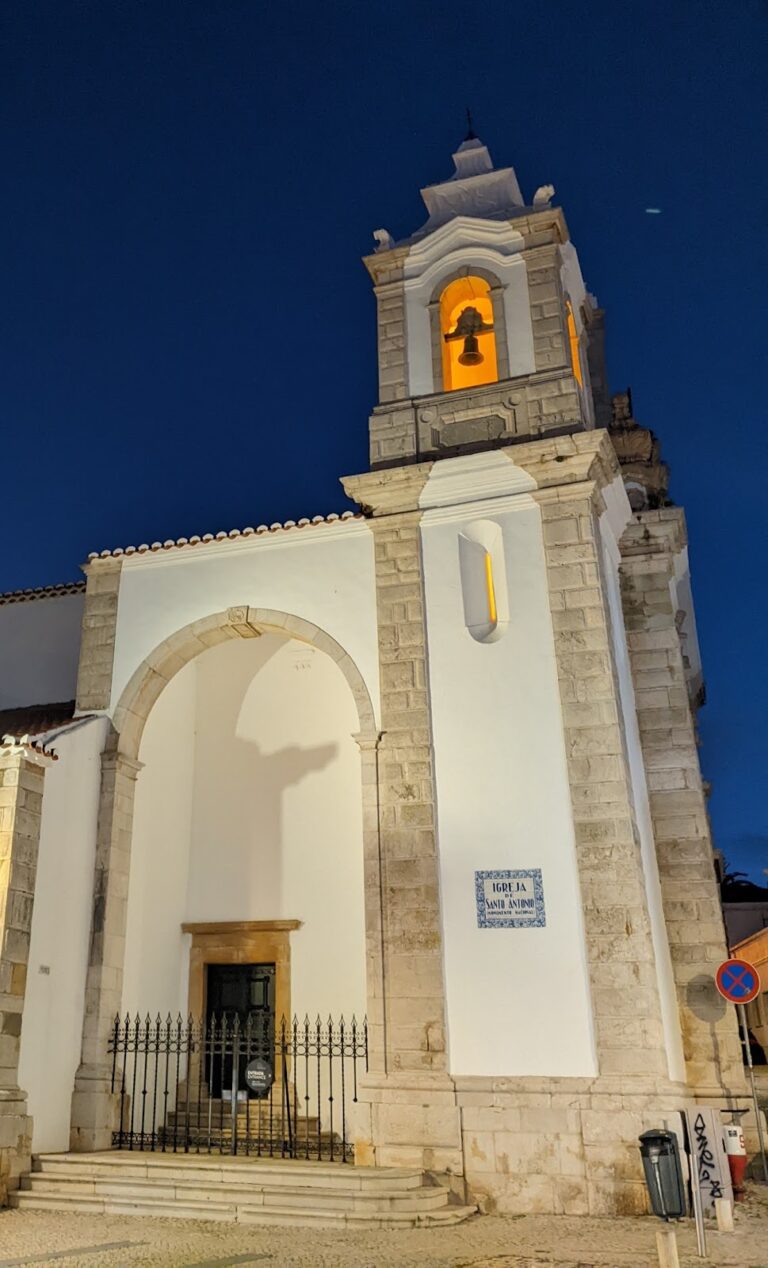
The coastal area around modern Lagos was occupied successively from prehistoric times. Greek navigators, Phoenicians, and Carthaginians visited the area in antiquity, while the Roman settlement was known as Lacobriga, or Laccobriga. That early town had a quadrangular defensive wall. Visigothic occupation followed, and Muslim communities from North Africa established control in the eighth century, calling the settlement Zawiya.
In 929, Abd-ar-Rahman III, the Umayyad caliph of Cordoba who ruled much of Muslim Iberia in the tenth century, conquered Lagos. He equipped the town with towers, reflecting its economic and strategic value and its access to Muslim Silves. The first fortification comparable to a castle probably dates from this Islamic period and may have been a citadel that later developed into the Governors’ Castle.
Reconquest and medieval defenses
After Silves fell, Lagos surrendered to King Sancho I in 1189 during the Christian reconquest of territories in the Iberian Peninsula that had been under Muslim rule. The Almohad caliph Abu Yusuf Yaqub al-Mansur, ruler of a North African Muslim dynasty that controlled parts of Iberia and North Africa, retook the town in 1191. Paio Peres Correia captured it again in 1241.
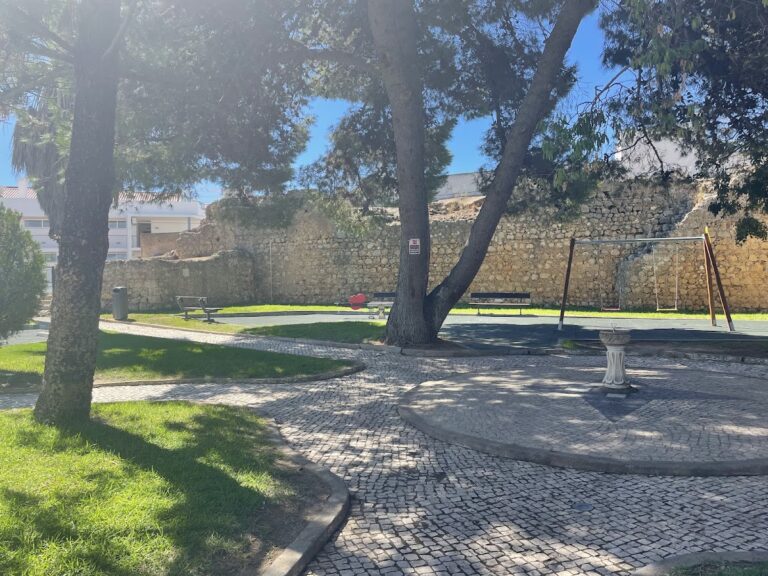
King Afonso III began building the post-Reconquest walls around the city. King Denis and his successor, Afonso IV, continued the work, which was probably complete during the fourteenth century. From 1361, Lagos was removed from Silves’s jurisdiction and became administratively independent.
Maritime expansion and civic development
Lagos gained a prominent role during Portugal’s expansion into North Africa and the early Age of Discoveries. Its harbor and shipbuilding facilities supported caravels and other vessels. Expeditions associated with the conquest of Ceuta in 1415, the discovery of Madeira in 1419 and the Azores in 1427, and Gil Eanes’s voyage beyond Cape Bojador in 1434 departed from Lagos. King Afonso V’s expeditions to Ksar es-Seghir, Asilah, and Tangier took place in 1458 and 1472.
In 1475, complaints about the poor condition of Algarve fortifications, including those at Lagos, prompted reconstruction across the region. During the reign of King John II, the Company of Guinea moved from Lagos to new premises in Lisbon in 1481 and 1482. John II and his successor continued the conservation of the town’s defenses.
King Manuel I granted Lagos a second Foral Charter in 1504. This royal charter defined the town’s legal, administrative, and fiscal privileges. It was revised a decade later, when construction of the Governors’ Palace began. Urban growth and Lagos’s increasing importance led to plans for another line of walls in the early sixteenth century. Work on that enclosure was later completed, with its finish recorded in 1598.
Capital, fortified port, and earthquake damage
Under King Sebastian, Lagos became a city in 1573, the capital of the Kingdom of the Algarve, and the residence of the Captains General and Governors. Cardinal Henry, who succeeded Sebastian as both king and cardinal, confirmed this status in 1579.
During the Iberian Union, the period from 1580 to 1640 when Portugal and Spain shared a monarch, Lagos’s defenses were strengthened. In 1587, the English naval commander Francis Drake failed to land at Lagos and attacked Sagres instead. Damage from English artillery, together with concern about further coastal attacks, led to additional reconstruction and modernization. The most heavily fortified medieval section was strengthened in 1621.
Following the restoration of Portuguese independence, conservation work was carried out on the walls in 1642. In 1643, authorities approved plans for a large pentagonal fortification south of the city, with five corner bastions, projecting structures designed to support artillery and provide flanking fire along the walls.
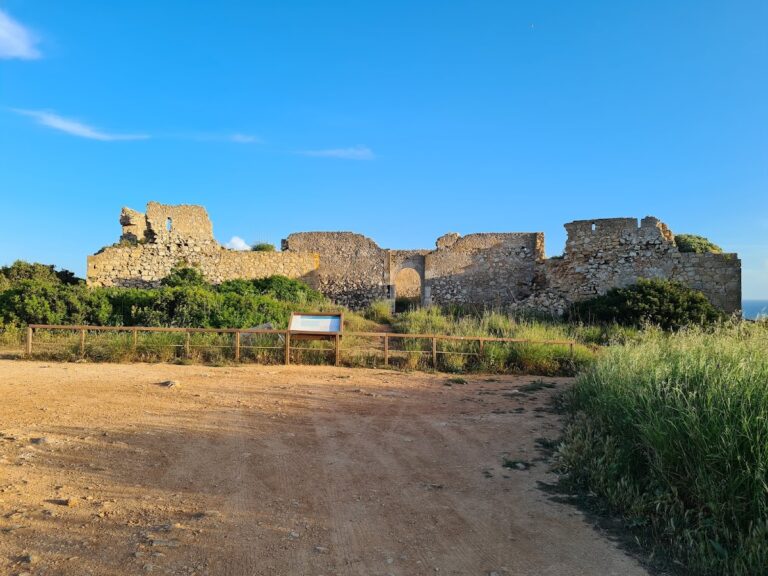
The earthquake and tsunami of 1755 severely damaged Lagos and its defenses. The castle and most of the walls were destroyed, and the castle was not rebuilt as a fortress. Part of it was later adapted as a hospital. Civilian and military government moved to the less affected town of Tavira, and by the end of the eighteenth century the civic center had shifted from the former Praça de Armas, now Praça Infante D. Henrique, to Cano Square, now Gil Eanes Square.
Restoration and present status
Lagos experienced renewed economic growth during the nineteenth century, particularly through fishing. The walls and ramparts were declared national monuments by a decree published on June 20, 1924.
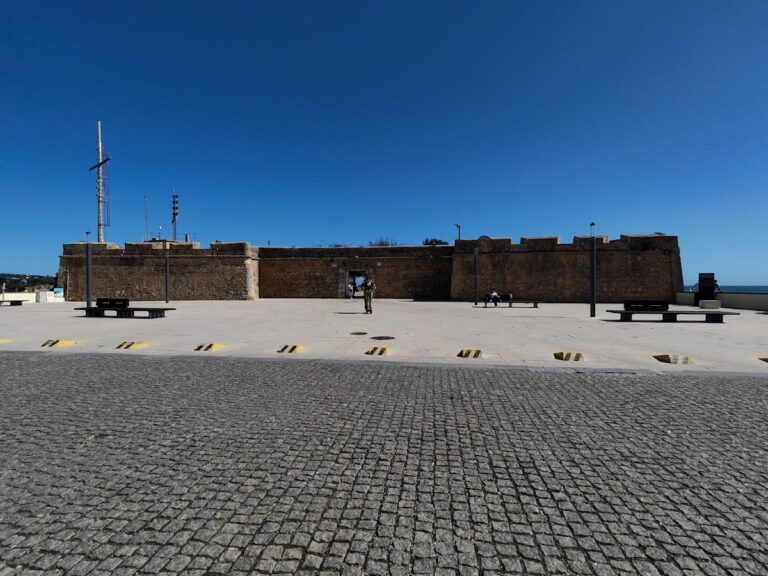
During the 1950s, the Directorate General for National Buildings and Monuments undertook extensive restoration connected with centenary celebrations for Henry the Navigator. The work rebuilt structures attached to the old walls and ramparts, reconstructed the Governors’ Palace and sections of the walls, and created Discovery Avenue on a filled strip between the city and the sea, enlarging the protected area associated with the defenses. Further conservation took place in the 1980s and in the 2010s under Lagos municipal authorities. In 2001, the Baluarte of Porta Vila was reclassified as an astronomical observatory. The Portuguese Republic owns the defensive complex, commonly called the Castle of Lagos, although the name primarily identifies the Governors’ Castle, while the surviving walls and bastions are known as the Walls of Lagos.
Remains
The surviving defensive complex follows an irregular, incomplete pentagonal plan and originally enclosed the whole city. The medieval enclosure surrounded the settlement that developed around the Church of Santa Maria do Castelo, on the right bank of the Ribeira de Bensafrim. Its later defenses were adapted for firearm artillery and incorporated walls, bastions, towers, a second line of walls, and the Governors’ Palace.
Fortifications and towers
Walls and bastions
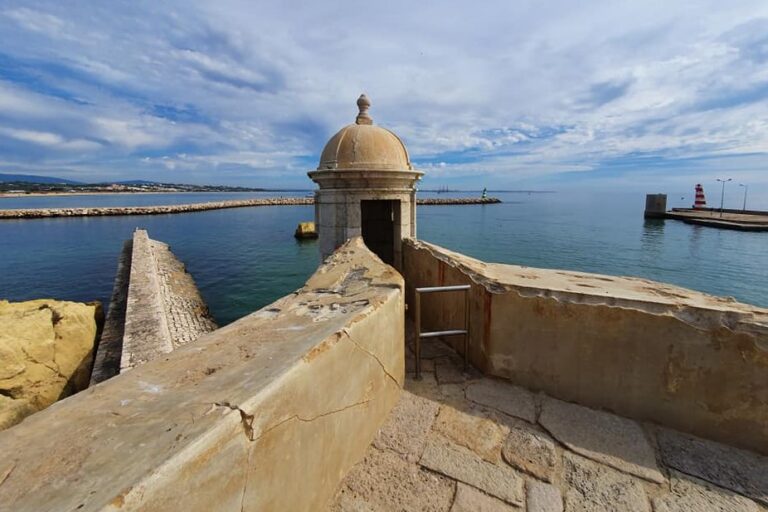
The city enclosure formed Lagos’s principal defensive system. Its artillery defenses included the Santa Maria, Alcaria, and São Francisco bastions. The bastions projected from the walls to support firearms and provide flanking fire along the enclosed perimeter. A second line of walls was added as the city expanded, while the large pentagonal fortified scheme south of the city was planned with five corner bastions.
Defensive towers
Four named towers formed part of the later defensive arrangement: the Praça de Armas Tower, the Conception Tower, the Porta Room Tower, and the Santo Amaro Tower. Together with the bastions and wall lines, they belonged to a system repeatedly strengthened as Lagos faced artillery warfare and the threat of attacks from the sea.
Castle and civic structures
Governors’ Castle and Palace
The first castle-like fortification probably developed from the Islamic citadel. In the later complex, the Governors’ Castle was the principal fortress identified by the name Castelo de Lagos. Construction of the Governors’ Palace began after the reform of Lagos’s Foral Charter in the early sixteenth century. The 1755 earthquake and tsunami destroyed the castle, and part of the surviving structure was subsequently used as a hospital. Twentieth-century restoration reconstructed the Governors’ Palace and buildings attached to the older defenses.
Aqueduct and Discovery Avenue
An aqueduct supplied the fortified city sometime between 1490 and 1521. Discovery Avenue was later created on a filled area between Lagos and the sea, enlarging the protected zone associated with the defensive complex. The Baluarte of Porta Vila, one of the fortified elements, was reclassified as an astronomical observatory in 2001.