Forte da Ponta da Bandeira: A Seventeenth-Century Maritime Fortification in Lagos


Site at a Glance
- Rating
- 4.1
- Popularity
- Low
- Country
- Portugal
- Primary era
- Early Modern
- External website
- Open
- Eras represented
- Early Modern, Modern
- Civilizations
- Portuguese
- Site type
- Military
- Remains
- Fort
On this page6 sections
History
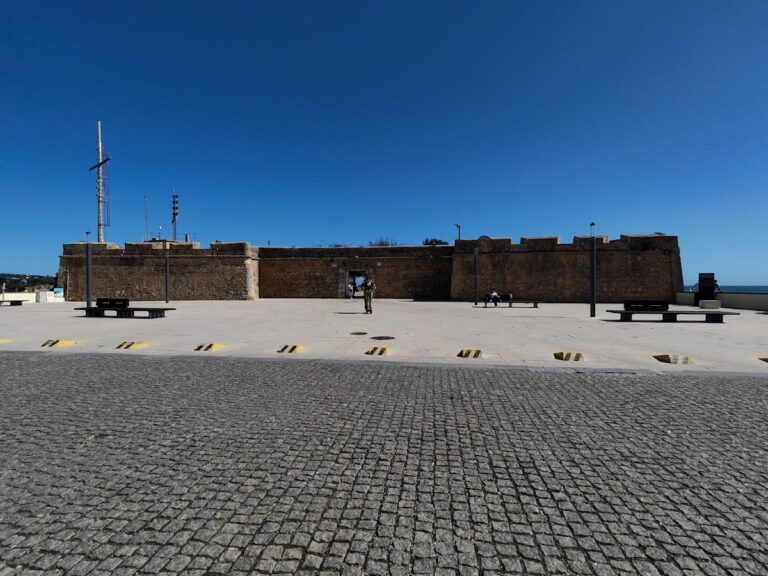
Forte da Ponta da Bandeira is a seventeenth-century Portuguese coastal fortification in Lagos, Portugal, built to defend the city’s maritime approaches. It formed a principal part of Lagos’s defensive system when the city served as the seat of the military government of the Algarve.
Defence after the Restoration War
The fort emerged after the Restoration War, the seventeenth-century conflict in which Portugal fought to reassert its independence from Spain. In the war’s aftermath, pirates and privateers repeatedly threatened the Algarve coast, leading to the creation of a network of maritime defences around Lagos.
Captain Inácio Pereira designed the fort, and construction began around 1680 on the orders of Luís Lopo da Silveira, 2nd Count of Sarzedas and Governor of the Kingdom of the Algarve. Francisco Luís Baltazar da Gama, 6th Count of Vidigueira and 2nd Marquis of Nisa, directed the final phase, completed in 1690. The fort represented the shift toward numerous smaller coastal defences rather than a smaller number of large fortresses, and it reflected several decades of development in Portuguese military architecture.
Damage, military decline, and later use
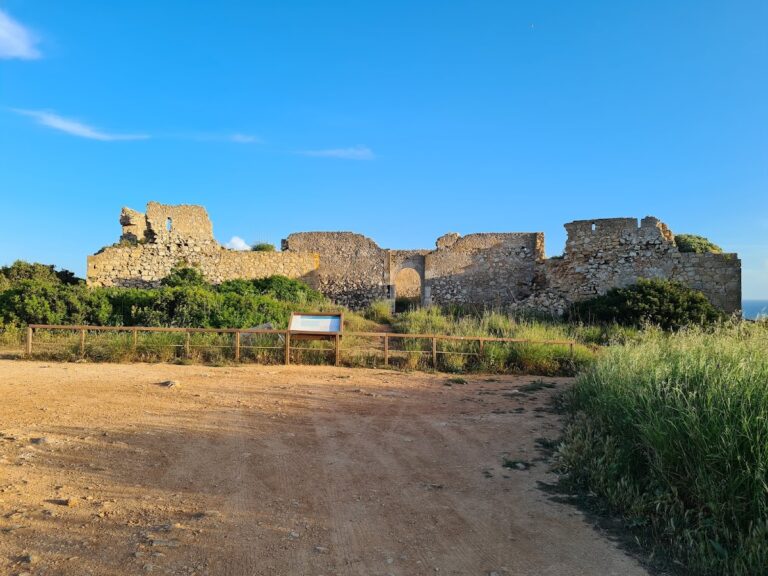
The Lisbon Earthquake of 1755 badly damaged the fort. Restoring Lagos’s sea defences then became a priority because of fears of further raids. By 1769, the force of the ocean was reportedly causing additional damage. The Ministry of War restored the walls in 1826, but the fort’s military effectiveness later declined. It briefly held forty political prisoners in 1828, and by 1842 it was considered unable to defend the bay effectively because it lacked a sufficient garrison and artillery.
Major twentieth-century alterations began in 1956, when the fort was adapted for the naval branch of Mocidade Portuguesa, the state youth organization of Portugal’s Estado Novo authoritarian regime. Extensive maintenance followed in 1970, and the Municipality of Lagos acquired the fort at the end of the 1970s. Subsequent restoration has preserved it as one of the best-preserved seventeenth-century fortifications in the Algarve.
Remains
River mouth and defensive layout
The fort stands where the Bensafrim River meets the Atlantic Ocean, near the walls of Lagos. Its position controlled access to the quays along the riverbanks and covered the southeastern and eastern sides of the city walls. Its artillery could also exchange fire with the bastions of Lagos Castle and the city gates. The building has a regular square plan, with especially thick walls toward the ocean, an elevated upper terrace facing the sea, and several gun emplacements. A ramp leads up to the terrace.
A single entrance is reached by a drawbridge, and the fort is partly surrounded by a moat. The moat and drawbridge were built or installed during alterations in 1960. A lighthouse was also mounted on the dock attached to the fort. Above the entrance, a stone coat of arms remains in place, while a stone plaque names the Count of Sarzedas as the initiator of construction and the Marquis of Nisa as the official who completed it.
Several cylindrical sentry-boxes are attached to the fort. These small projecting shelters or lookout structures were added after the original construction. The fort’s strong construction has allowed it to remain relatively intact, while other Algarve fortifications underwent extensive alteration or were destroyed.
Chapel and surviving interior
The chapel appears to date from the fort’s original building period and is dedicated to Saint Barbara. Its interior is completely covered with seventeenth-century tiles. Other rooms now accommodate exhibitions and a restaurant, while the chapel remains part of the preserved complex.