Château du Muguet: A Neo-Louis XIII Château and Wartime Conference Site in France


Site at a Glance
- Rating
- 3.8
- Popularity
- Very Low
- Country
- France
- Primary era
- Modern
- Eras represented
- Modern
- Civilizations
- French
- Site type
- Domestic
- Remains
- Elite Residence
On this page8 sections
History
Construction and design
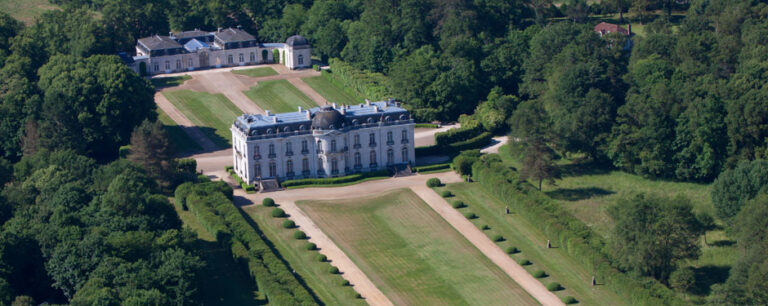
Château du Muguet is a château in Breteau, France, built in 1863 in the Neo-Louis XIII style, a nineteenth-century revival of forms associated with seventeenth-century French architecture. The building was designed by the architect Arthur Froelicher.
The Briare Conference
The château became historically important during the French debacle of June 1940, when German military pressure forced the French government to withdraw to Tours and nearby châteaux. French General Headquarters moved to Briare, and General Maxime Weygand, commander-in-chief of the French Army, established himself at Château du Muguet with his staff.
Paul Reynaud, France’s head of government, chose the château for the Briare Conference, held on 11 and 12 June 1940 at Winston Churchill’s request. The meeting was the penultimate session of the Franco-British Supreme War Council, the senior Anglo-French body responsible for coordinating Allied military policy during the Second World War.
The British delegation included Churchill, then prime minister, Secretary of State for War Anthony Eden, and Generals Spears, Ismay, and Dill. The French participants were Reynaud, Philippe Pétain, the vice-president of the Council, Charles de Gaulle, then Under-Secretary of State for War and National Defence, and Generals Weygand and Alphonse Georges. Georges served as Weygand’s deputy.
Heritage protection
Château du Muguet and its stables have been listed as historic monuments in France since 9 September 1991.
Remains
Buildings and setting
Main château
The château stands west of Breteau in the south-eastern part of the Loiret department, within the Centre-Val de Loire region. It lies near the hamlets of La Clairditière and La Gipauderie, south of the Étang de la Grande Rue. Its architectural character reflects Froelicher’s Neo-Louis XIII design, which revived forms associated with the reign of Louis XIII.
Stables
The château’s stables form part of the same historic complex and are included in the historic-monument listing. They complement the principal building as a documented architectural element of the estate.