Château de Jovelle: A Ruined Fortified Castle in France


Site at a Glance
- Rating
- 3.4
- Popularity
- Very Low
- Country
- France
- Primary era
- Medieval
- Eras represented
- Medieval, Early Modern
- Civilizations
- French
- Site type
- Military
- Remains
- Castle
On this page8 sections
History
Château de Jovelle is a ruined fortified castle in La Tour-Blanche-Cercles, France, built between the thirteenth and fourteenth centuries and developed through the seventeenth century. Its history includes associations with the Hundred Years’ War, a prolonged series of conflicts between the English and French crowns from the fourteenth into the fifteenth century.
The castle during the Hundred Years’ War
During the fourteenth century, Château de Jovelle may have provided lodging for Edward of Woodstock, known as the Black Prince, the eldest son of the English king Edward III and a prominent military commander. In the following century, the castle served for several months as the headquarters of Charles VII, king of France from 1422 to 1461 during the later phase of the conflict.
Seventeenth-century changes
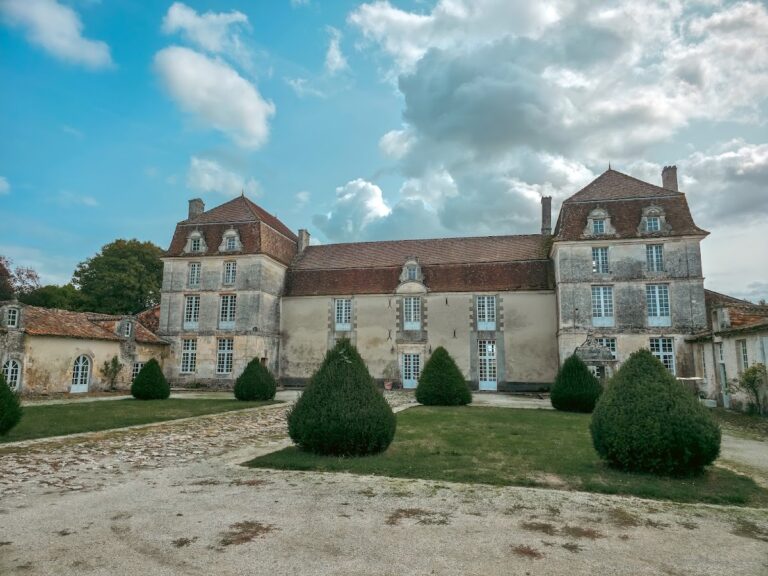
The residential building was remodeled in the seventeenth century, continuing the long development of the fortified complex. A well in the courtyard also dates from this period.
Revolutionary destruction and protection
During the French Revolution, a substantial part of the castle walls was destroyed. The surviving ruins were listed as a historic monument on 24 June 1948. Vegetation partly obscures the remains.
Remains
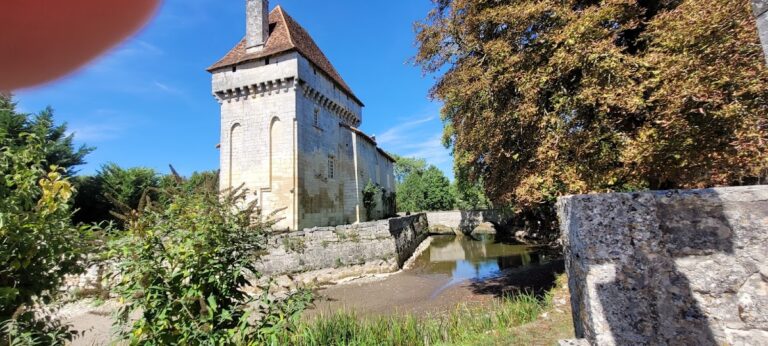
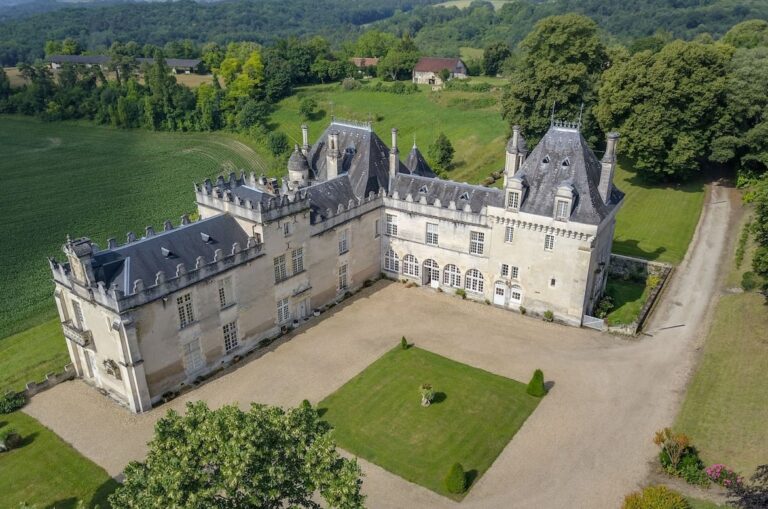
Château de Jovelle was arranged as a fortified complex enclosed by walls and entered through a châtelet, a fortified entrance structure controlling access to a castle. The complex included a residential building, a chapel, a keep, and towers. Surviving wall sections chiefly surround the courtyard on its southern side, while the eastern part remains the least deteriorated.
Eastern complex
Romanesque chapel
The eastern section contains a Romanesque chapel, built in the medieval style that preceded Gothic architecture in western Europe. Its eastern end includes an arrow slit, a narrow opening through which weapons could be used, and a Gothic twin-light window divided into two narrow openings by a central vertical element. A defensive chamber forms part of the chapel.
Courtyard well
A seventeenth-century well survives in the courtyard, linking the later residential remodeling of the castle with the physical remains of its enclosed interior.