Ruine Benzenberg: Medieval Castle Seat of the Counts of Rohrdorf


Site at a Glance
- Rating
- 4.4
- Popularity
- Very Low
- Country
- Germany
- Primary era
- Medieval
- Eras represented
- Medieval
- Civilizations
- Holy Roman Empire
- Site type
- Military
- Remains
- Castle
On this page7 sections
History
The Counts of Rohrdorf
Ruine Benzenberg, also called Benzenburg, is a ruined medieval castle in Germany, near Rohrdorf in the city of Meßkirch. It served as the seat of the Counts of Rohrdorf from 1060 to 1210. This high-noble family based its power on landownership and lordship around the northern Lake Constance basin, with holdings around Meßkirch, Upper Swabia, the Madach, Hegau, and Linzgau. Meersburg was also held by the family as a fief.
The Counts of Rohrdorf were early holders of the Meßkirch lordship. They are said to have built the first Rhine bridge at Constance and made substantial donations to the monasteries of Zwiefalten and Salem. At Salem, they established a burial chapel in the minster. Blessed Eberhard of Rohrdorf later became one of Salem’s most important abbots and advised both an emperor and the pope.
Successors and Abandonment
The Rohrdorf line ended with Count Mangold III in 1210. Its successors were the Truchsesses of Rohrdorf, a collateral branch of the Truchsesses of Waldburg. The Truchsesses belonged to a noble lineage whose title originally referred to a high-ranking court official responsible for household and ceremonial duties. Under their rule, Meßkirch received town rights around 1260.
Around 1300, the Truchsesses left their residence on the Benzenberg and moved to Meßkirch, where the present castle stands. The castle attributed to Count Mangold of Rohrdorf later belonged to the Counts of Neiffen in 1210 and to the Lords of Zimmern by the middle of the fourteenth century. Around 1400, it was dismantled for building material during the rebuilding of Meßkirch Castle under Johannes von Zimmern. The remaining ruins then decayed, although foundations were still preserved in 1846.
Early Occupation and Fortification
The Zimmerische Chronik, a sixteenth-century chronicle of the Zimmern noble family and its historical surroundings, describes Benzenberg Castle as unfortified in the eleventh century, during the time of Count Mangold of Rohrdorf. The substantial fortifications visible today are therefore considered unlikely to have been built before around 1200. Ceramic finds assigned to older Albware, an archaeological pottery group from the Swabian Alb and nearby regions, show that the site was already in use between about 1050 and 1150. This early occupation places Benzenberg among the earliest castle sites in the Alb–Lake Constance region.
Remains
Setting and Layout
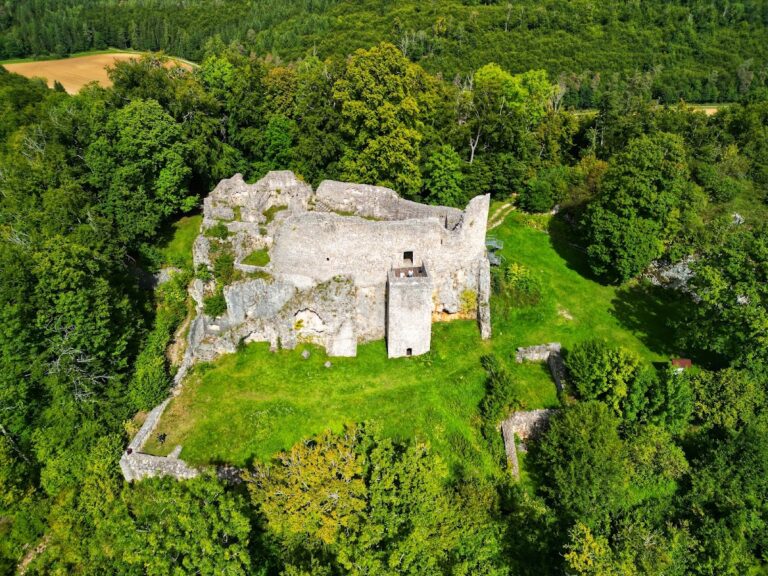
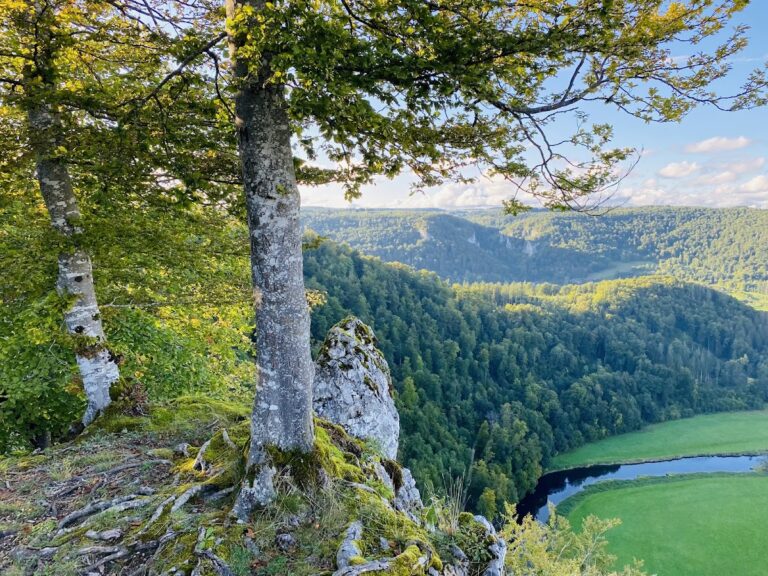
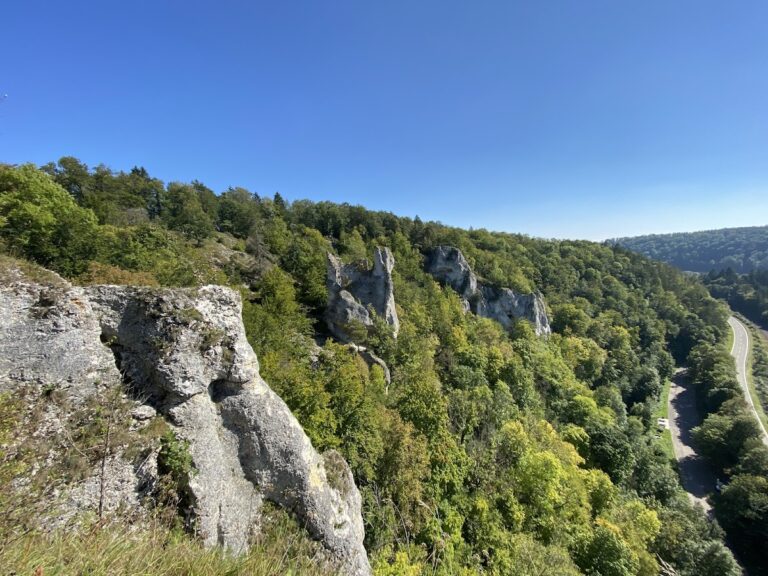
The ruin occupies the Altes Schloss area on the Benzenberg at Rohrdorf, now a district of Meßkirch in the district of Sigmaringen, Baden-Württemberg. The castle stood on a steep, westward-projecting mountain spur at approximately 670 metres above sea level. Steep rocks on both sides create a narrow passage beside the road toward Kreenheinstetten. The high-altitude rock castle covered about 1,100 square metres and measured approximately 65 by 20 metres. It was built in rubble stone, and the surviving complex is now preserved as a ruin.
Surviving Structures
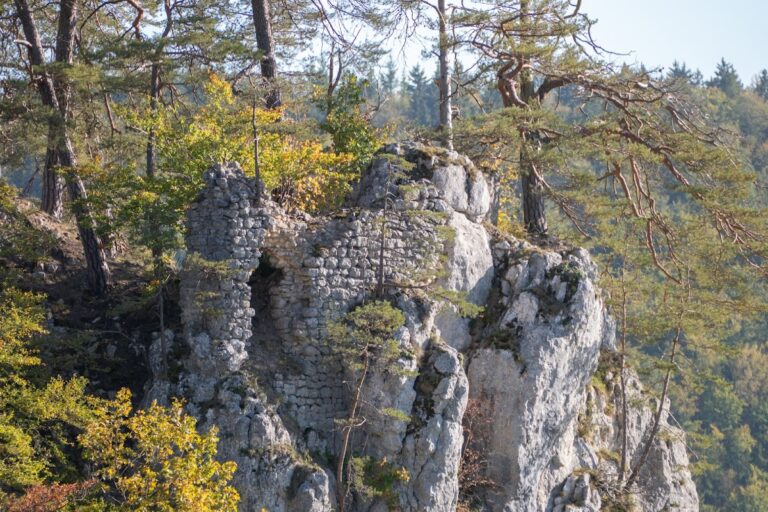
The clearest masonry remnant is a restored retaining wall about 25 metres long and 5 metres high. Changes in the terrain still mark the scale of the former complex, including a rubble mound produced by the former residential building. In the southwestern part of the site, a surviving building remnant measures approximately 9 by 9 metres. Together with the ceramic finds dated to about 1050–1150, these remains provide physical evidence for the castle’s early occupation and its later substantial construction.