Castell de Gironella: Medieval Castle in Catalonia


Site at a Glance
- Rating
- 4.8
- Popularity
- Very Low
- Country
- Spain
- Primary era
- Medieval
- Eras represented
- Medieval
- Civilizations
- Crown of Aragon
- Site type
- Military
- Remains
- Castle
On this page5 sections
History
Castell de Gironella is a medieval castle in Gironella, Spain, constructed over a broad period from the ninth to the twelfth century. Built above the Llobregat River, it occupied a strategic position overlooking the Llobregat Valley and the Casserres plain. The castle and the territorial jurisdiction attached to it are documented in 1253, indicating its established role within the medieval landscape of the area.
Archaeological prospection in the gardens south of the surviving remains recovered medieval and modern pottery. The medieval material dates no earlier than the end of the ninth century, corresponding with the earliest period assigned to the castle’s construction. The site forms part of the Inventory of Catalonia’s Architectural Heritage and has been protected as a Cultural Asset of National Interest since 22 April 1949. This category is Catalonia’s high-level heritage protection for places considered to possess exceptional cultural importance.
Remains
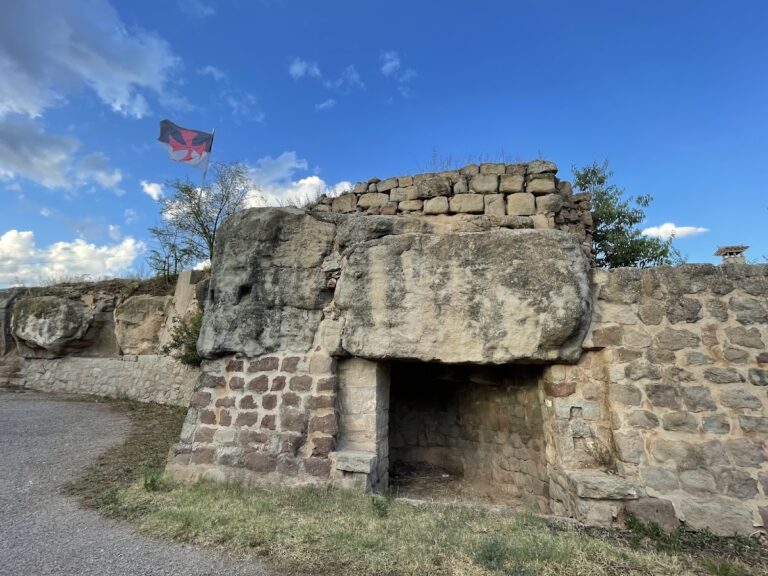
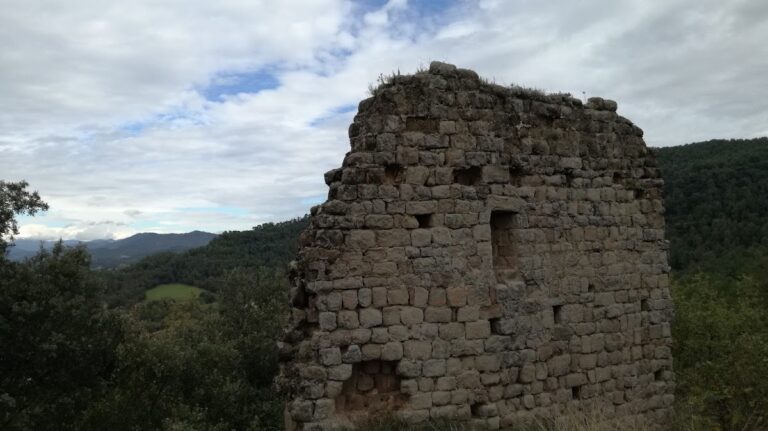
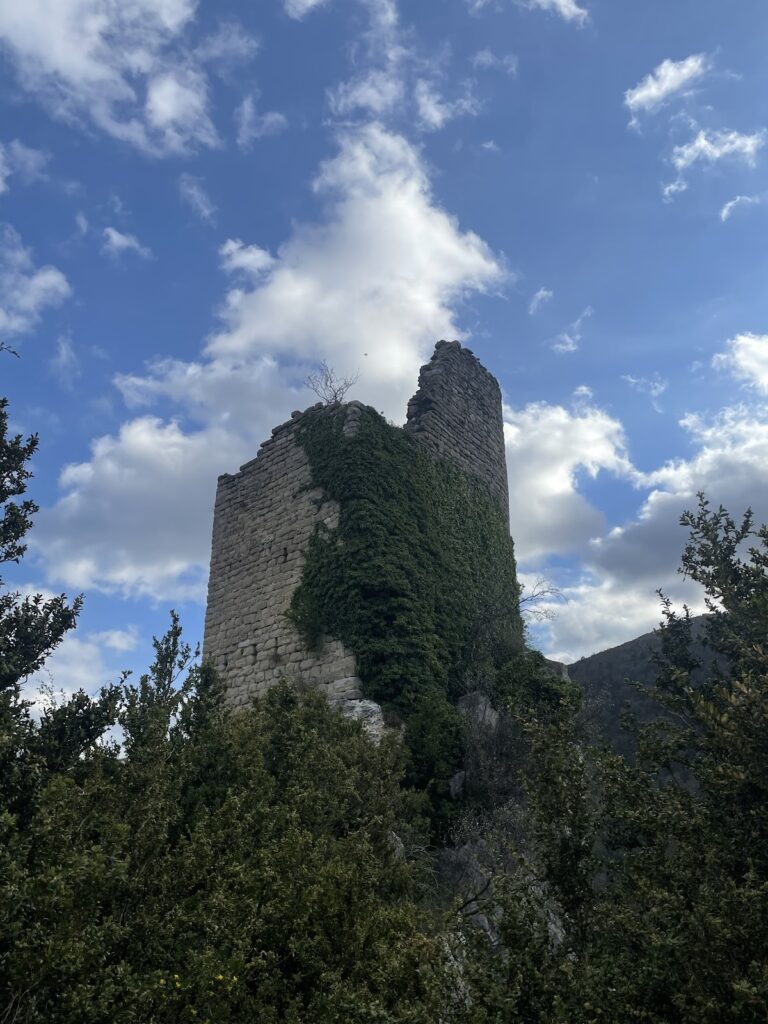
The surviving castle is arranged on a cliff at the upper end of Gironella, where a rocky outcrop separates the old town from the Llobregat River. Its remains are incorporated into the traditional urban centre and into a building popularly known as the “Prison,” beside the town hall. Sloping defensive walls and a square-plan tower form the principal visible elements, while the surviving fabric is in a very precarious condition.
Fortifications and tower
Defensive walls
Part of the wall that supported the former castle above the river remains in place, together with other substantial defensive walls. Their sloping form reflects the fortified character of the site and preserves part of the castle’s relationship with the steep ground below it.
Square tower
A square tower survives among the castle remains and supports a later bell tower. Its incorporation into the urban buildings preserves a visible connection between the medieval fortification and the present historic centre.
Nearby sites