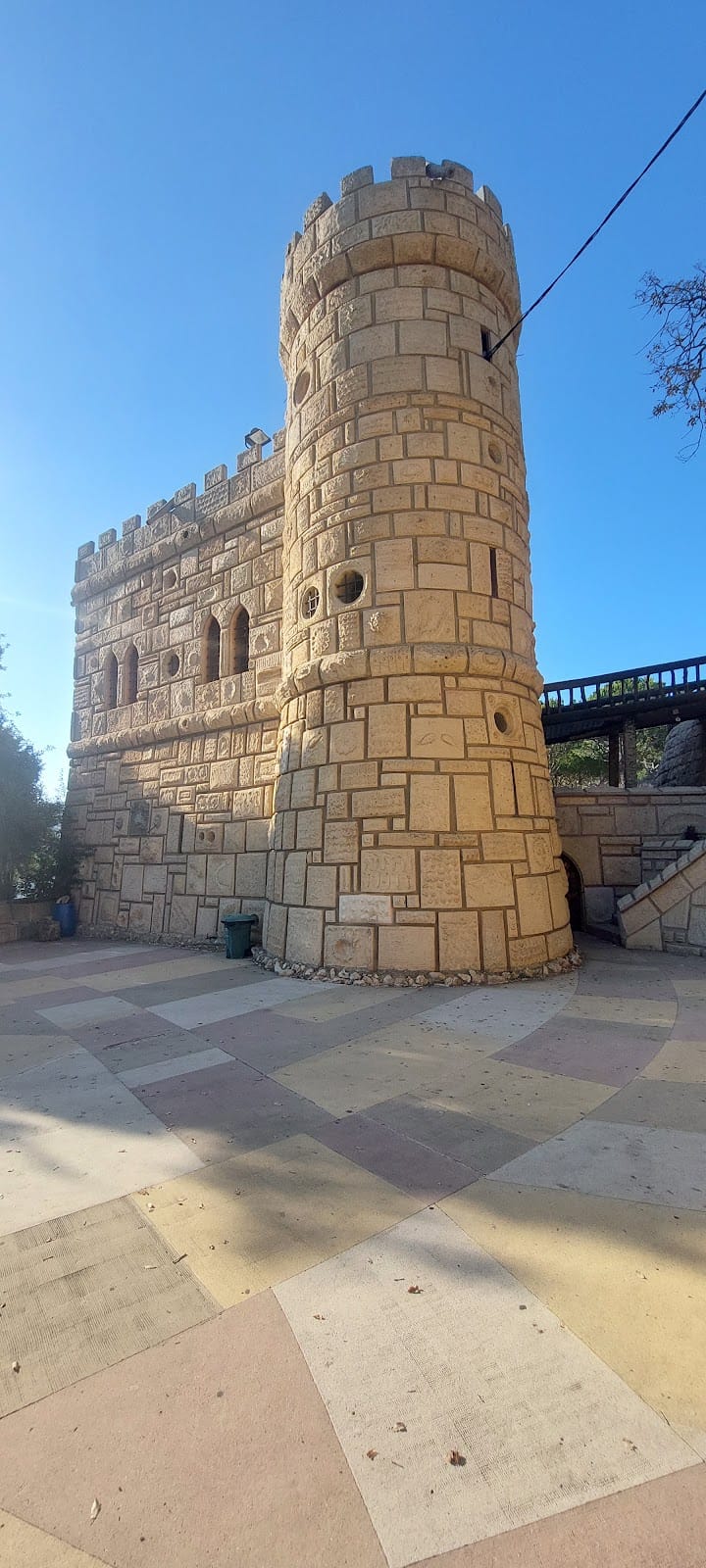
Beirut Castle: A Crusader and Ottoman Coastal Fortress in Lebanon


Site at a Glance
- Rating
- 3.8
- Popularity
- Very Low
- Country
- Lebanon
- Primary era
- Medieval
- Eras represented
- Medieval
- Civilizations
- County of Tripoli, Crusader, Kingdom of Jerusalem
- Site type
- Military
- Remains
- Castle
On this page9 sections
History
Crusader foundation and rebuilding
Beirut Castle was a medieval coastal fortress in Lebanon, in the city of Beirut, associated with the Crusader conquest of the city in 1110. The Crusades were medieval Latin Christian military campaigns in the eastern Mediterranean, and Crusader forces controlled several fortified coastal cities in the Levant. William of Tyre recorded Beirut’s city walls during the conquest, while the castle itself was probably built in 1183–1185 after Saladin’s unsuccessful siege of Beirut in 1183. Its construction was probably ordered under Raymond III of Tripoli, a leading ruler of the Crusader County of Tripoli.
Saladin, the sultan of the Ayyubid dynasty that ruled Egypt and parts of the Levant, captured Beirut in 1187. Crusader forces retook the city in 1197, and in 1198 the castle came under the authority of John of Ibelin, a prominent noble of the Crusader states. John refurbished the fortress, which the medieval cleric and traveler Wilbrand of Oldenburg described in 1212.
Mamluk and Ottoman administration
Mamluk troops captured Beirut from the Crusaders in 1291. The Mamluks were a military ruling dynasty that governed Egypt and much of the Levant from the thirteenth to the early sixteenth century. Their forces partly demolished Beirut’s fortifications. Sultan Barquq later built a new tower on the site in the late fourteenth century.
Beirut Castle later served as a base for Ottoman military garrisons. Its position directly on the Mediterranean made it valuable for surveillance and defense, while its administrators oversaw maintenance, storage, and security. The castle governor held the Ottoman military office known as the dizdar, an officer responsible for commanding and administering a fortress. Several Beirut families successively held the office, including the al-Qutli, al-Jundi Diyeh, al-Qalajji, and al-Manasfi families.
In the eighteenth century, responsibility for the castle was held by Emir Abd al-Salam al-Imad and Sheikh Hussein Talhuq. After events at the castle in 1772 and the establishment of Yusuf Shihab’s authority in Beirut, its military administrators were replaced. Ahmad Pasha al-Jazzar, an Ottoman governor and military commander in the Levant, was appointed among the new officials, followed later by a prominent Beirut official. In the 1770s, al-Jazzar destroyed part of the castle and subsequently rebuilt its tower.
Bombardment, mosque, and port expansion
During the period of Egyptian rule in Beirut, Ibrahim Pasha appointed Abdullah Abu Diyeh governor of Beirut in 1840 and placed him in charge of the castle’s military, commercial, storage, and security affairs. In the same year, during the Egyptian–Ottoman War, a British fleet heavily bombarded the castle. The wider attack was conducted by allied European fleets against Egyptian forces in Lebanon during the rule of Muhammad Ali Pasha, the ruler of Egypt.
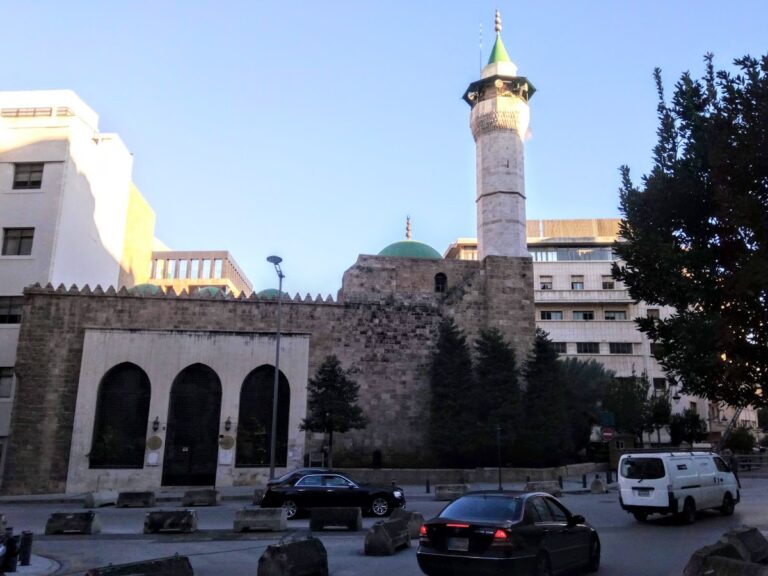
The damaged fortress was rebuilt and converted into a mosque in 1844, during the reign of Sultan Abdulmejid I. The building later became known as the Majidiyya Mosque. By the late nineteenth century, Beirut’s growing trade, including the export of silk, required a modernized and enlarged port. The Municipality of Beirut received Ottoman authorization for the work in 1887, and between 1889 and 1895 the castle structures and the promontories on which they stood were flattened to create a road and railway serving the new port facilities. The route is now Charles Helou Avenue.
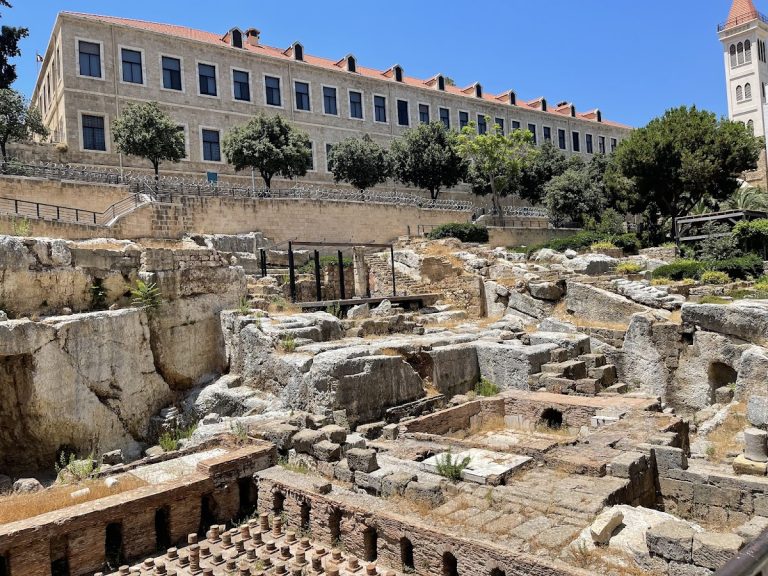
The area below the castle promontory later became Souk Mal al-Qabban, a bulk-trade market for grain, sugar, rice, coffee, and tea. Archaeological excavations conducted in 1995 during development of Beirut’s Central District uncovered the basement remains of the land castle. Beirut Castle is classified among Lebanon’s archaeological buildings within the country’s category of castles, fortresses, and fortifications.
Remains
Coastal fortress complex
Beirut Castle occupied a coastal promontory southeast of the entrance to Beirut’s harbor, in an area formerly known as al-Kharija or Kharija Cemetery Hill. It stood north of the ancient Tell of Beirut, a mound formed by accumulated remains from successive periods of settlement, and west of the present-day intersection of Charles Helou Avenue and Al-Shuhada Street. The medieval complex consisted of a principal land castle and a separate offshore fortification called Burj al-Musallah, or the sea castle.
Land castle
The land castle was protected on its southwestern side by a moat approximately 6 meters wide, which separated the tower from the lower city during the Crusader period. Its lower floor functioned as a warehouse for Beirut merchants operating at the harbor. Timber traders used this space between 1257 and 1260 in the Islamic calendar. The castle also formed an extension of Souk al-Tawila, a named commercial area associated with Beirut’s waterfront.
Sea castle
Burj al-Musallah stood on an islet, a small island, at approximately the later intersection of Charles Helou Avenue and Foch Street. Also called Beirut Sea Tower or the sea castle, it overlooked the Mediterranean and formed one of Beirut’s principal maritime fortifications. The separate offshore position distinguished it from the main fortress on the landward promontory.
Later building layers and archaeological survival
The 1844 mosque was established on the ruins of Beirut Castle, adding a later religious use to the site’s military and commercial history. Subsequent port-extension works demolished the castle’s remaining structures and altered the promontories that supported them. Excavation in 1995 nevertheless revealed parts of the basement of the land castle beneath the developed area, preserving physical evidence of the former fortress complex.