Roman Baths Beirut: A Roman Bath Complex in Lebanon

Site at a Glance
- Rating
- 4.7
- Popularity
- Very Low
- Country
- Lebanon
- Primary era
- Classical
- Eras represented
- Classical
- Civilizations
- Roman
- Site type
- Sanitation
- Remains
- Baths
On this page11 sections
History
Roman Baths Beirut are the remains of a Roman bath complex in Lebanon, built as part of Berytus, the Roman city of Beirut. The first of Berytus’s four major bath complexes was established in the early first century under Augustus, the first Roman emperor, who ruled from 27 BC to AD 14. The baths belonged to an important Roman center in Phoenicia, while the area itself had been occupied as early as the Persian period.
Early development
Ceramics recovered in the area during the 1930s indicate earlier occupation before the Roman complex was established. Herod the Great, the client king of Judaea under Roman authority, built a bath-gymnasium in Berytus. Herod and his descendants were among the benefactors who provided the city with prestigious buildings, linking the development of public architecture to the generosity of powerful patrons.
Imperial expansion
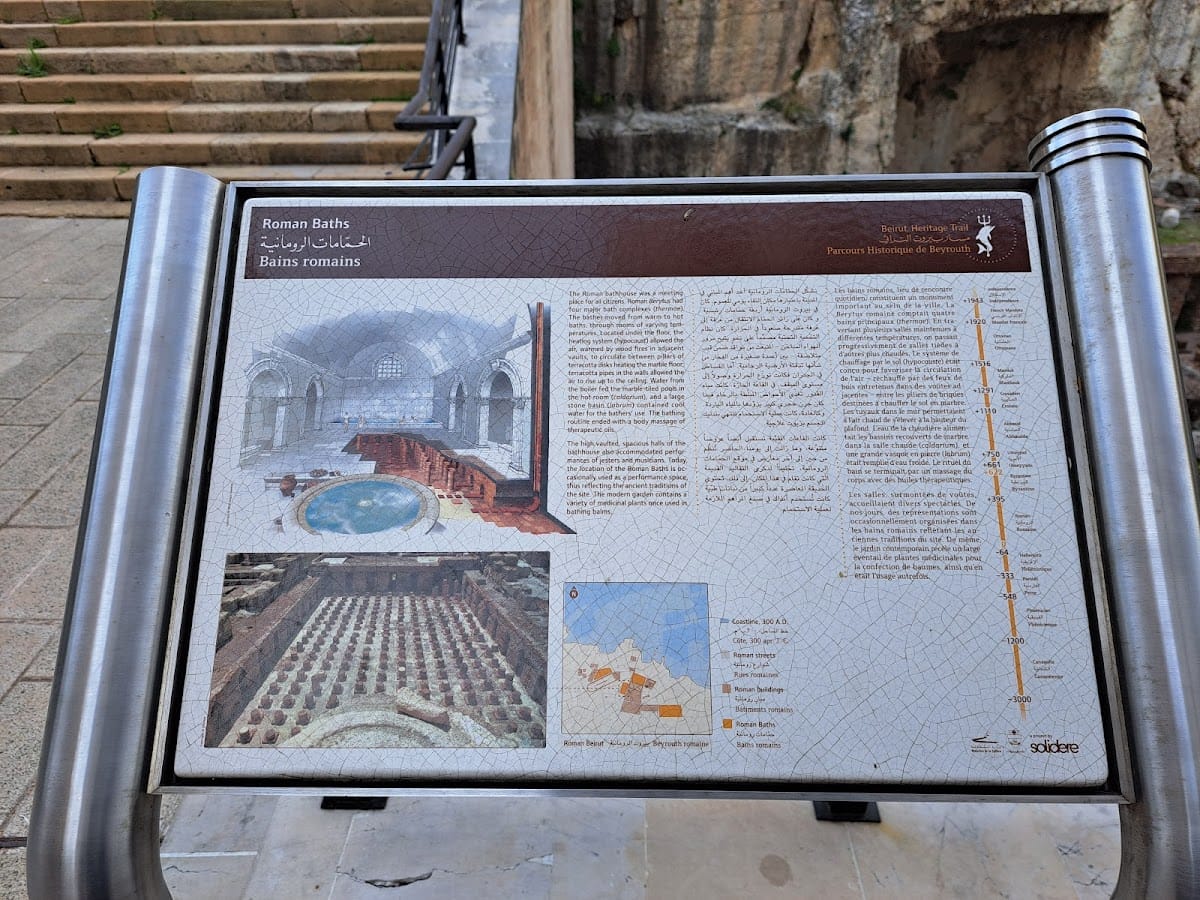
The bath complex was greatly enlarged during the second century and adopted an imperial plan, a monumental layout associated with Roman imperial architecture. The emperor Hadrian, who ruled from AD 117 to 138, probably visited the baths. Their spacious halls served bathing and also accommodated performances by jesters and musicians, giving the complex a public role beyond washing and bodily care.
Berytus later lost imperial favor under Septimius Severus, who ruled from AD 193 to 211, after the city supported Pescennius Niger during the civil war that followed the death of the emperor Pertinax. A basilica near the baths may have been connected with the complex, although the nature of that association remains uncertain.
Restoration, destruction, and later use
The baths were restored during the fifth and sixth centuries. In AD 551, an earthquake accompanied by a tsunami destroyed the thermal buildings and devastated Berytus. Bathing activity nevertheless continued in a bath operating during the Umayyad period, when the Umayyads governed Syria and the wider region. This later use lasted until the ninth century.
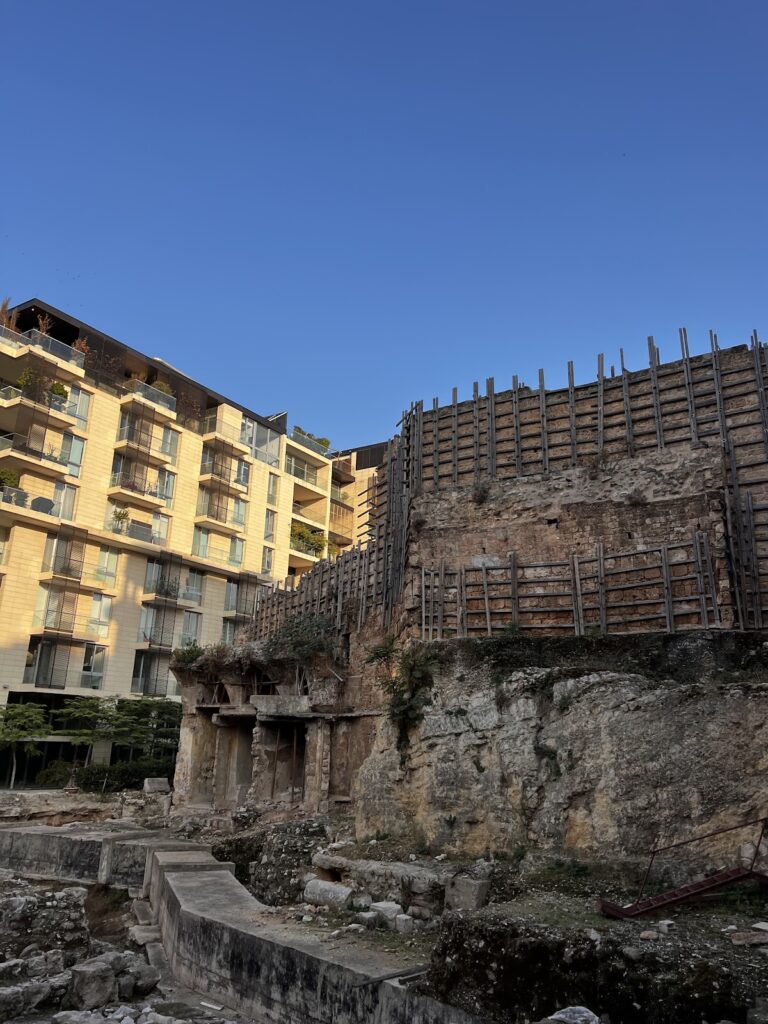
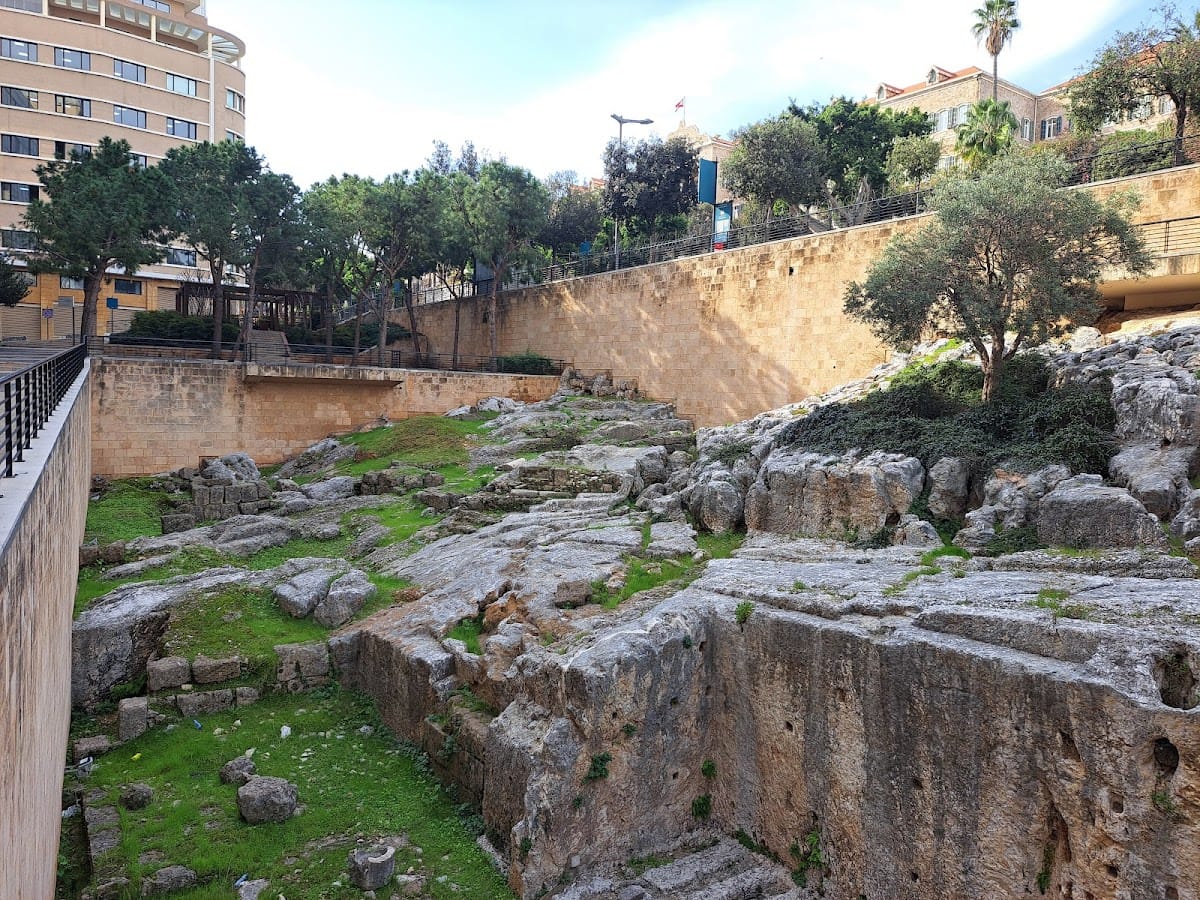
The remains were discovered in 1968–1969 and underwent major renovation in the mid-1990s. Today, one preserved bath is occasionally used for artistic performances and concerts, extending the site’s long connection with public performance. The ruins lie in central Beirut between Banks Street and Capuchin Street, near the Grand Serail and within the modern Garden of Forgiveness.
Remains
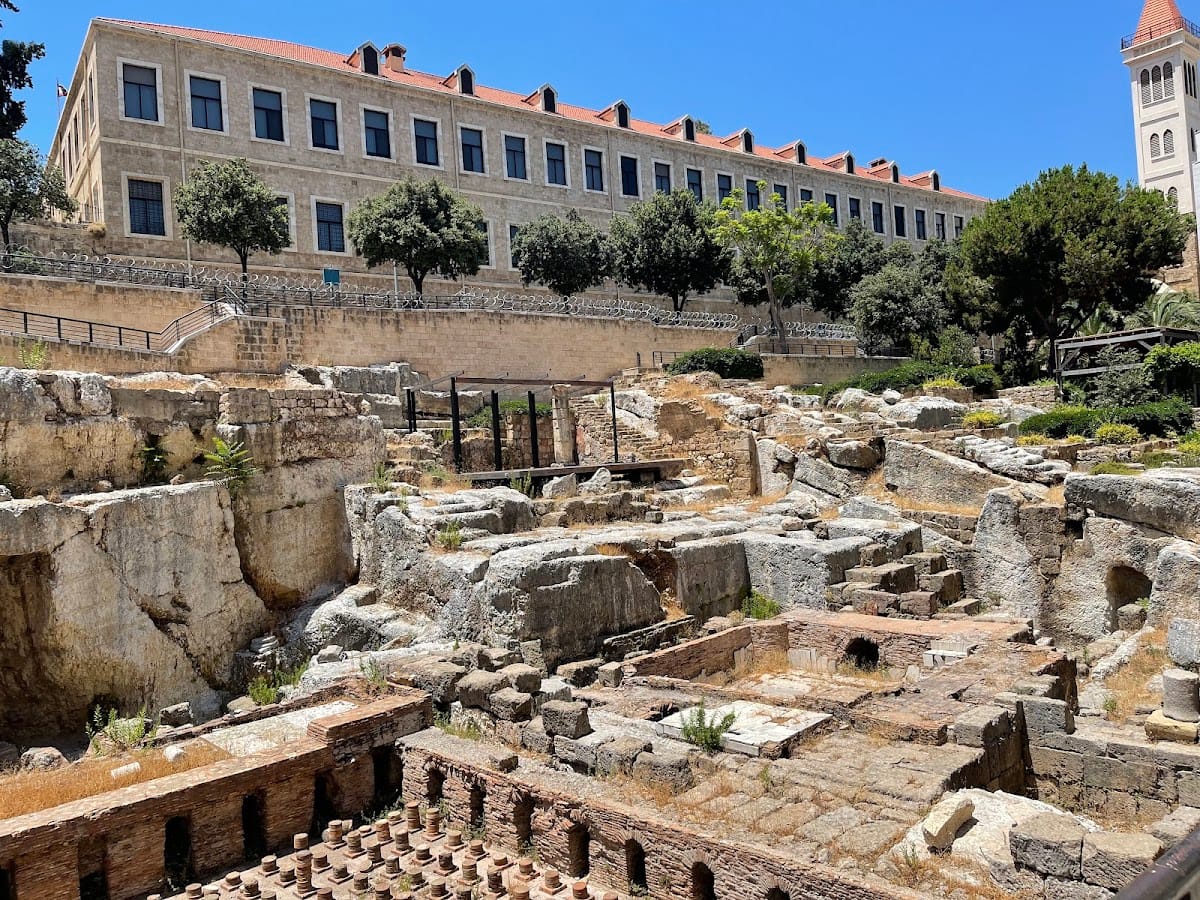
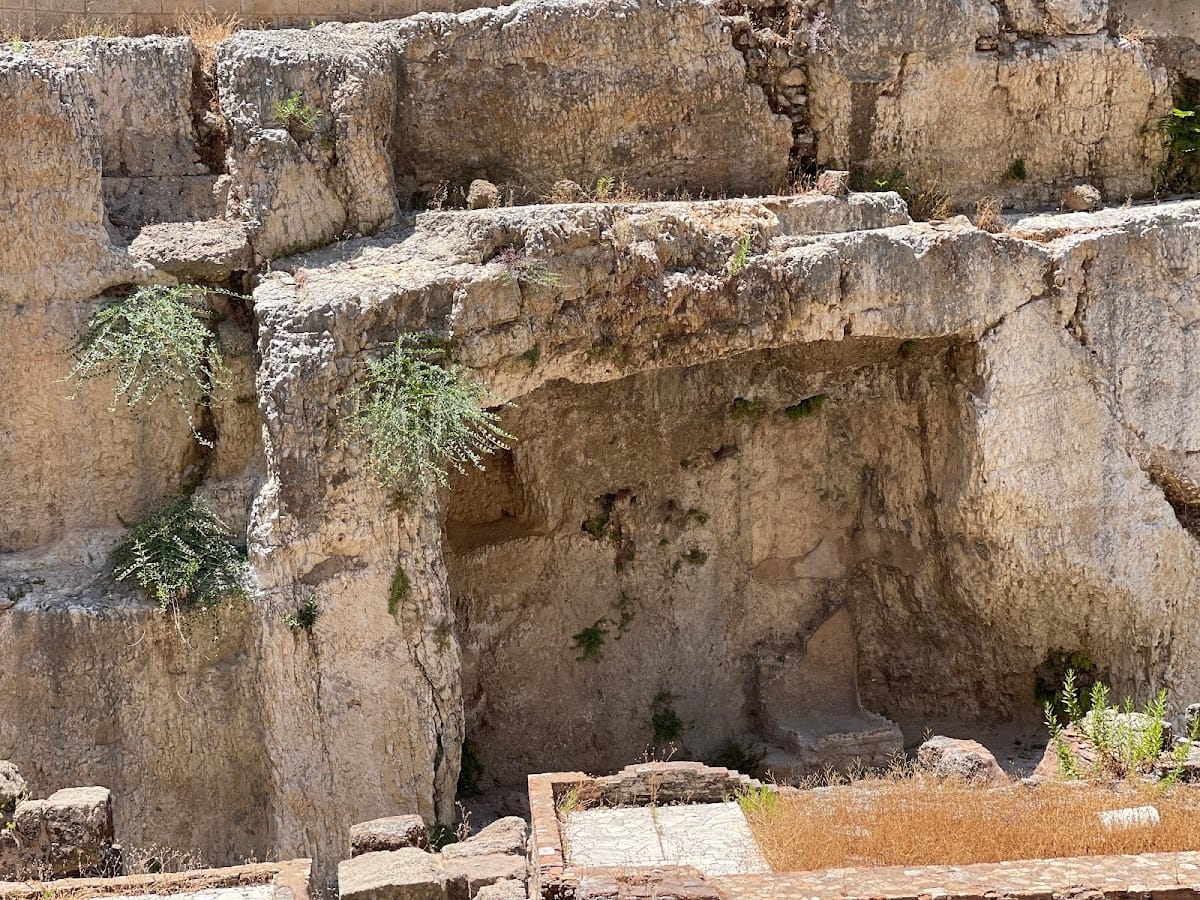
The excavated remains occupy approximately 1,700 square meters on the flank of a hill. At its greatest extent, the bath complex is estimated to have covered about 8,000 square meters. Its surviving layout reflects a Roman bathing sequence organized around four major halls or chambers, where bathers passed from warm rooms to hotter ones maintained at different temperatures.
Water supply and bathing rooms
Water channels and pools
Water reached the bathhouse from external cisterns through a network of lead or terracotta pipes and channels. In the hot room, or caldarium, boiler water supplied pools lined with marble. A large stone basin called a labrum held cool water for bathers. Bathing ended with body massage using therapeutic oils, part of the physical regimen associated with the complex.
Hypocaust heating
The rooms were heated by a hypocaust, an ancient underfloor system that circulated hot air beneath the floor. Wood fires burned in adjacent vaults, sending heated air through rows of supports made from terracotta disks. Terracotta pipes embedded in the walls carried the hot air upward toward the ceiling, while the heated air also warmed the marble flooring above.
Performance halls and present grounds
Vaulted halls
Spacious halls with high vaulted ceilings formed part of the bathhouse and provided room for performances by jesters and musicians. One preserved bath remains within the archaeological ruin and is occasionally adapted for artistic events and concerts.
Gardens
The present grounds include Mediterranean-style gardens planted with medicinal species. These plants recall the use of medicinal ingredients in balms applied during bathing, while the preserved ruin remains the central physical element of the site.