Emir Munzer Mosque: An Ottoman-Era Mosque in Beirut

Site at a Glance
- Rating
- 4.6
- Popularity
- Very Low
- Country
- Lebanon
- Primary era
- Early Modern
- Eras represented
- Classical, Early Modern
- Civilizations
- Ottoman, Roman
- Site type
- Religious
- Remains
- Mosque
On this page6 sections
History
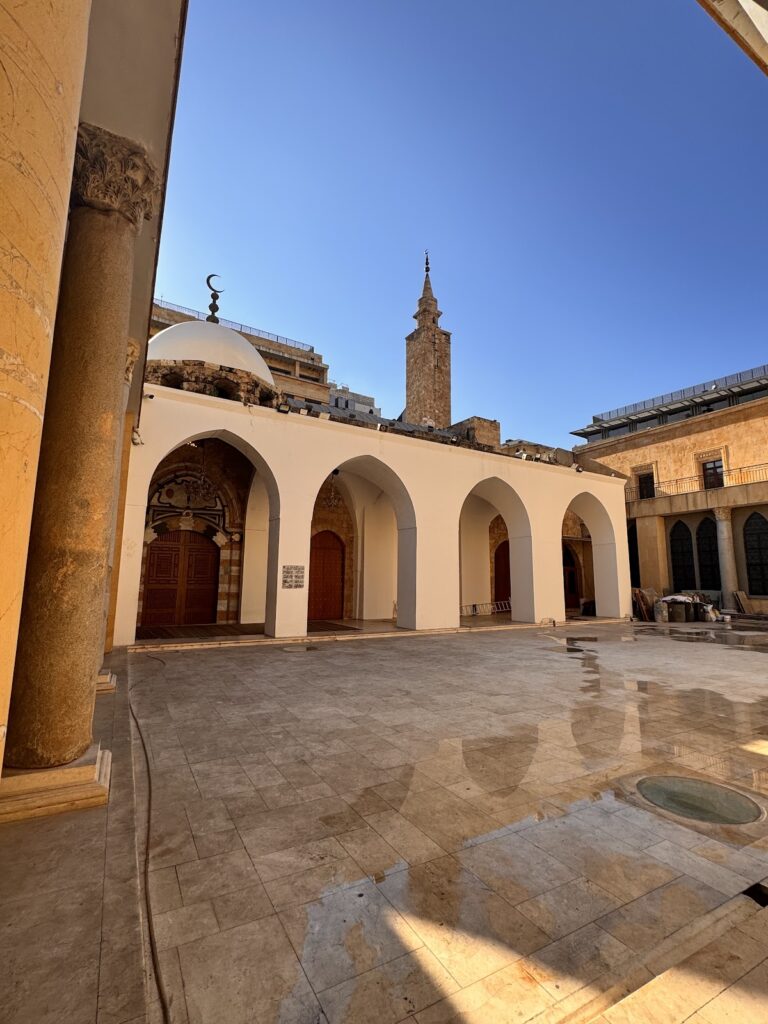
Emir Munzer Mosque is an Ottoman-era mosque in Beirut, Lebanon, constructed most likely in 1620 by Emir Munzer Al-Tannoukhi, a high-ranking ruler who governed Beirut from 1616 to 1633. The Ottoman era was the period when the Ottoman Empire governed much of the eastern Mediterranean, including Beirut. The mosque was built over the remains of a Roman building and remains an active place of Islamic worship. Its alternative name, the Naoufara Mosque, refers to the fountain in its courtyard.
Ottoman Foundation and Shihab Restoration
Emir Munzer established the mosque during his governorship in the early seventeenth century. In 1749, Emir Melhem and Emir Mansour of the Shihab dynasty restored it. The Shihabs were a ruling family whose members held political authority in parts of Lebanon during the Ottoman period. These works form part of the mosque’s later historical development under Ottoman rule.
War Damage and Later Restoration
The mosque was partly damaged during the Lebanese Civil War, a conflict that lasted from 1975 to 1990. It was restored in 2002 and continues to function as a mosque affiliated with Islam.
Remains
Layout and Construction
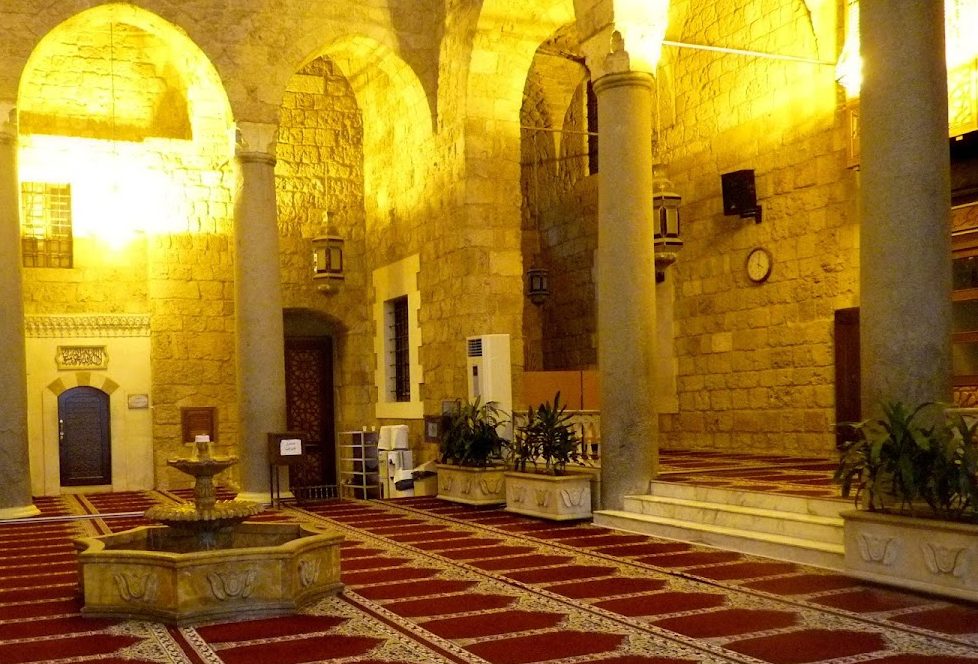
Emir Munzer Mosque stands in Beirut’s central district near Souk Al-Bazarkhan, west of the Omari Mosque and near Bab Idris of Souq al-Tawila, the Long Market. Built using granite, it has a single dome and one minaret. The courtyard contains eight reused Roman granite columns, linking the surviving mosque to the Roman building on which it was constructed. Some Roman columns also remain in the mosque’s vicinity.
Entrances and Courtyard Fountain
The original seventeenth-century entrance is an arched portal opening toward Souk Al-Bazarkhan. A second entrance, formed by three arches, was added after an adjacent building was demolished to create Emir Fakhreddine Street, later renamed Riad Al-Solh Street. A fountain in the courtyard gave the mosque its alternative name, the Naoufara Mosque.