Shagan Castle: A Medieval Shirvan–Absheron Fortress in Azerbaijan


Site at a Glance
- Rating
- 4.5
- Popularity
- Very Low
- Country
- Azerbaijan
- Primary era
- Medieval
- Eras represented
- Medieval
- Civilizations
- Shirvanshah
- Site type
- Military
- Remains
- Castle
On this page6 sections
History
Medieval foundation
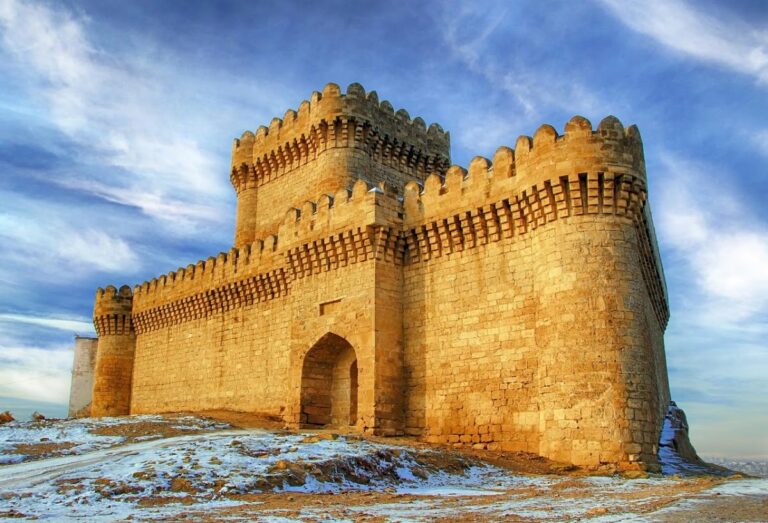
Shagan Castle is a medieval fortress in Azerbaijan, built in the 12th–13th centuries in the settlement of Shagan, in present-day Baku. It belongs to the Shirvan–Absheron architectural school, a regional tradition associated with monumental stone fortifications on Shirvan and the Absheron Peninsula. The castle formed part of the defensive landscape of the Absheron region.
Earthquake, ruins, and restoration
A severe earthquake in 1841 destroyed most of Shagan Castle. The nearby Mashtaga Fortress was completely destroyed in the same disaster. Shagan Castle then remained in ruins for a long period before being restored and strengthened in 2014.
On 2 August 2001, Cabinet of Ministers Decision No. 132 placed Shagan Castle on Azerbaijan’s list of immovable historical and cultural monuments of national importance. That year, it was also included with other Caspian coastal defensive structures on Azerbaijan’s UNESCO World Heritage Tentative List, an inventory for sites that may be considered for future World Heritage nomination. This inclusion did not constitute inscription on the World Heritage List.
Remains
Fortress tower and enclosure
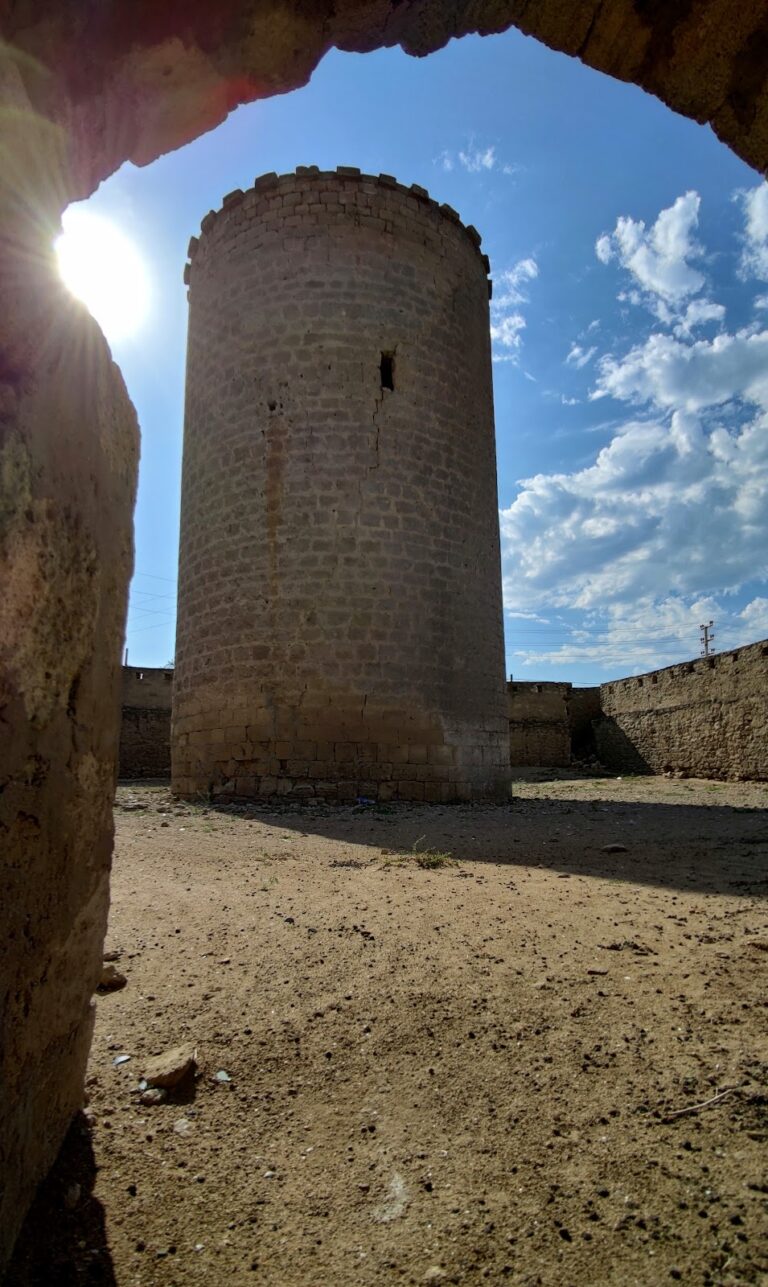
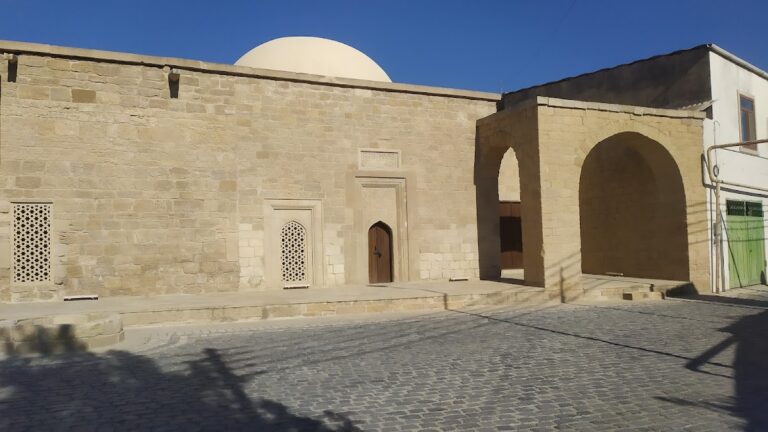
Built of white stone on elevated ground, the castle occupied a position from which the sea coast and the settlement of Mardakan could be observed. Most of the fortress has been destroyed, while its principal surviving feature is a 24-metre-high tower. Repair work in 2014 revealed the foundations of two stone fences and several wells, adding evidence of the castle’s former enclosure and water infrastructure.
Underground roads
The castle also contains underground roads. One passage inside the fortress resembles a well and formerly led toward the castles of Mardakan. These subterranean routes formed part of the site’s concealed circulation and connected Shagan Castle with the wider network of medieval fortifications on the Absheron Peninsula.
Nearby sites