Mosque of Gadzhi Bakhshi: A Seventeenth-Century Sunni Mosque in Nardaran

Site at a Glance
- Rating
- 5
- Popularity
- Very Low
- Country
- Azerbaijan
- Primary era
- Early Modern
- Eras represented
- Early Modern
- Civilizations
- Safavid
- Site type
- Religious
- Remains
- Mosque
On this page5 sections
History
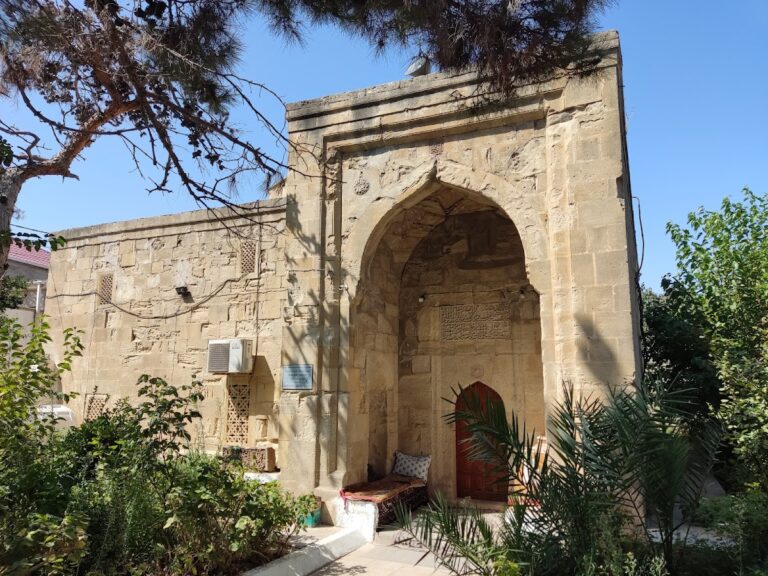
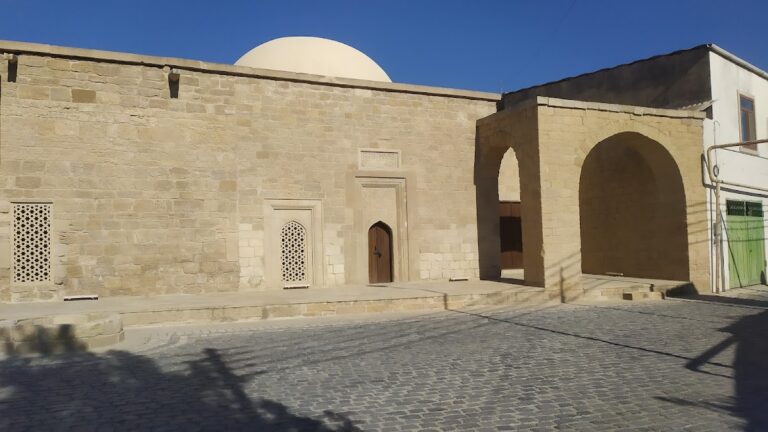
The Mosque of Gadzhi Bakhshi is a seventeenth-century Sunni mosque in Nardaran, Azerbaijan, within Baku’s Sabunchu District. Built in 1663 in the Shirvan-Absheron architectural tradition, a regional style associated with the historical Shirvan and Absheron areas, it remains active and is recognized as a cultural-heritage monument in Azerbaijan.
Construction took place in 1662 and 1663, with the building erected in 1663. An Arabic inscription on the mosque’s wall names Bakhsh-Ali Mirza Mohammed as the construction supervisor and Murad Ali as the architect. The same inscription states that Murad Ali received the rank of master. Its date is given according to the Hijri calendar, the Islamic lunar calendar traditionally used in Muslim historical records.
Remains
Plan and architectural form
Central worship hall
The mosque is organized around a square worship hall with four columns at its center. A dome gives the central hall greater volume, while the other rooms have arched ceilings. The square plan, together with the additional entrance, extends the internal arrangement and gives the building a more elongated appearance.
Entrance portal
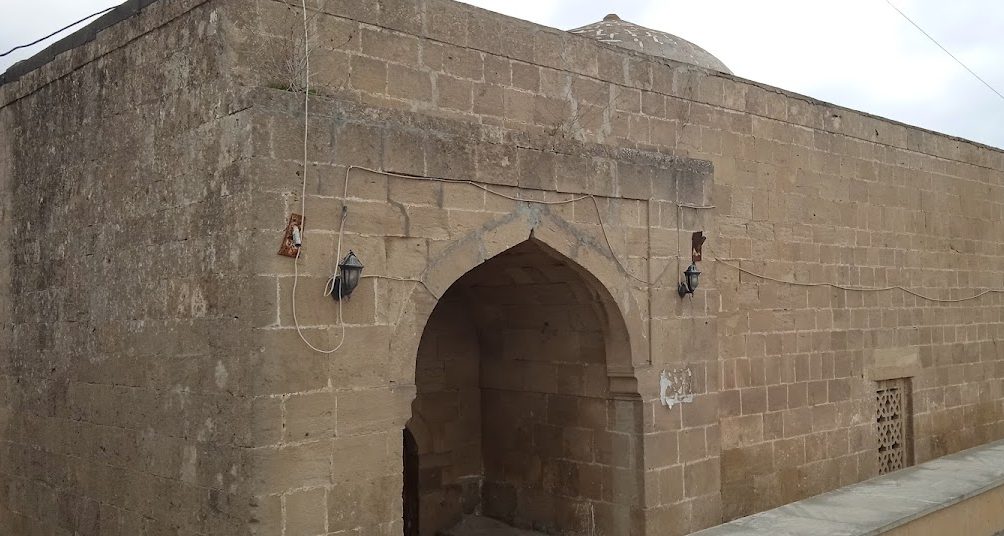
A formal portal, or architectural entrance framing the main body of a building, forms the principal approach to the mosque. A second door was added on the eastern side. The arrangement of these entrances and the manner in which the central hall’s dome is supported on the roof distinguish the building from other mosques in Absheron.
The spatial effect created by the square plan and additional entrance has comparisons in the fifteenth-century Tuba-Shahi Mosque in Mardakan and in a seventeenth-century mosque in Kishli. These parallels place the Mosque of Gadzhi Bakhshi within a wider regional architectural context while retaining its particular entrance arrangement and domed central hall.