Burg Tailfingen: A Medieval Hilltop Castle in Albstadt, Germany


Site at a Glance
- Rating
- 4.4
- Popularity
- Very Low
- Country
- Germany
- Primary era
- Medieval
- External website
- Open
- Eras represented
- Medieval
- Civilizations
- Holy Roman Empire
- Site type
- Military
- Remains
- Castle
On this page4 sections
History
Burg Tailfingen, also known as Tailfinger Schloss, is the remnant of a medieval aristocratic hilltop castle in Albstadt-Tailfingen, Germany. Probably built before 1100 by the Lords of Tailfingen, it occupied the Schlossberg above the settlement. The castle’s Romanesque chapel places part of its construction in the medieval architectural period associated with heavy masonry, rounded arches, and simple geometric forms.
The Lords of Tailfingen were a local noble family whose first appearance in surviving records dates to the fourteenth century, long after the castle was probably established. Their identities and occupation of Burg Tailfingen are otherwise not known in detail. They are thought to have maintained another local castle near St Peter’s Church, while the Schlossberg itself also contained a separate prehistoric hilltop refuge fortification, possibly connected with settlement in the Degerfeld.
Burg Tailfingen was probably abandoned before 1250. By 1403, it had already long ceased to be inhabited, when Count Friedrich V, known as “Mülli,” sold the Schalksburg and Tailfingen to Württemberg. Württemberg was a historical German ruling house and territory that later became part of the modern state of Baden-Württemberg. The sale marked the castle’s final abandonment.
Remains
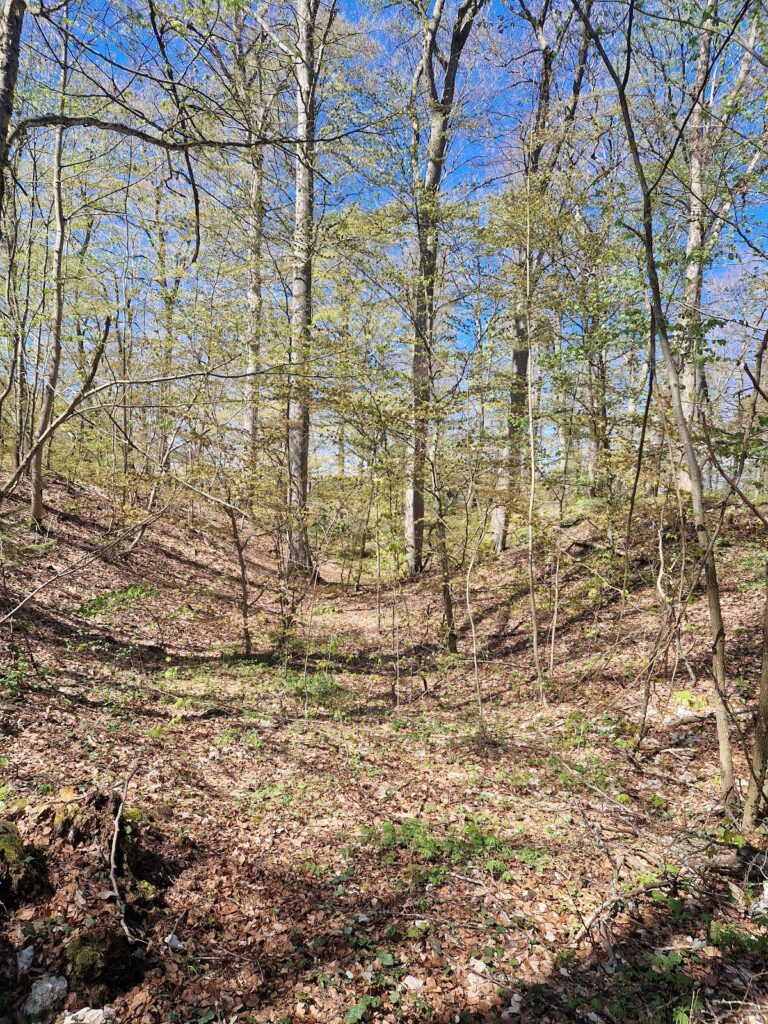
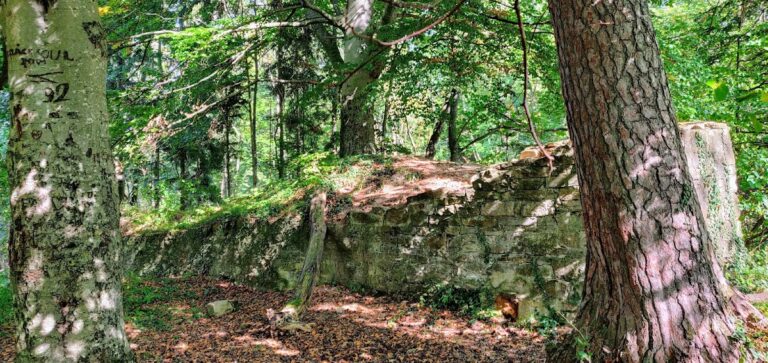
Burg Tailfingen stood on the 937-metre Schlossberg, about 1,000 metres southeast of the Tailfingen district, at the Schlossfelsen. The rock spur drops steeply toward the northwest. On the other sides, a small rampart and ditch enclosed a complex measuring approximately 80 metres in length and 50 metres in width. The castle comprised a central fortified enclosure and an outer bailey, the area beyond the core used for service, residential, or defensive purposes. Small-block masonry was used in its construction.
Fortifications and castle buildings
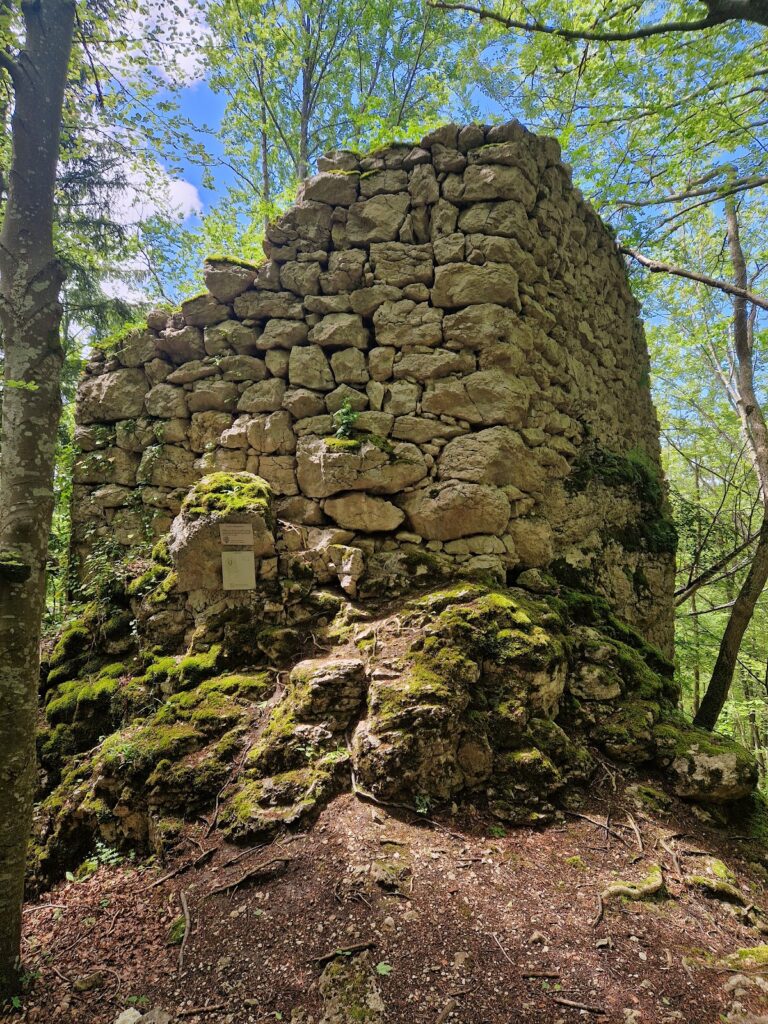
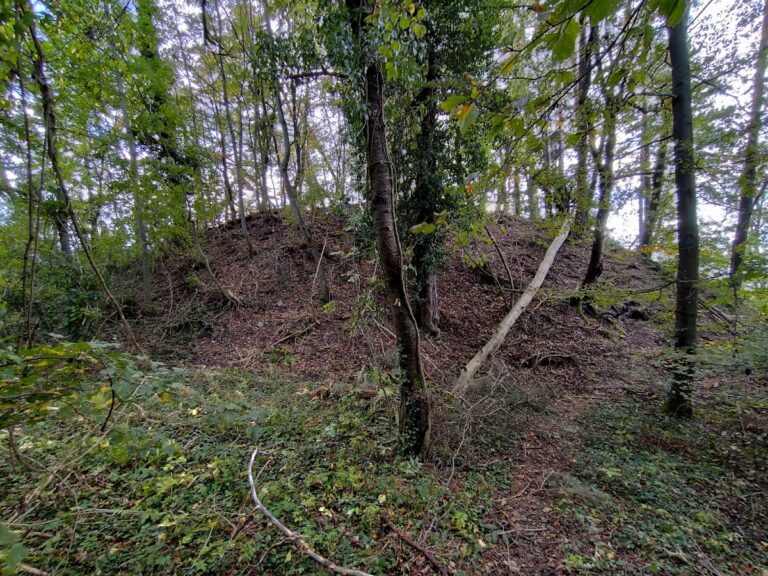
An 1880 description recorded the ruins of a stone building on the rocky corner, measuring 22 by 16 paces, or approximately 7 by 5 metres. A destroyed tower projected from its outermost corner. The forward summit of the Schlossfelsen is considered the probable position of the castle tower. Only slight remains of the medieval complex survive today, including the rampart and ditch.
Romanesque chapel
The core castle included a Romanesque chapel. In 1983, the foundations of its apse were exposed. An apse is the usually rounded or polygonal end of a chapel that marks or encloses the sanctuary. At Burg Tailfingen, the apse lay west of and directly against the tower, revealing part of the relationship between the chapel and the castle’s principal structure.