Burg Vogelfels: An Early Medieval Castle near Albstadt
Site at a Glance
- Rating
- 3.5
- Popularity
- Very Low
- Country
- Germany
- Primary era
- Medieval
- Eras represented
- Medieval
- Civilizations
- Holy Roman Empire
- Site type
- Military
- Remains
- Castle
On this page6 sections
History
Foundation and early abandonment
Burg Vogelfels was a small medieval castle on a narrow rocky spur of Oberer Berg near Albstadt, Germany. It was probably built in the second half of the eleventh century, likely by the Lords of Lautlingen, and was abandoned early, perhaps before the twelfth century. Its end may have come during the Investiture Controversy around 1076, a conflict between the papacy and rulers of the Holy Roman Empire over appointments to church offices.
The Lords of Lautlingen
Eberhardt and Gerold of Lautlingen appear in a 1094 foundation record for St. George’s Monastery, a Benedictine monastery in southwestern Germany. In 1140, Burkard of Lautlingen and Gozbertus of Obernheim, both described as legally free men, witnessed a document at Schwenningen for Gengenbach Monastery, another Benedictine house. The Lords of Lautlingen died out around 1200, and Burg Vogelfels later belonged to the Lords of Tierberg.
Road security and local tradition
The castle may have helped protect a road through Lange Tal, a side valley of Brunnental. The route ran through Hossingen, Unterdigisheim, Kolbingen and Mühlheim an der Donau toward Tuttlingen, with sentries’ sightlines at Mühlheim. In wartime, two wooden ladders at Hossingen could be raised, while barriers linked by hooks could secure Lochen Pass, Dobelsteige, the Rottweiler Way near Tieringen toward Hausen, and Bschorrer Way. A record from 1521 names soldiers and their weapons.
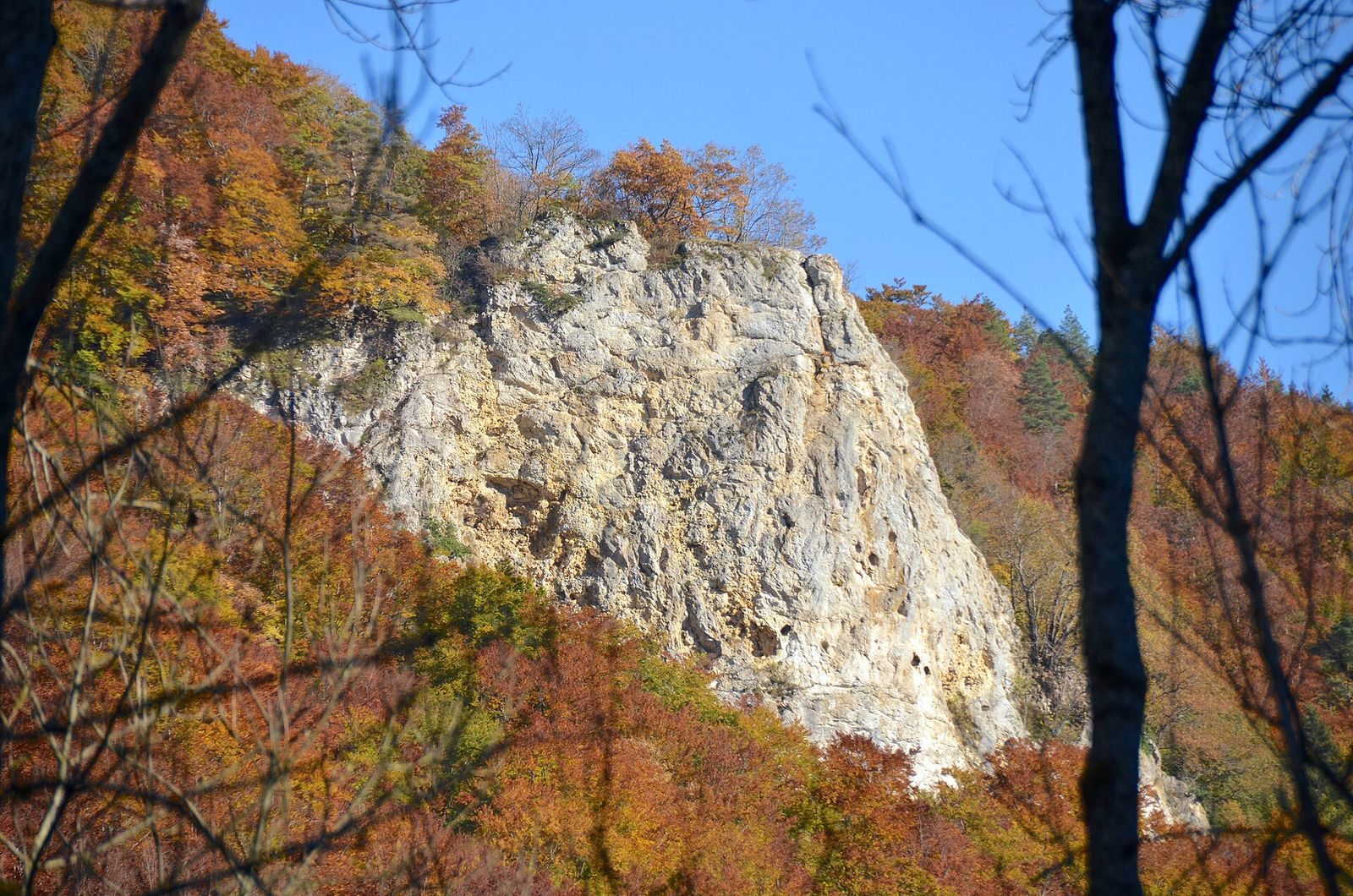
A local legend tells of a shoemaker from Hossingen who faced execution after being accused before the lordship’s court. To prove his innocence, he had to make a pair of shoes high above a precipice without losing any of the material allotted to him. His survival and the flawless shoes were taken as proof that he was innocent. Official maps label a rock pinnacle opposite the castle Schuhmacherfels, while oral tradition places the ordeal on the valley’s right side near Hossinger Leiter. Since 22 August 1991, Großer Vogelfels has been protected as an area natural monument.
Remains
Layout and archaeological evidence
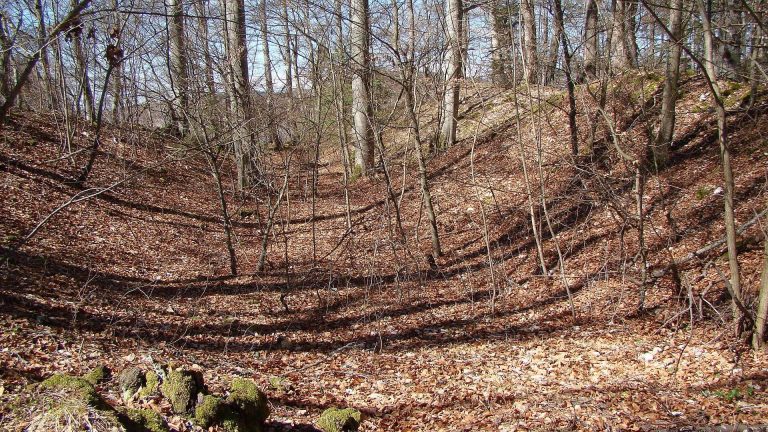
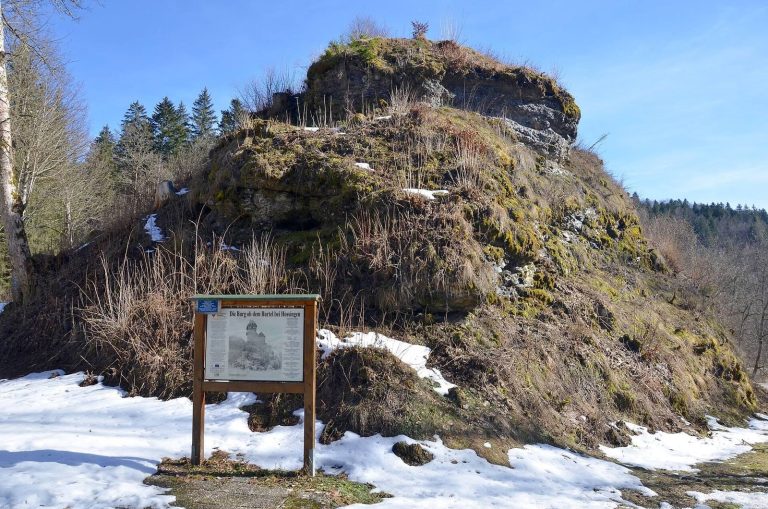
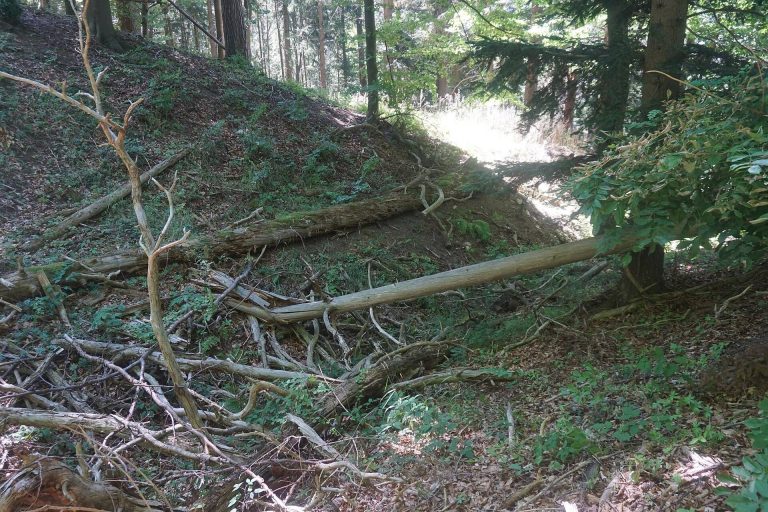
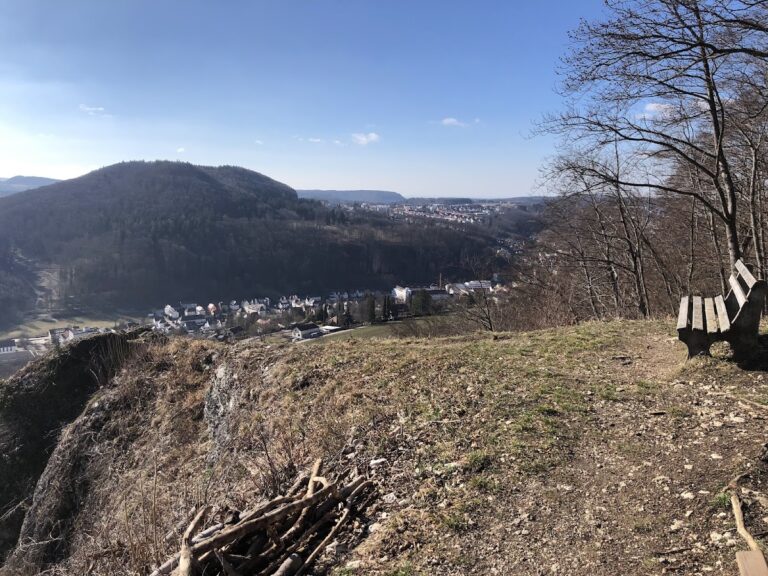
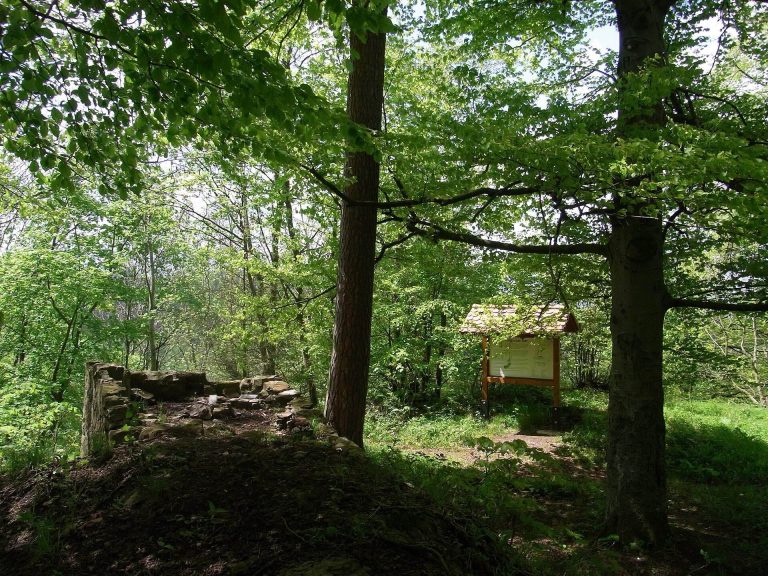
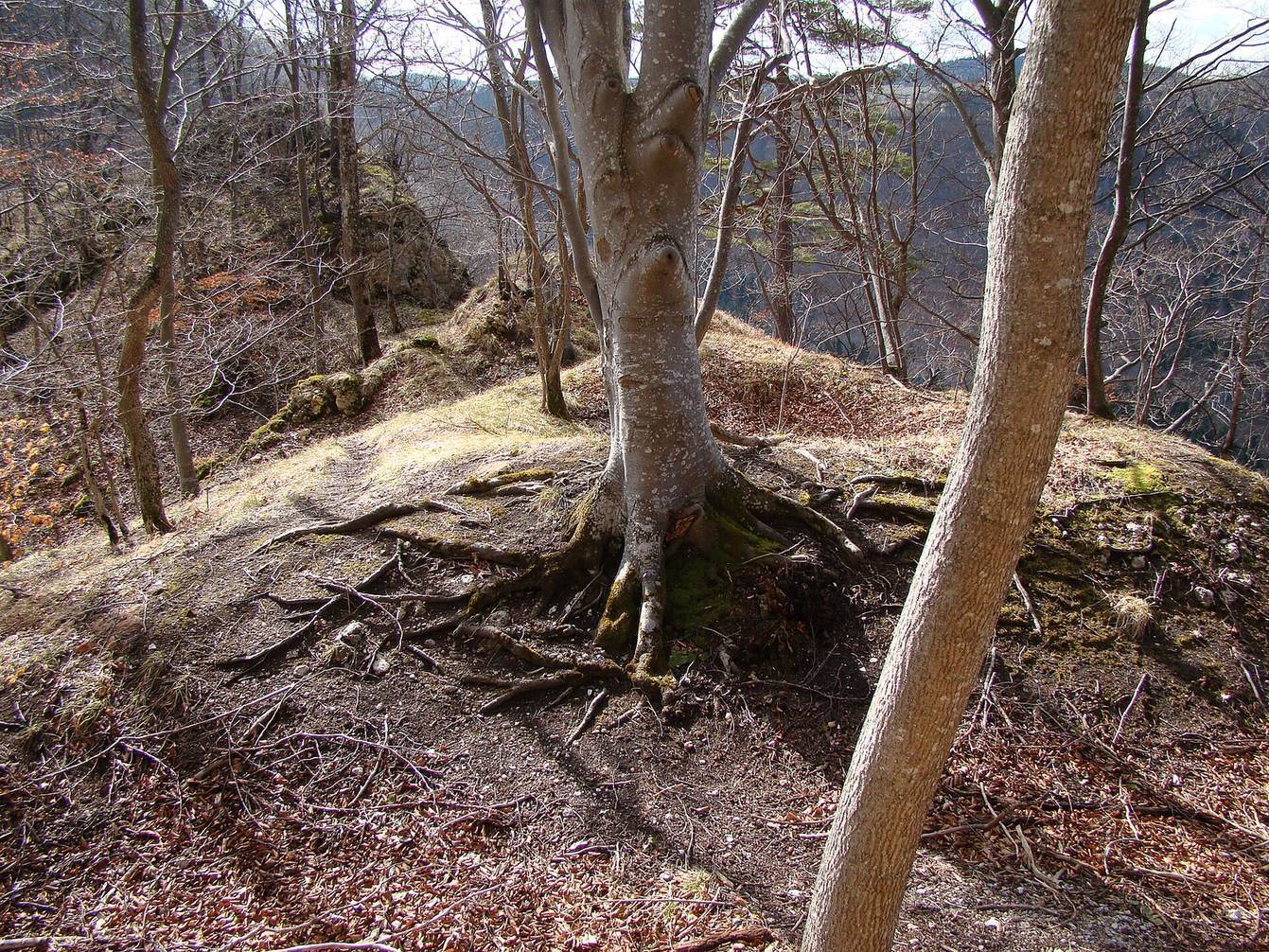
The castle occupied a narrow rocky spur pointing southwest from Oberer Berg, at about 870 metres elevation. The site lies roughly 500 metres southwest of Hof Tierberg and two kilometres southwest of Lautlingen. Three ditches cut across the spur, separating the fortified ground from the surrounding ridge. Inside stood the core castle, possibly including a residential tower. The construction used small, squared stone blocks, but only the ditches survive. Pottery fragments and metal finds, dated by archaeologist Christoph Bizer, support the proposed construction date in the second half of the eleventh century. The castle takes its present name from the rock Großer Vogelfels; its original name is unknown.