Magletsch: An Underground Artillery Fortress in Switzerland

Site at a Glance
- Rating
- 4.4
- Popularity
- Very Low
- Country
- Switzerland
- Primary era
- Modern
- External website
- Open
- Eras represented
- Modern
- Civilizations
- Swiss
- Site type
- Military
- Remains
- Fort
On this page13 sections
History
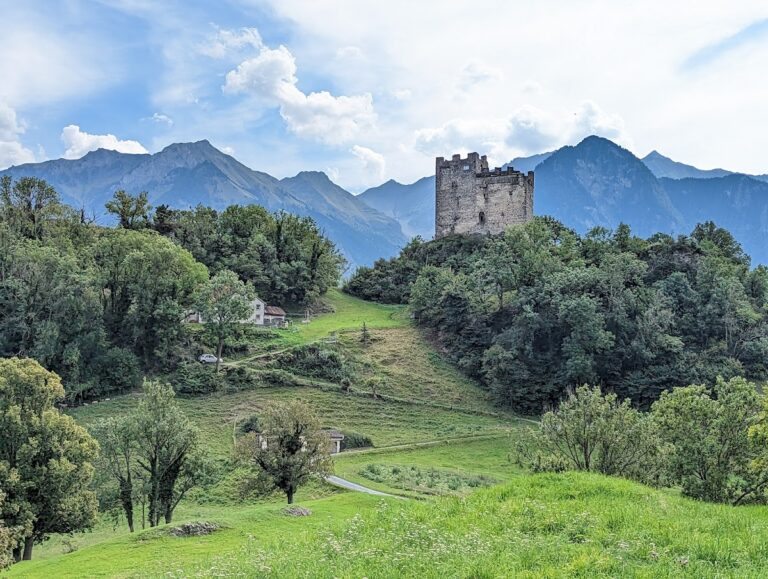
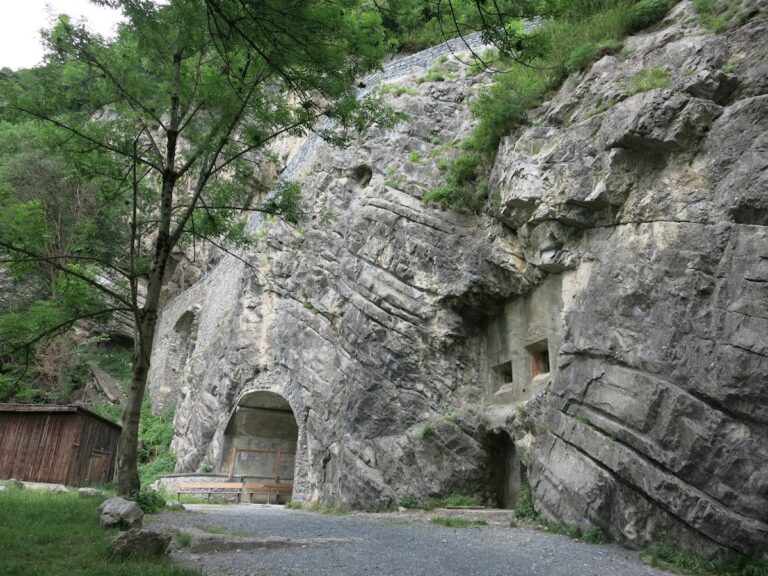
Magletsch is an underground defensive installation in Switzerland, near Gretschins in the municipality of Wartau. Built during the Second World War, it formed the northernmost corner of the Sargans Fortress and became one of the largest and strongest artillery works in the Swiss National Redoubt, a defensive strategy that concentrated fortifications in the Alps and at key approaches. Designated by the Swiss Army as A 6020, “Der Hammer,” the work was equipped with seven guns.
Strategic origins and wartime construction
The military value of the location had been recognized centuries earlier. Around 1225, Wartau Castle was built there, taking advantage of the site’s strategic position. A new underground turret installation near the castle was begun in autumn 1939, at the start of the Second World War. It was ready for firing in September 1940, followed by the East bunker-gun battery in February 1941 and the West battery in July 1941.
Magletsch was planned as a substantial self-contained military complex. Its infrastructure was intended for 381 personnel and was supported by approximately 600 external troops. The artillery’s possible range extended as far as Rankweil in Vorarlberg, placing the installation within a wider defensive system for the Rhine Valley and surrounding approaches.
External defenses
The Plattis Wartau defensive position, designated Army installation 1304, was constructed from October 1939 as the first artificial anti-tank barrier protecting the Sargans Fortress from the north. It blocked the Swiss side of the Rhine Valley between the western valley slope and the Rhine and formed part of Magletsch’s external defenses. Its East battery worked together with the artillery installation.
The combat system at Plattis included an anti-tank obstacle, a tank ditch, an infantry work for anti-tank defense, a flanking bunker, and numerous road barricades. A flanking work is a fortification designed to fire along the side of an obstacle or defensive line, allowing the barrier to be covered from a protected position.
Postwar military use and opening as a museum
During the 1960s, two additional 8.1 cm fortress mortars, model 1956/60 and also designated A 6020, were installed south of the armoured gun turrets. A fortress mortar is a protected short-range artillery weapon that fires high-angle projectiles from a fortified position.
On 14 October 1968, a lateral error during practice firing caused five exercise shells to detonate outside the intended target area over Malbun in Liechtenstein. Fragmentation fell on car parks and hotels, while the main impact area apparently lay on the slope beside the Peace Chapel.
The fortress’s combat functions ended during the 1995 army reform. That same year, a modern underground troop accommodation facility was installed on the ground floor and continued in army use. After decommissioning, the Artillery Fort Magletsch Association leased major combat and infrastructure sections from Switzerland’s Federal Department of Defence, Civil Protection and Sport, the federal department responsible for defence and related civil-protection affairs. Part of the installation has been open as a museum since 1 July 2000.
Remains
Magletsch consists of an underground artillery work connected with external defenses and supporting counterworks, meaning fortifications that cover approaches to a main work. Its tunnel network extends for approximately 4,000 metres through limestone and required concrete lining. The associated defensive landscape includes the Plattis position, several infantry and observation works, exercise installations, shelters, and a natural cave system extending for 421 metres.
Underground fortress infrastructure
Services and internal facilities
The underground infrastructure contained accommodation and catering areas, its own bakery and laundry, and a hospital with 70 beds. Two water reservoirs held a combined 1.6 million litres of drinking water. Electricity was generated by three ship-diesel engines, while two diesel fuel tanks each held 100,000 litres. The main entrance, an anti-aircraft shelter, and a sandstone relief commemorating 650 years of Switzerland, dated 1941, are identified features within the installation.
Armoured turrets and guns
The principal armament comprised three armoured gun turrets, identified as the North, South, and East turrets. Each mounted a 10.5 cm turret gun and an ammunition circulation lift known as a paternoster, a continuously circulating lift that moved shells between storage and the gun turret. Four 7.5 cm bunker guns supplemented the turrets, while ten positions served machine guns and light machine guns. Anti-aircraft guns protected the fortress against enemy aircraft.
Fortress mortars and shelters
South of the armoured turrets is the position for the two 8.1 cm fortress mortars installed in the 1960s. Associated remains include a muzzle cover for an 8.1 cm fortress mortar and an underground shelter cavern. The wider group of Magletsch objects also includes the Brögstein Infantry Work A 6021 and Wartau Infantry Work A 6022, both counterworks, as well as the Guggstein artillery observation post A 6050.
Associated artillery and infantry works
Exercise and observation installations
The associated installations include the Mumpertjörs exercise bunker, designated A 6069, with a 10.5 cm Hb 46 gun. Two exercise 10.5 cm Hb 46 artillery guns, an A 6091 shelter, and the Guggstein observation post form part of the wider network connected with Magletsch. These features extended the defensive and training functions beyond the main underground artillery work.
Plattis defensive position
The Plattis position lies east of the artillery work between Sevelen and Weite in Wartau. Its physical remains include the Plattis Infantry Bunker A 6023, the Plattis Flanking Work A 6024, and the Plattis anti-tank obstacle T 3312. The obstacle consists of terrain barriers with anti-tank teeth, a tank ditch, and road barricades.
Other associated objects
Other associated features include the demolition installation at the Old Rhine Bridge between Vaduz and Sevelen and the Schindler Bunker of the Sevelen defensive position. Together with the infantry works, shelters, artillery observation post, and exercise bunkers, these objects form the external and supporting elements of the Magletsch defense system.