Burg Kallenberg: A High-Medieval Castle Ruin in Germany


Site at a Glance
- Rating
- 4.6
- Popularity
- Very Low
- Country
- Germany
- Primary era
- Medieval
- Eras represented
- Medieval
- Civilizations
- Holy Roman Empire
- Site type
- Military
- Remains
- Castle
On this page6 sections
History
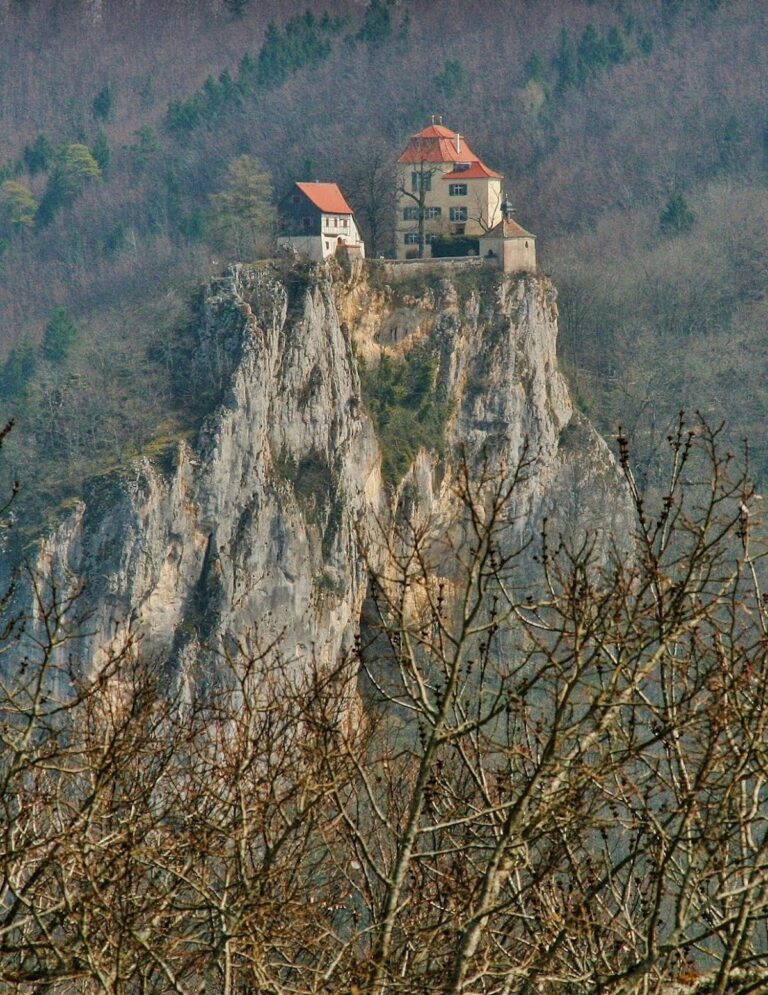
Burg Kallenberg is a high-medieval castle ruin in Germany, probably built around 1200 on a hill above the Danube in what is now Baden-Württemberg. It lies in the Upper Danube Nature Park between Fridingen and Beuron, within the municipality of Buchheim, and is considered, alongside Falkenstein, one of the most significant ruins in the Danube Valley.
Medieval origins and lordship
The castle was first recorded under the name Kallenberg in 1225, a name associated with the noble Kallenberg family. The wider Lordship of Kallenberg included the castle and the settlements of Gründelbuch, Nusplingen, Obernheim, Dormettingen, Bronnhaupten, and Erlaheim. The castle and the nearby Kallenberg Cave were used at the same time and formed a single ensemble. Finds from the castle place its origin around 1200, while material from the cave belongs to the Celtic period, the era of prehistoric and early historic cultures associated with Celtic-speaking peoples in parts of Europe.
In 1334, Kallenberg was recorded as property of the Counts of Hohenberg. It was sold to the House of Habsburg in 1381. The Habsburgs were a major European ruling dynasty whose members held extensive territories and became kings and emperors. After the sale, the castle passed through the hands of several pledge-holders. Members of the Kallenberg family held it at various times, followed by the Truchsesses of Waldburg from 1401 to 1695. A Truchsess was a medieval court official traditionally responsible for aspects of a ruler’s household, and the title became part of the Waldburg family’s name. From 1702, the von Ulm-Erbach family held Kallenberg as pledged property and a hereditary male fief.
Decline and preservation
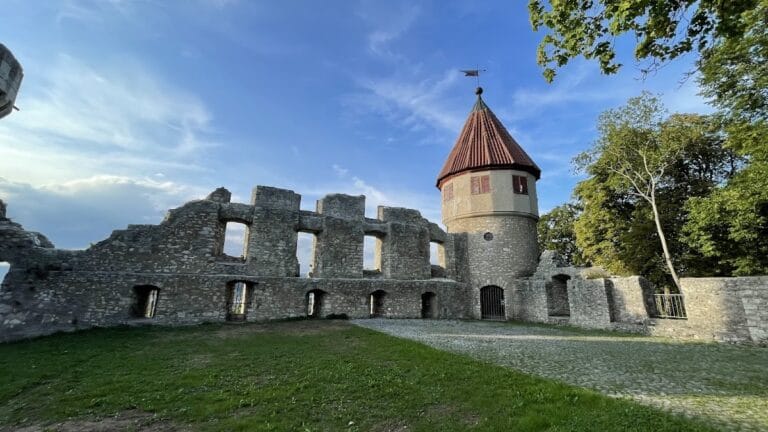
The castle entered a gradual decline around 1800. Its associated farm burned on 4 March 1905 and was not rebuilt. The ruin passed to Baron von Ow-Wachendorf in 1907. On 16 November 1911, an earthquake in the Albstadt Shear Zone, a geological zone of deformation in the Albstadt area, caused the eastern gable of the tower to collapse. Since 1974, Burg Kallenberg has been owned by Tuttlingen District.
Remains
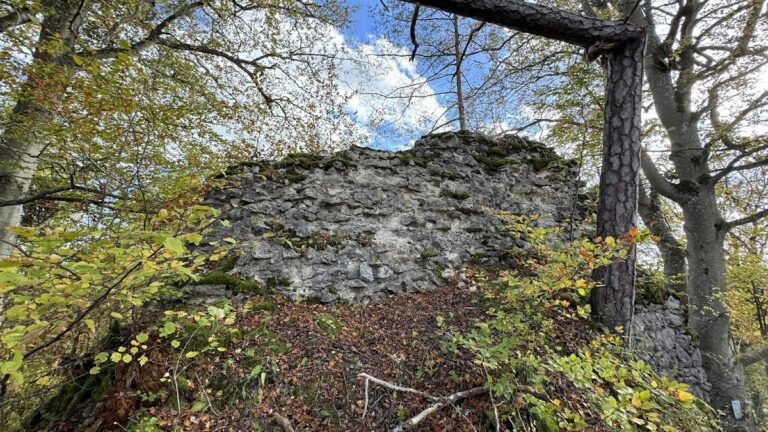
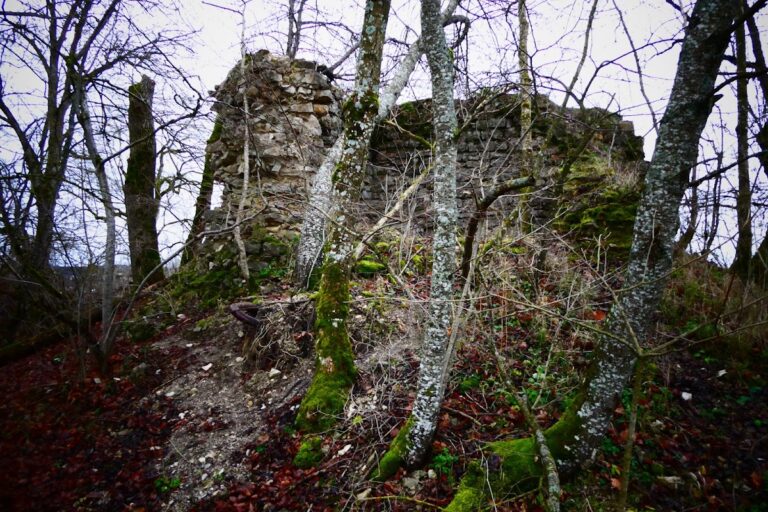
Burg Kallenberg occupies a steep summit at approximately 776 metres above sea level, rising above the Danube at about 613 metres. The hilltop complex stands on a prominent knoll overlooking the Danube gorge toward Bronnen Castle. Its surviving masonry includes carefully dressed bossage blocks in the lower half of the keep, where the outer faces of the stones project beyond the wall surface, together with ashlar masonry made from regularly cut and closely fitted blocks.
Keep
The well-preserved keep, the principal fortified tower of a medieval castle, has a square plan measuring approximately eight metres on each side and rises about 20 metres. Its elevated entrance was designed to be reached by a platform, ladder, or removable access structure. The entrance has a tripartite shoulder lintel, and beam sockets beneath the worn base block of the threshold show where the former entrance platform was suspended.
Kallenberg Cave
Approximately 100 metres east of the castle complex lies the associated Kallenberg Cave, a cave castle incorporating and defending a natural cave. In front of the cave entrance are the remains of masonry from an entrance portal. Together with the hilltop castle, this fortified cave formed part of the Kallenberg ensemble.
Nearby sites