Abenberg Castle: A Medieval Hilltop Fortress in Germany


Site at a Glance
- Rating
- 4.7
- Popularity
- Very Low
- Country
- Germany
- Primary era
- Medieval
- External website
- Open
- Eras represented
- Medieval, Early Modern
- Civilizations
- Holy Roman Empire
- Site type
- Military
- Remains
- Castle
On this page10 sections
History
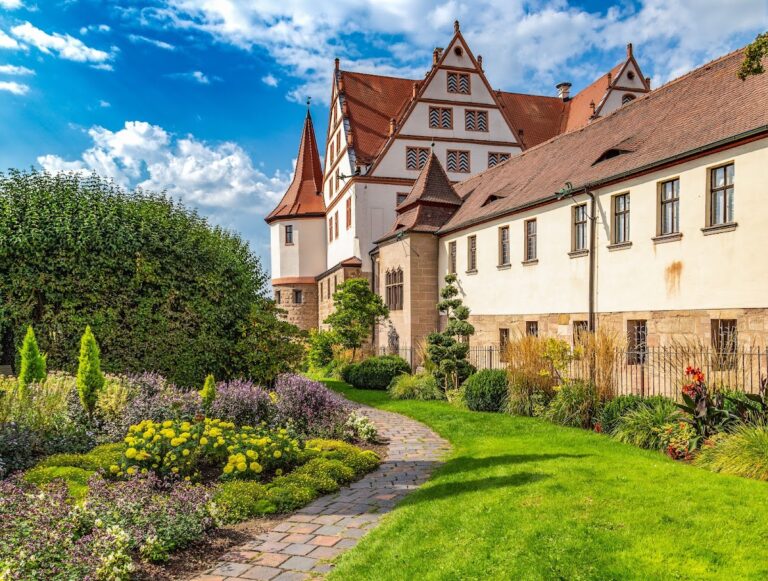
Abenberg Castle is a medieval hilltop fortress above Abenberg in Bavaria, Germany. The Abenberg noble family began building the first, largely wooden castle under Count Adalbert II between the early and mid-eleventh century. Its exact foundation date is uncertain within that period. The castle is also described as a Gothic building, although its surviving fabric reflects several centuries of alteration.
The Abenberg Counts and the First Stone Castle
Under Count Rapoto of Abenberg, who lived from 1122 to 1172, the wooden fortress was replaced with a stone castle between 1130 and 1140. The new stronghold was regarded as one of the most imposing fortresses in Bavaria. Excavations later confirmed the earlier wooden phase through pottery and postholes, although the original arrangement can no longer be reconstructed.
The male line of the Abenberg family ended with Count Friedrich II around 1200. In 1236, Sophia of Raabs brought the town and castle to the Hohenzollerns through marriage. The Hohenzollerns were a German ruling dynasty, and their Nuremberg branch held the office of burgrave, an administrative and military position connected with governing Nuremberg and its surrounding territories. They scarcely used Abenberg Castle, and the fortress began to deteriorate.
Hohenzollern and Eichstätt Administration
Between 1230 and 1250, the Hohenzollerns undertook a partial rebuilding of the earlier complex. They doubled the size of the main castle and replaced the old enceinte, the fortified perimeter enclosing the castle, with a new one. In 1296, the castle was sold to the Prince-Bishopric of Eichstätt. A prince-bishopric was a territory governed by a bishop who exercised both religious and secular authority. Eichstätt established an administrative office at Abenberg and reinforced the less-defended northwest corner with a square tower.
Further alterations took place during the fifteenth, sixteenth, and seventeenth centuries. From 1496, administrative buildings were added along the eastern front, while additional service buildings were constructed inside the castle. After the medieval period, the fortress gradually lost its military importance, and the bishops no longer used it as a major stronghold. The Chapel of Saint Otmar collapsed in 1799.
Secularization and Preservation
During secularization in 1806, when church property was transferred to secular authorities, the Kingdom of Bavaria acquired Abenberg Castle. It then sold the complex to Max Freiherr von Welden for demolition and the recovery of its building materials.
The Munich art dealer K. J. Zwerschina purchased the ruins in 1875 and prevented their complete destruction by carrying out repairs and restoration. Among other works, he rebuilt the 33-metre-high watchtower. The chamber singer Anton Schott continued the restoration from 1881 to 1913, but the castle later declined again.
Archaeology and Modern Cultural Use
The town of Abenberg acquired half of the castle in 1982 and the remainder in 1984. On 8 March 1986, the town joined the Roth district and the administrative district of Middle Franconia in establishing an organization to take ownership of the castle, preserve it, and revive its cultural use. Extensive restoration continued until the mid-1990s, followed by further conversion work completed with the opening of the Lace Museum in 2001.
Archaeological excavations between 1988 and 1992 clarified several stages of the castle’s architectural history. The discoveries included pottery and postholes belonging to the eleventh-century wooden fortress. Abenberg Castle now operates as a cultural and hospitality complex with a restaurant, hotel, conference centre, House of Franconian History, and Lace Museum. Summer concerts and the Feuertanz, or Fire Dance, festival are held on the grounds.
Remains
Castle Layout and Early Stone Construction
Abenberg Castle occupies a hilltop in a hilly setting at approximately 430 metres above sea level. Excavations identified the first stone fortress as a main castle measuring about 40 by 40 metres. Its principal building was a free-standing residential tower in the centre of the courtyard. This substantial tower provided living quarters as well as defensive strength, with a base measuring 15.6 by 14.6 metres and masonry up to 2.5 metres thick. The first stone castle was built mainly from sandstone ashlar blocks, carefully shaped masonry units.
Thirteenth-Century Defenses
The enceinte built between 1230 and 1250 is the oldest surviving part of the castle. The thirteenth-century rebuilding created a new fortified perimeter, doubled the inner area, thickened the front side, and added a fortified gate at the southeastern corner. The northwest corner was later strengthened with a square tower. These surviving defensive elements preserve the main changes made when the earlier Salian-period complex was enlarged. The Salian period refers chiefly to the eleventh and early twelfth centuries, when the Salian dynasty held the German kingship and imperial title.
Eastern Buildings and Watchtower
The eastern front contains a tower and administrative buildings added from 1496. Service and economic buildings were also built within the castle, extending its functions beyond defense. The 33-metre-high watchtower, known as Luginsland, belongs to the nineteenth-century restoration campaign because it was rebuilt during that period. The castle is substantially preserved and has undergone restoration.
Tournament Field
Immediately south of the main castle lies a large open area used for knightly tournaments. The medieval German poet Wolfram von Eschenbach described it in Parzival as Abenberg’s tournament field and complained about its poor condition. Archaeological work has identified it as the only tournament field archaeologically documented at a Bavarian castle. Wernfels Castle lies within sight of Abenberg Castle.