Ramana Tower: A Medieval Defensive Fortress in Azerbaijan


Site at a Glance
- Rating
- 4.4
- Popularity
- Low
- Country
- Azerbaijan
- Primary era
- Medieval
- Eras represented
- Medieval
- Civilizations
- Shirvanshah
- Site type
- Military
- Remains
- Castle
On this page10 sections
History
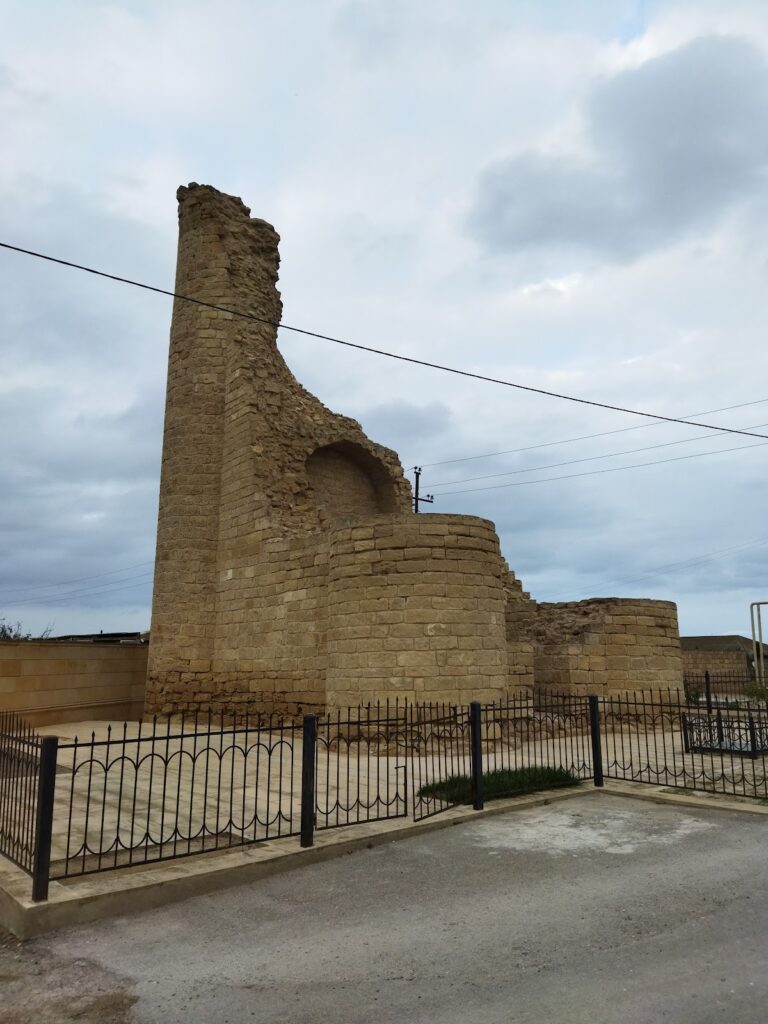
Ramana Tower is a historical fortress and architectural monument in Azerbaijan, located in Ramana village in Baku’s Sabunchu district. It was probably built in the fourteenth century by order of the Shirvanshahs, the ruling dynasty of Shirvan, although some researchers attribute its construction to the twelfth-century Nizami period. The fortress was intended primarily as a temporary refuge and formed part of the interconnected defensive system of the Absheron Peninsula.
Medieval defensive role
The fortresses of Absheron were concentrated along the northern and northeastern shores of the Baku area, reflecting the direction from which danger was expected. Their network allowed warnings to pass between strongholds through fires at night and smoke signals by day. Ramana therefore served within a wider system of observation and defence rather than as a long-term residential centre.
Some historians have claimed that an underground passage once linked Ramana Fortress with the Maiden Tower in Baku’s historic core and the settlement of Bakikhanov. This remains a historical claim rather than an established certainty. The entrance gate was added after the original construction, according to L. Mamikonov.
Restoration and later recognition
Before the filming of Koroghlu, the fortress stood in a dilapidated or partly ruined condition. It was restored in 1956 during that production and later served as a filming location for Nasimi and Babek. Ramana Fortress is registered by Azerbaijan’s Ministry of Culture as a monument of global significance. In 2001, it was included in the UNESCO Reserve List with other defensive structures of the Absheron Peninsula. The fortress is also described as operating as a museum.
Remains
Fortress layout and central tower
Courtyard and donjon
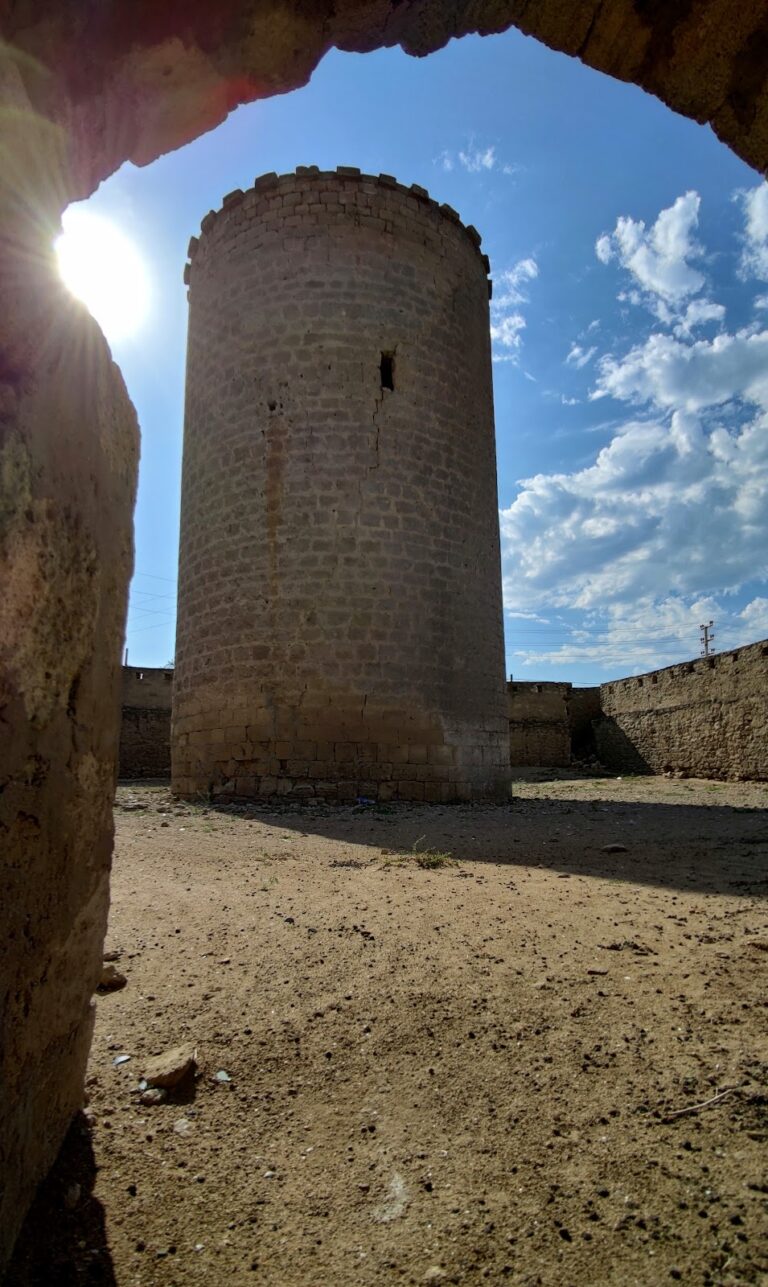
The fortress occupies an elongated polygonal area enclosed by walls, with the tower standing at its centre. Its inner courtyard measures 28 by 10 metres. The central donjon, the principal fortified tower combining defensive and residential functions, is square and approximately 15 metres high. It has four levels rather than the customary three-tier arrangement associated with circular donjons, and contains 83 square metres of living space.
Built of white stone, the tower has vaulted stone roofs on its first and uppermost levels. The intervening floors have flat ceilings supported by wooden beams. Two staircases are positioned on the left side of the structure. Movement between the tower’s levels was possible only by ladder, while stone steps led up to the crenellated walls. Semicircular towers were added on all four sides of the donjon, giving it a more massive form, allowing greater height, and strengthening the defensive organization of its walls.
Walls, turrets, and entrance
Enclosing defences
The external walls are reinforced by solid semicircular turrets placed at the corners and along the walls, with intervals of no more than 10 to 11 metres. Their unusually close spacing probably allowed crossbow fire to cover the ground immediately outside the fortifications. Regularly spaced chambers along the full length of the external walls helped protect the base of the walls.
Western gateway
The courtyard is entered from the western side. Access to the tower passes through a narrow gap between the donjon and the enclosing wall. Above the fortress entrance is a defensive platform, while the gateway itself is formed by an arch. Its later addition is attributed to L. Mamikonov. The plan and architecture of Ramana Tower closely correspond to those of other defensive towers on the Absheron Peninsula.
Local association
Outside the fortress walls stands a large rock-like stone on the right-hand side of the complex. Local tradition associates it with the singer Bülbül, who was said to have performed Koroghlu’s aria beside it. Bülbül was a prominent Azerbaijani singer, while Koroghlu is a celebrated heroic figure whose story survives in Azerbaijani epic and musical traditions.
Nearby sites