Castello di Novi Ligure: A Medieval Fortress in Italy


Site at a Glance
- Rating
- 4
- Popularity
- Low
- Country
- Italy
- Primary era
- Medieval
- External website
- Open
- Eras represented
- Medieval
- Civilizations
- Duchy of Milan, Genoese
- Site type
- Military
- Remains
- Castle
On this page6 sections
History
Medieval origins and Visconti strengthening
Castello di Novi Ligure is a medieval fortress in Italy, begun in the eleventh century on a rocky elevation above a group of houses at the foot of the site. The settlement below lacked defensive walls, while the elevated fortification provided protection. The castle’s first certain mention appears in a document of 1153, which describes the fortified site and its position above the houses.
The Visconti, a powerful ruling dynasty based in Milan that controlled territories across northern Italy during the late medieval period, strengthened the castle in two phases. Work took place between 1353 and 1392 and again between 1412 and 1447.
Genoese control and early modern representations
In 1447, the castle passed to the Genoese and was subsequently reinforced. Its earliest known image is a schematic drawing from 1594. It shows a tower with Ghibelline battlements, crenellations associated with the imperial political faction in medieval Italy, together with a surrounding wall. A more detailed drawing made in 1648 depicts the castellan’s residence, accommodation for troops, the tower, and the enclosing walls.
Occupation, dismantling, and redevelopment
Austrian forces briefly occupied the castle in 1746. Genoese control continued until 1797, or until 1805 if the period of the Ligurian Republic is included. French forces then dismantled the castle, leaving only part of its original fabric.
A major redevelopment of the tower and surrounding park began in 2023. The project includes renewing the park paths and lighting and improving the area around the tower.
Remains
Tower and enclosing walls
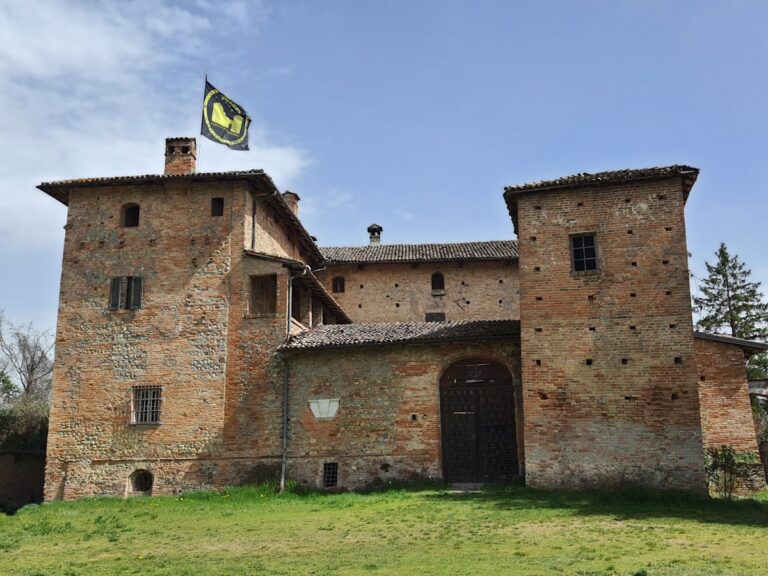
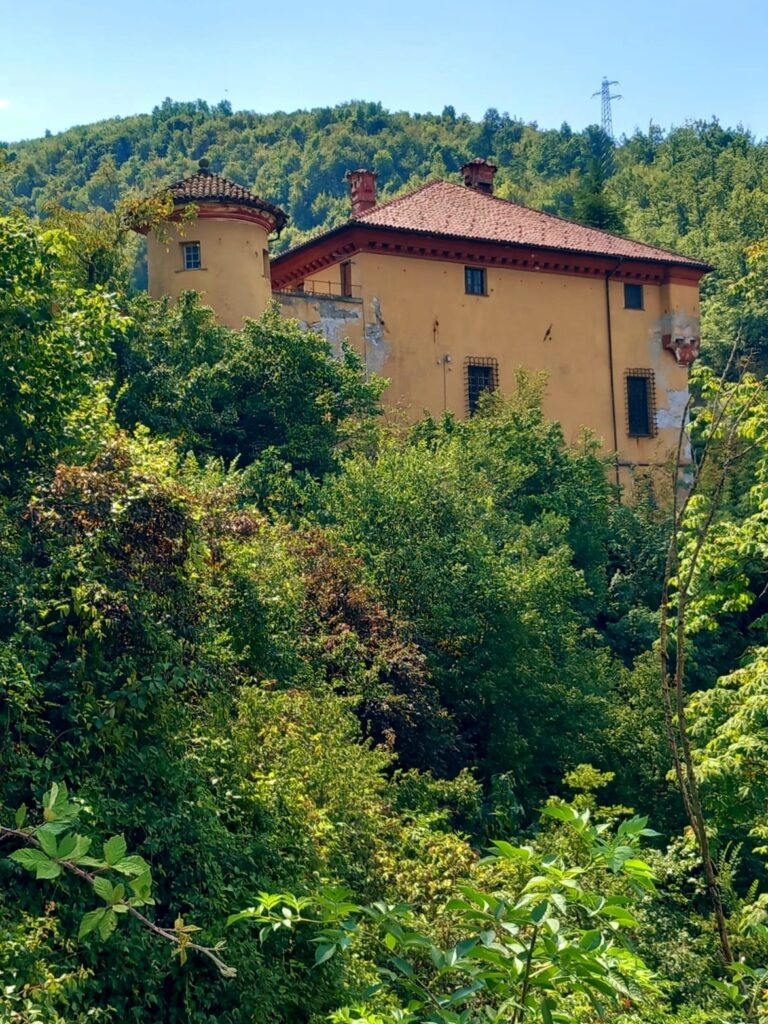
The castle occupied an irregular enclosure on the rocky elevation near Novi Ligure’s historic center. Its main surviving structure is a square tower that originally reached 30 meters in height. Built of stone and brick, the tower remains together with sections of the enclosing walls, which now delimit part of the large park around it. The surviving complex is in good condition.
The tower was originally crowned with Ghibelline battlements, whose swallowtail-shaped merlons reflected their traditional association with the imperial faction. The battlements have been lost, but their outline remains discernible beneath the tower’s present covering of curved roof tiles.
Nearby sites