Burg Liebeneck (Pforzheim): A Medieval Castle Guarding the Würm River


Site at a Glance
- Rating
- 4
- Popularity
- Low
- Country
- Germany
- Primary era
- Medieval
- External website
- Open
- Eras represented
- Medieval
- Civilizations
- Holy Roman Empire
- Site type
- Military
- Remains
- Castle
On this page8 sections
History
Burg Liebeneck is a ruined high-medieval hill castle in Germany, probably established during the twelfth century on a forested spur above the Würm River. Its position overlooked the Würm valley, and the castle was built to protect a rafting toll station on the river.
Foundation and Feudal Possession
The castle may have been created between about 1100 and 1200, although its first recorded mention dates from 1236. In that year, Burg Liebeneck and the village of Würm were transferred from the lords of Weißenstein at Kräheneck to Rudolph I of Baden, a thirteenth-century margrave of the Baden dynasty.
Liebeneck later became an hereditary fief of the lords of Weißenstein. An hereditary fief was property held under a lord, with inheritance recognized as part of the arrangement. The castle subsequently passed into the possession of the lords of Leutrum von Ertingen.
Destruction and Conservation
During the Orleans War, a late-seventeenth-century conflict, the castle burned out in 1692. The site was transferred to the state of Baden in 1828 and was later deliberately destroyed. An information board explains that this was done so that “no riff-raff would find shelter there.”
The 30-metre-high principal tower, or bergfried, was renovated between 1968 and 1977. The ruins were then secured and maintained by the Hochbauamt, the state construction department. A further conservation campaign ran from September 2019 through the end of 2024, with interruptions during the breeding and nesting periods of peregrine falcons occupying the masonry. The ruins are identified as an archaeological monument and heritage site.
Remains
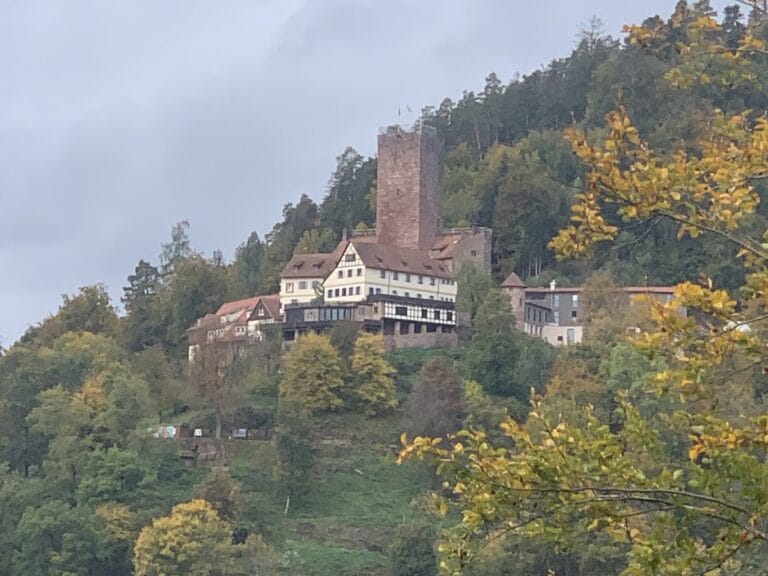
Burg Liebeneck survives as a ruined hill castle on elevated ground at about 415 metres above sea level, in the Hagenschieß forest southeast of Würm, within present-day Pforzheim in Baden-Württemberg. The protected forest setting places the remains above the Würm valley. The surviving layout includes the main tower, walls around the castle courtyard, defensive outer works, and an enclosed perimeter formed by two pentagonal lines of fortification.
Principal Structures and Defenses
The Bergfried
The 30-metre-high bergfried, the principal tower of a medieval German castle, remains one of Liebeneck’s dominant structures. Such a tower served defense, refuge, and the display of lordly authority rather than functioning as an ordinary residential tower. Its renovation between 1968 and 1977 helped preserve the tower within the ruined castle complex.
Enclosing Walls and Foreworks
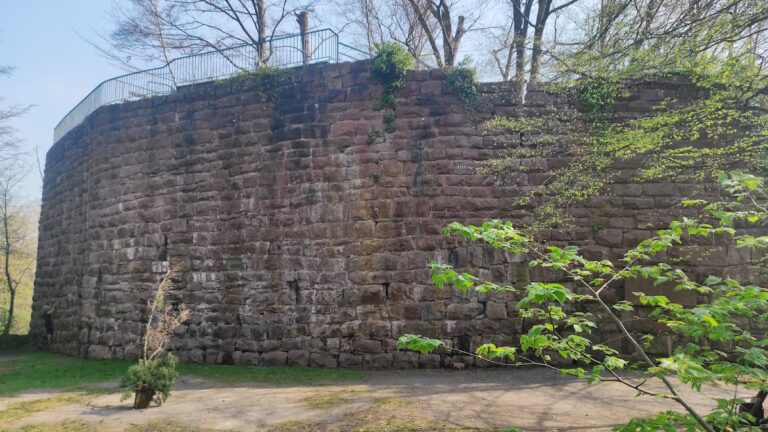
Several surviving walls enclose the castle courtyard. Liebeneck’s defenses include a double pentagonal enceinte, meaning a fortified enclosing wall or defensive perimeter, together with foreworks and zwingers. These enclosed defensive areas lay between successive walls and allowed attackers to be exposed to fire from the fortifications.
Main Building
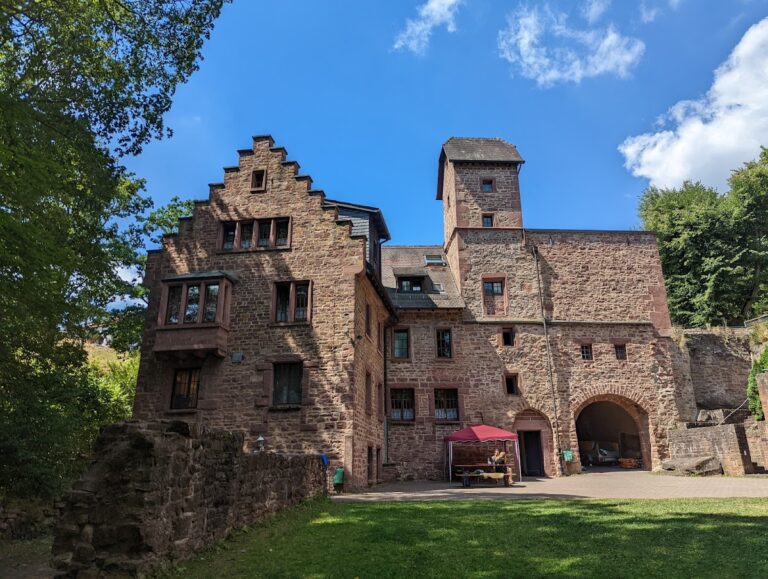
A main building forms part of the surviving ruins. Its remains include an entrance and an interior area, linking the principal occupied space with the courtyard enclosed by the castle walls.
Nearby sites