Statue of Hercules: A Seleucid Rock Relief at Bisotun, Iran
Site at a Glance
- Rating
- 4.6
- Popularity
- Low
- Country
- Iran
- Primary era
- Classical
- Eras represented
- Classical
- Civilizations
- Seleucid
- Site type
- Civic
- Remains
- Statue
On this page9 sections
History
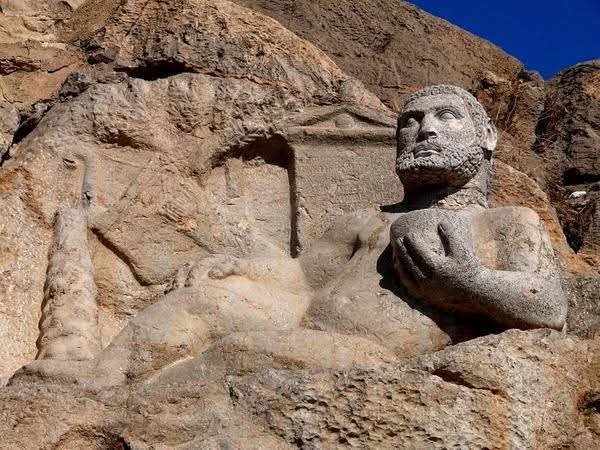
The Statue of Hercules is a Seleucid rock relief at Bisotun in Iran, on Mount Behistun. Sculpted and dedicated in 148 BCE during the Hellenistic period, it is described as the only surviving rock sculpture from the era of Seleucid control over the Iranian Plateau, which lasted approximately from 312 to 140 or 139 BCE. The monument presents Herakles Kallinikos, meaning “Hercules glorious in victory,” and reflects the political and cultural presence of the Seleucid Empire in the region.
The Seleucid dedication
The monument was set up by Hyakinthos, son of Pantauchos, for the safety of Kleomenes, Commander of the Upper Satrapies, and the satraps. A satrap was a provincial governor, and the Upper Satrapies were the eastern provinces of the Seleucid realm. The Greek dedicatory inscription dates the act to year 164 of the Seleucid era, in the month of Panemos, corresponding to June. It identifies Hyakinthos as the individual responsible for erecting the statue and places the dedication within the official political language of the period.
Religious and artistic interpretation
The figure may reflect the assimilation of the Greek Heracles with Wahrām, an Iranian divinity associated with victory. The epithet Herakles Kallinikos could suit this association, but the statue does not provide unequivocal proof that the two figures were formally identified. Its setting may also have formed part of a naiskos, a small shrine or temple-like frame, an interpretation supported in part by the remnant of an Ionic column nearby.
The monument combines Greek language and imagery with features considered more Iranian than Greek. The sculptor was not formally trained in the Greek sculptural style, and the figure’s bow is unusual in Hellenistic representations of Heracles. Its form and imagery also recall the bows shown in the Behistun inscription, linking the relief to local visual traditions while retaining its place within Seleucid culture.
Discovery and later history
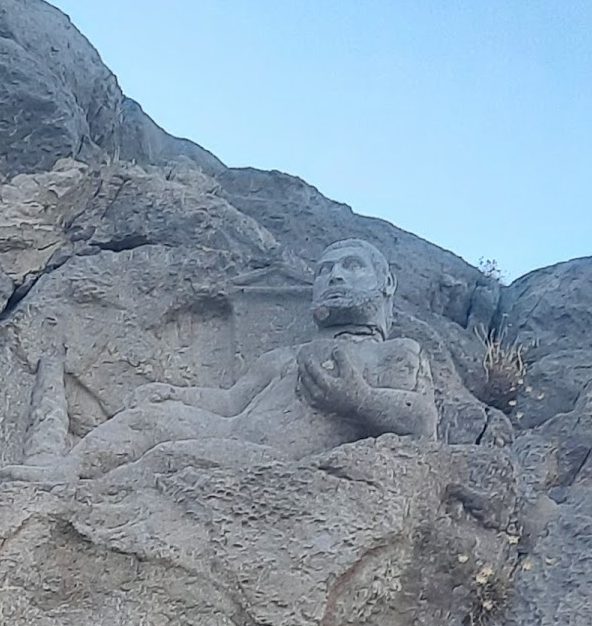
The statue was discovered in 1958. Its head was stolen twice and recovered in 1996. The head now attached to the figure is a replica, while the original is held by Iran’s Cultural Heritage, Handcrafts and Tourism Organization.
Remains
The rock relief and shrine-like setting
Reclining figure
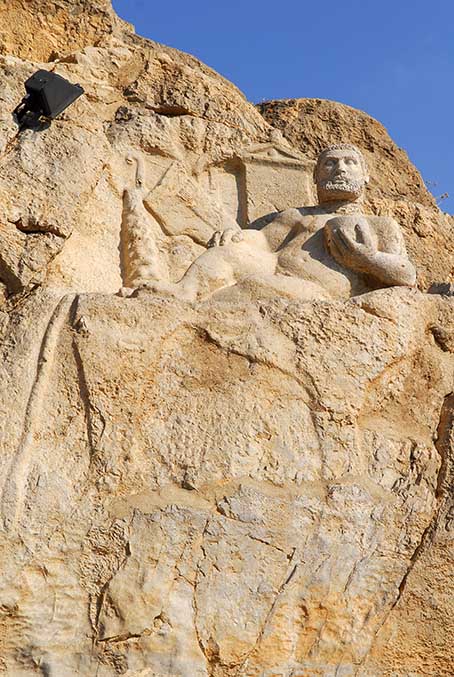
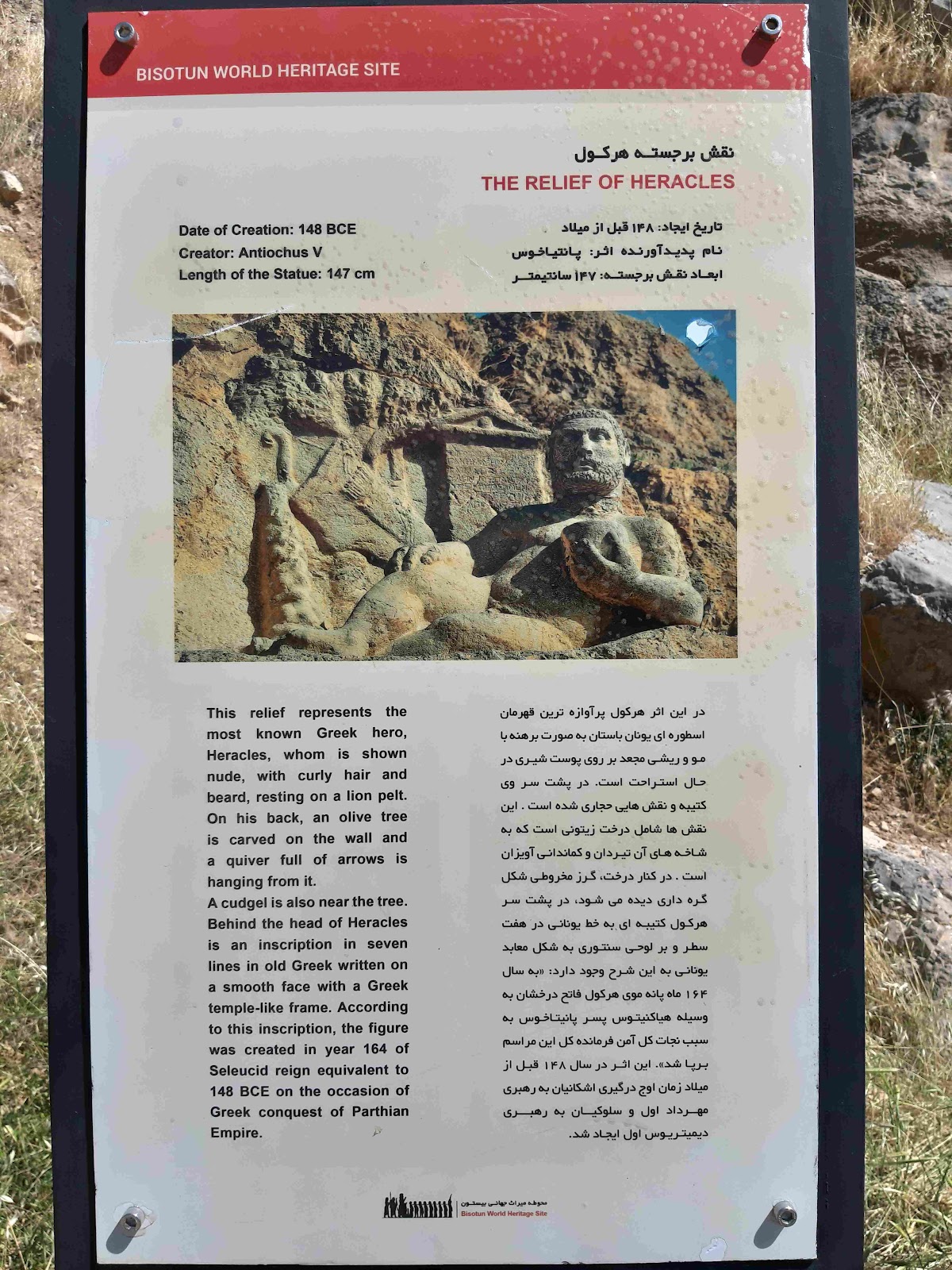
The sculpture remains attached to the mountain as a carved rock relief. Hercules reclines on a platform approximately 2 metres long, while the figure itself measures 1.47 metres. He is shown naked, bearded, and powerfully built, with curly hair. Resting on his left side beneath or beside a tree, he holds a bowl in his left hand, while his right hand rests on his leg. His left foot leans against his right foot. A lion skin is associated with the figure, and a club is carved behind him as though propped up. A bow hangs from a branch, with a quiver containing arrows nearby.
Platform and column remnant
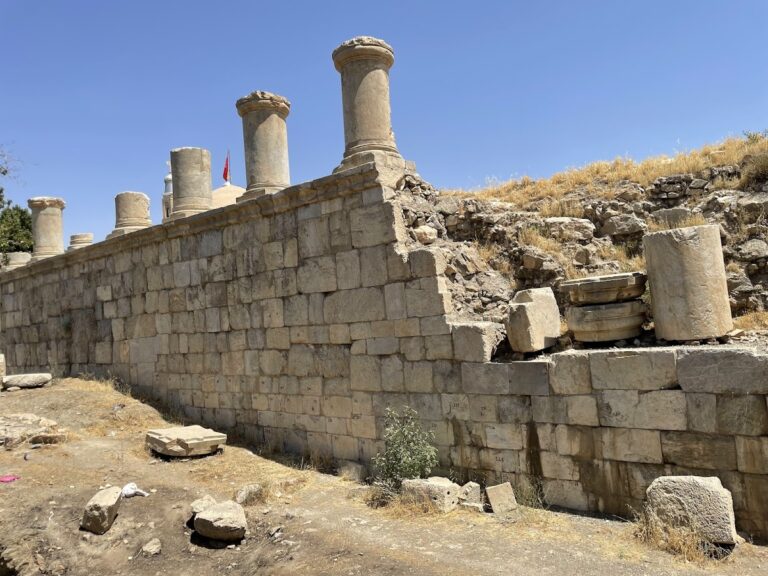
Rough-stone ramparts or side walls flank the platform. These unsculpted stones are covered with gypsum. A remnant of an Ionic column, an element with the scroll-shaped capital characteristic of that Greek architectural order, stands nearby and measures 52 centimetres in height. This measurement is also cited for the columns of the Temple of Athena Nike in Athens. Together with the relief’s framed form, the column remnant supports the interpretation of a small shrine.
Inscriptions and official imagery
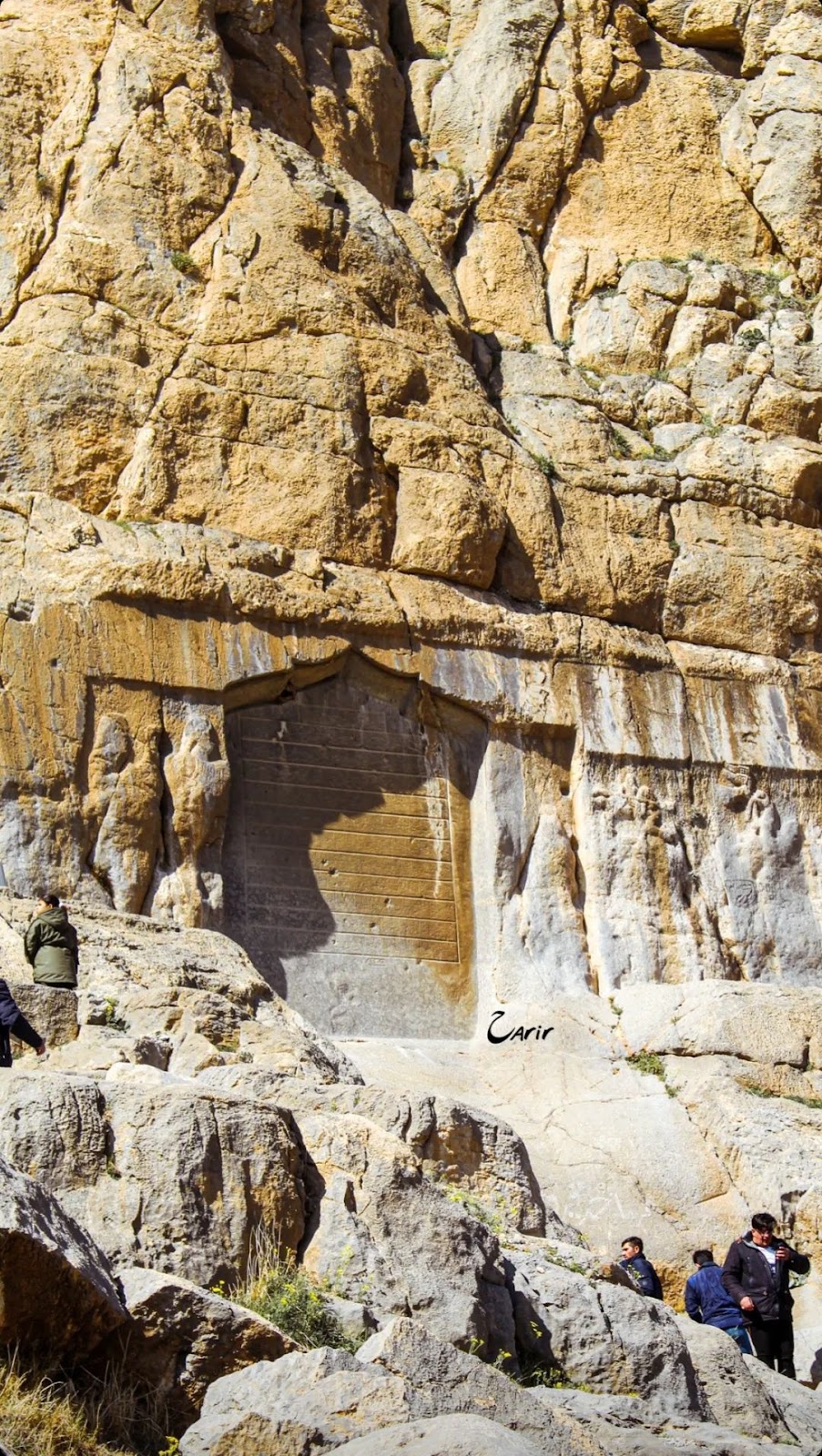
A Greek inscription is carved behind the statue. A lighter Aramaic version was thought to have been carved below it, while the word šnt, meaning “in the year,” remains discernible. The inscription’s imagery and formal arrangement follow visual and linguistic conventions used in Seleucid imperial epigraphy, the public inscriptional language of the empire.
The shrine-like arrangement also resembles Seleucid stelae used for official inscriptions in the region, particularly the stele from Laodicea-in-Media at Nahavand. That comparison connects the monument’s form with official inscriptions associated with the Seleucid dynastic cult. The surviving relief therefore joins a Greek dedicatory text and Hellenistic religious imagery to an artistic design shaped by Iranian conventions.