Plaošnik, Ohrid: A Byzantine Church and Archaeological Site


Site at a Glance
- Rating
- 4.6
- Popularity
- Low
- Country
- North Macedonia
- Primary era
- Medieval
- External website
- Open
- Eras represented
- Classical, Medieval
- Civilizations
- Byzantine, First Bulgarian Empire, Roman
- Site type
- Religious
- Remains
- Church
On this page9 sections
History
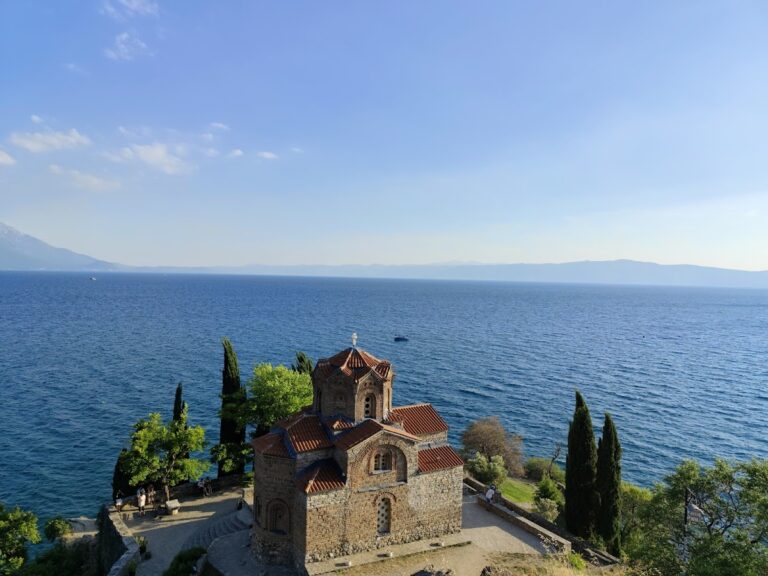
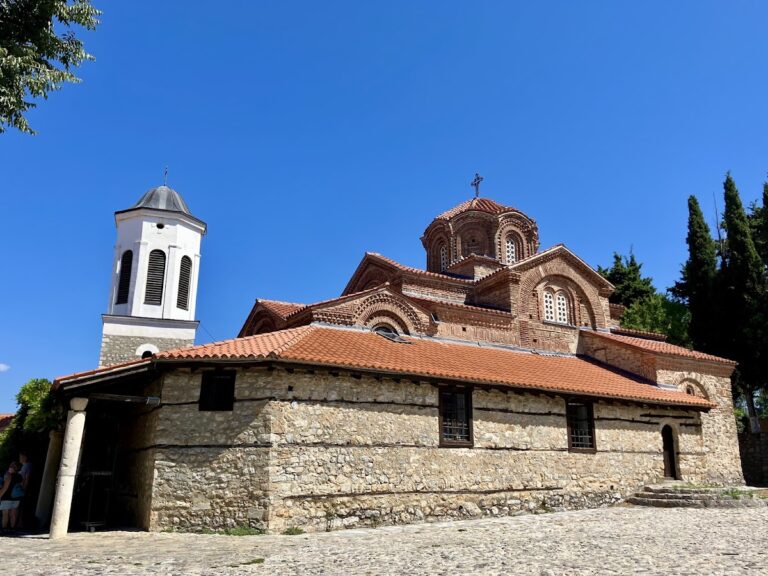
Plaošnik is an archaeological and sacred site in Ohrid, North Macedonia, centred on the Byzantine Church of Saints Clement and Panteleimon, traditionally dated to 893. Built during the First Bulgarian Empire, the church became associated with Saint Clement of Ohrid and with the development of Slavic Christian learning in the region.
Foundation and the school of Clement
The church is attributed to Saint Clement of Ohrid, a Christian missionary, bishop, teacher, and disciple of Cyril and Methodius. It was erected over an earlier Christian church and a five-part Roman basilica. Tradition holds that Clement first restored an older church, then built a larger one because he considered the earlier structure too small. He used the church for worship and for teaching his pupils Old Church Slavonic and the Glagolitic alphabet, an early Slavic writing system used to translate Christian texts.
Ohrid became an important centre of Slavic Christian education within the First Bulgarian Empire, the medieval Bulgarian state that supported the Christianisation and literary development of the Slavic population. Archaeologists believe that the first students of the Glagolitic alphabet were taught at Plaošnik. The church is also associated with instruction in the Cyrillic alphabet, a later script that developed within the same broader Christian and Slavic literary tradition. Its design has led to the scholarly interpretation that it served as a literary school and possibly as Europe’s first and oldest discontinued university, although this remains an interpretation rather than an established institutional title.
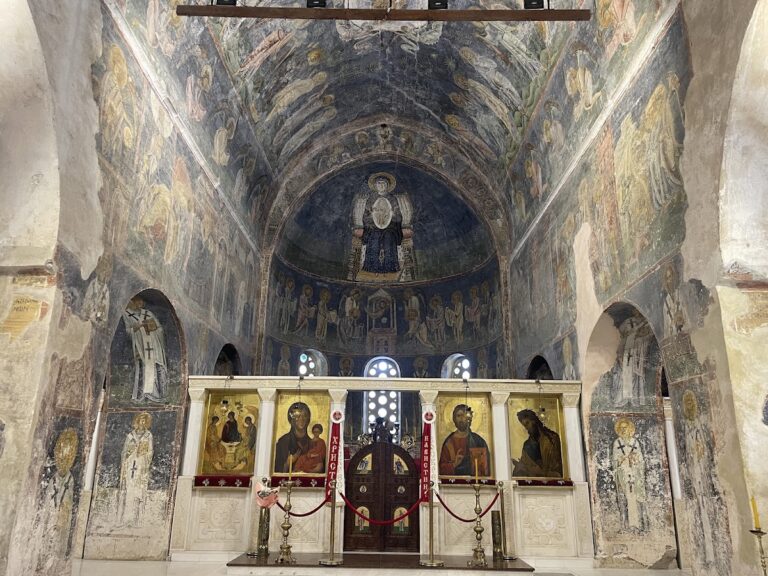
Clement was buried inside the church after his death in 916. His tomb remains there, and most of his relics were returned during the modern reconstruction. The church is dedicated to Saints Clement and Panteleimon, with Saint Panteleimon as its patron saint.
Ottoman transformation
In the fifteenth century, Ottoman authorities converted the church into a mosque. At the beginning of the sixteenth century, permission was given for ruined monasteries and churches to be restored, and Saint Clement’s church was repaired. It was ruined again at the end of the sixteenth century or the beginning of the seventeenth century.
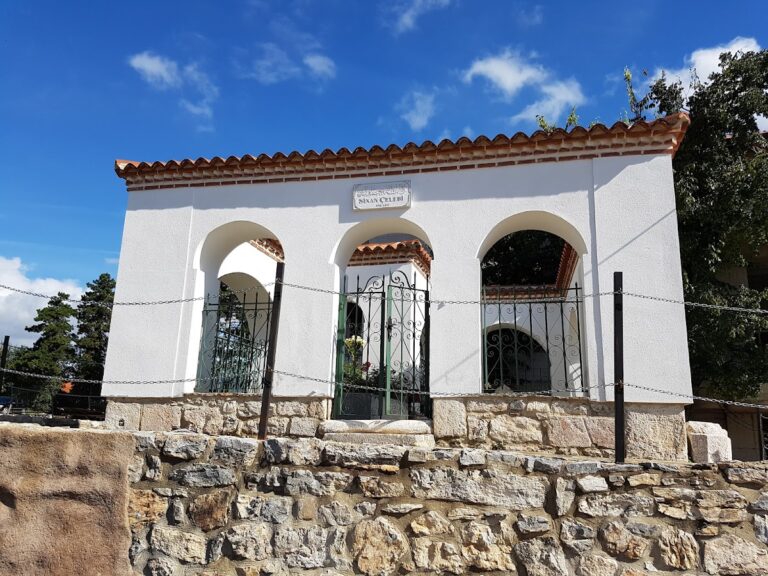
The Ottomans later built the Imaret Mosque over the remains. Sinan Chelebi, a member of the Ohrizade family, established the mosque as an endowment and memorial. The building was demolished in 2000 because it stood over the remains of an earlier church in the Plaošnik area. It was subsequently included on the damaged religious buildings list compiled by the Islamic Religious Community of Macedonia.
Excavation and reconstruction
The first excavations of the church took place in 1943 under Professor Dimche Koco. Later archaeological work continued alongside reconstruction, revealing tunnels and crypts and prompting plans for further investigation beneath the church, including additional remains of the Roman basilicas.
Reconstruction began on 8 December 2000, and the physical church was fully reconstructed by 10 August 2002. The work was carried out by hand with materials used in the original church, while machines were used only to polish the interior. The rebuilt church is affiliated with the Macedonian Orthodox Church within the Eastern Orthodox Church. Plaošnik remains a major sacred site in North Macedonia, where Macedonian Orthodox Christians gather for liturgies during major religious holidays such as Easter and Christmas.
Remains
Hilltop setting and church layout
The church stands on the hill of Plaošnik overlooking Lake Ohrid, about 250 metres south of Samuil’s Fortress. It is identified as a Middle-Byzantine building in Byzantine style and has a stated capacity of 3,000 people. Its exterior is decorated with finely detailed mosaics, while the interior floors were reconstructed in marble. A partially ruined bell tower, restored on the right side of the church, forms part of the present complex.
Earlier churches and archaeological layers
The present building occupies the site of a restored earlier church and a five-part Roman basilica, a large public or religious building organised around a spacious central hall and subsidiary areas. Remains of these earlier structures can be seen outside the church. Pillars standing beyond the present building support the possibility that further remains survive beneath it. Excavation inside the church has exposed tunnels and crypts, while additional work has been planned to examine the structures below the current floor level.
Religious features and finds
Clement’s tomb is located inside the church. Near the exterior mosaics stands a stone baptismal font used to baptise Clement’s disciples. Excavations in the church area also uncovered a deposit of approximately 2,383 Venetian coins on 10 October 2007. Archaeologist Pasko Kuzman interpreted the deposit as evidence of commercial links between Ohrid and Venice.
Remains of the Imaret Mosque
The Imaret Mosque once stood over the remains of the earlier church. Following its demolition in 2000, only a small enclosure of the mosque remains. Its surviving trace forms part of the layered archaeological history of Plaošnik, where the church site was repeatedly altered, restored, and rebuilt.