Sinan Čelebi Türbe: An Ottoman Tomb in Ohrid
Site at a Glance
- Rating
- 4.5
- Popularity
- Very Low
- Country
- North Macedonia
- Primary era
- Medieval
- Eras represented
- Medieval
- Civilizations
- Ottoman
- Site type
- Religious
- Remains
- Tomb
On this page6 sections
History
Sinan Čelebi Türbe is an Ottoman open mausoleum in Ohrid, North Macedonia, completed in 1493. It contains the grave of Sinan Čelebi Ohridzade, whose death on 19 April 1493 is recorded by an Arabic inscription. The occupant of a second grave is uncertain and may have been Sinan Čelebi’s brother or son.
Ottoman Foundation
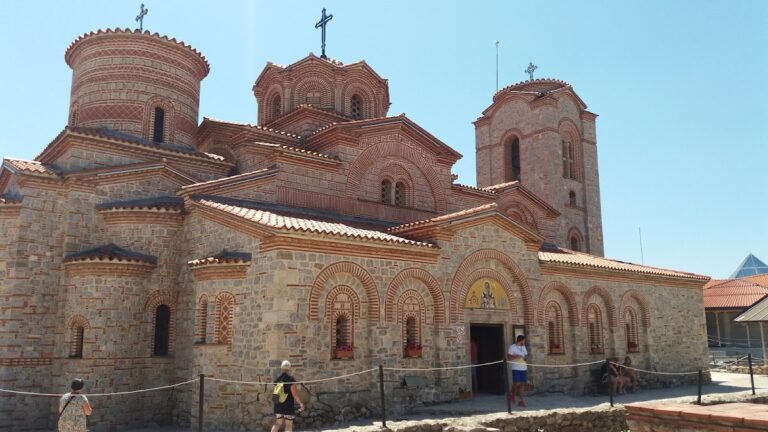
According to the Serbian writer Branislav Nušić, Sinan Čelebi built a mosque and an imaret, a charitable public kitchen, on the foundations of the Church of Saint Clement during the reign of Sultan Mehmed II, the fifteenth-century Ottoman ruler also known as Mehmed the Conqueror. The türbe stands near the Church of Saint Clement and Panteleimon, a Christian saint traditionally venerated as a healer.
Continuing Devotional Use
The tomb preserves a practice in which oil is brought and candles are lit as expressions of Muslim devotion to Saint Clement of Ohrid, a medieval Christian bishop and missionary associated with the city. Muslims continue to visit the site on St George’s Day, a practice described as evidence of uninterrupted Christian influence. Hasan Baba is buried in the smaller left-hand section of the tomb. The term Baba is an honorific meaning “father” or “elder,” while Hasan Baba’s historical identity remains uncertain.
Sinan Čelebi Türbe was declared a cultural monument on 22 March 1968 and is designated important cultural heritage of Macedonia.
Remains
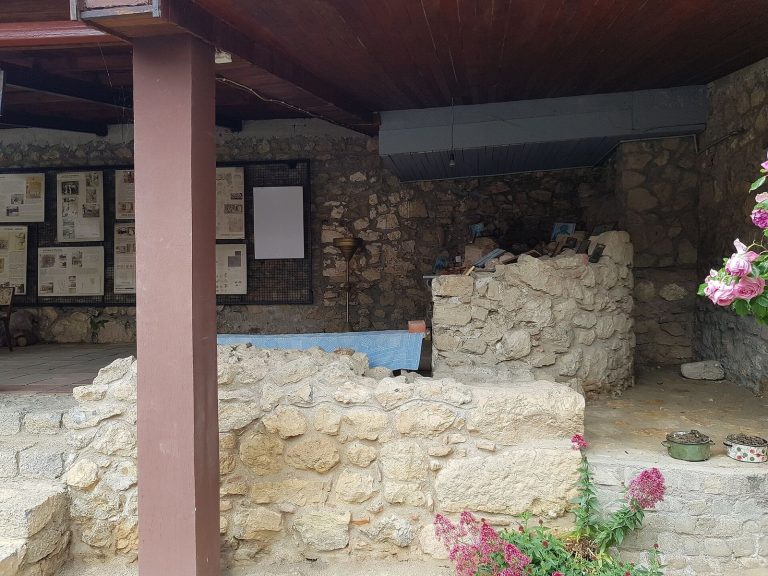
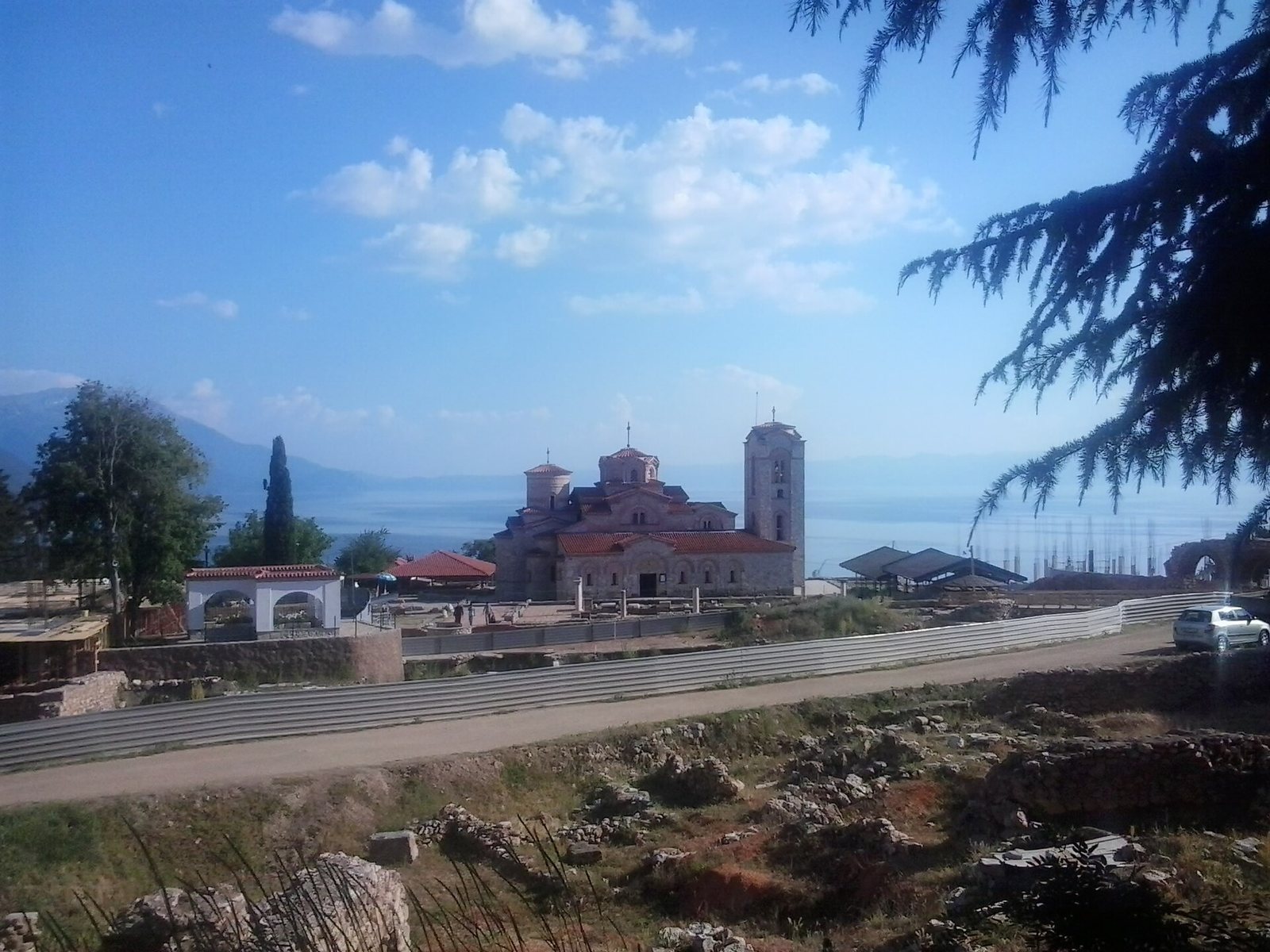
The türbe stands on Plaošnik Hill near the Church of Saint Clement and Panteleimon. It is an open türbe, an Ottoman funerary tomb supported by columns rather than enclosed walls. Its L-shaped plan is carried by square columns at each corner, creating two connected sections for the graves.
Structure and Materials
The structure is built of brick on a base of dressed stone. Its fabric incorporates material from the Plaošnik archaeological site, architectural spolia from nearby sites, and local stone. These reused materials form part of the surviving construction of the open tomb.
Graves and Inscription
The larger section contains Sinan Čelebi Ohridzade’s grave, marked by a carved gravestone with an Arabic inscription. A stylized leaf ornament appears above the inscription. The gravestone is preserved in the Ohrid Museum. Hasan Baba’s burial lies in the smaller section on the left.