Saints Forty Martyrs of Sebaste Church (Ohrid): A Medieval Orthodox Church


Site at a Glance
- Rating
- 4.7
- Popularity
- Very Low
- Country
- North Macedonia
- Primary era
- Medieval
- Eras represented
- Medieval
- Civilizations
- Byzantine
- Site type
- Religious
- Remains
- Church
On this page6 sections
History
Saints Forty Martyrs of Sebaste Church is a medieval Orthodox church in North Macedonia, in Ohrid, whose coins point to a date in the late twelfth or possibly early thirteenth century. Its surviving frescoes place it within the Byzantine period, the medieval continuation of the eastern Roman Empire whose religious and artistic traditions shaped Orthodox churches. The dedication refers to the Forty Martyrs of Sebaste, Christian soldiers traditionally remembered as martyrs executed during the Roman period for refusing to renounce their faith.
Medieval origins and later record
The church’s original construction belongs to the medieval period, while its surviving painting has been considered to date from the second half of the thirteenth century. The church is associated with the Macedonian Orthodox Church, Archbishopric of Ohrid, and falls within the Debar-Kicevo Diocese and Ohrid Deanery. It was first recorded in 1694, when Cosmas Kitijski, a church official of the Ohrid Archbishopric, was ordered by Ottoman authorities to census the Christian population. He listed Christians in seven neighborhoods and mentioned the church in the third neighborhood, although its location was not known at the time.
Rediscovery and preservation
Archaeological excavations discovered the church in 1989, near the end of the twentieth century. Coins recovered during the work helped place the building in the late twelfth or possibly early thirteenth century. The church is no longer active and survives as a ruin. Initiatives have been undertaken to reconstruct and restore it, while its foundations and walls have been protected. Most of the remains are covered by a porch intended to safeguard the surviving structure.
Remains
Building and setting
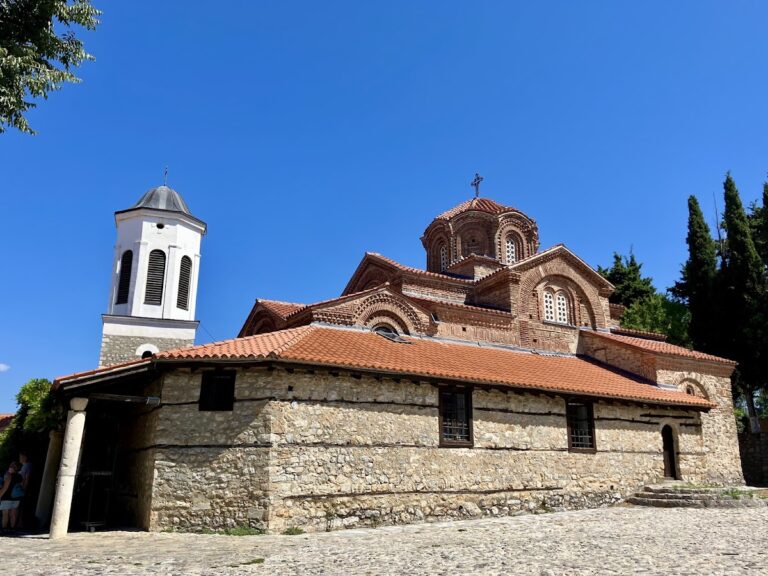
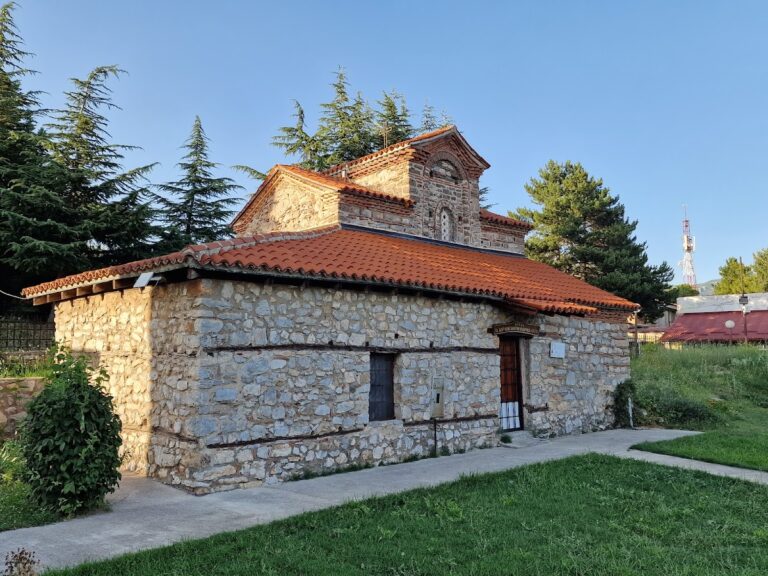
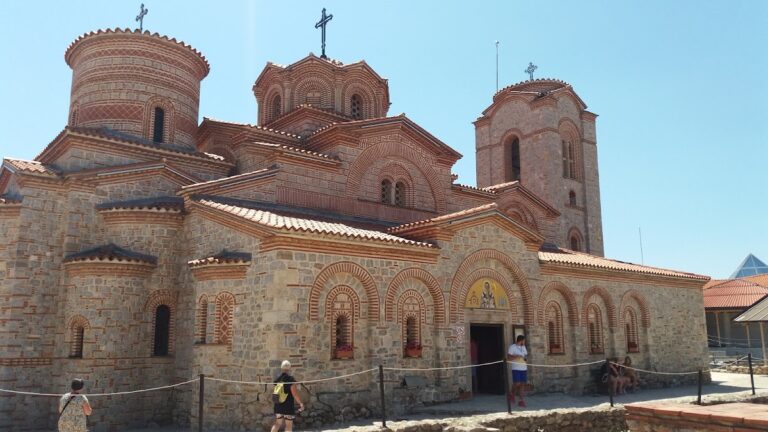
The church is a small, single-nave building, meaning that it has one principal longitudinal worship space rather than several parallel aisles. It stands in the old part of Ohrid, near the Church of Saint Sophia, on Boro Shain Street, between properties associated with the Lukanovi and Shandanovi families. Its surviving fabric consists of foundations and walls preserved as ruins. A porch covers most of the remains, protecting the visible structure while retaining the outline of the former church.
Fresco fragments
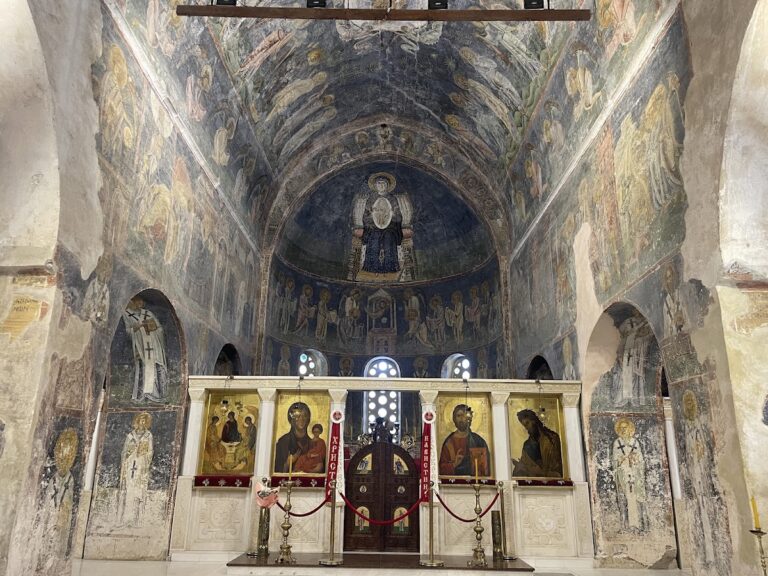
Fragments of fresco painting survive among the ruins. One unusual image shows Jesus Christ as an adult. From the fourteenth century onward, Christ was generally depicted as a baby in this artistic tradition, making the surviving representation a rarity. The fresco remains have been associated with the second half of the thirteenth century and provide evidence of the church’s Byzantine-period decoration.