Niš Fortress: An Ottoman Fortification in Serbia
Site at a Glance
- Rating
- 4.7
- Popularity
- High
- Country
- Serbia
- Primary era
- Early Modern
- External website
- Open
- Eras represented
- Classical, Medieval, Early Modern
- Civilizations
- Byzantine, Ottoman, Roman
- Site type
- Military
- Remains
- Fort
On this page14 sections
History
Niš Fortress is an Ottoman fortress and archaeological-historical monument in Niš, Serbia. Built in its present form between 1719 and 1723, it stands on a site occupied for more than two millennia and reflects successive Roman, Byzantine, medieval, and Ottoman periods of fortification.
Roman and Medieval Strongholds
Fortifications existed here by the middle of the second century, when the First Cohort of Dardania was established at the site. Dardania was an ancient Balkan region and people, and this Roman military unit was associated with that region. The stronghold was repeatedly destroyed and rebuilt over the centuries, with Roman, Byzantine, and later medieval defenses succeeding one another.
Ottoman Reconstruction
The fortress visible today originated under the Ottoman Empire, the imperial state that controlled much of the Balkans during this period. Its construction or reconstruction took place from 1719 to 1723, creating the large fortified complex that survives in a reconstructed form.
War, Protection, and Continuing Use
During the First World War, Bulgarian forces occupied the fortress and converted it into a prison for Serbian patriots. In May 1948, the fortress received legal protection as a cultural monument of great significance and was placed on Serbia’s list of protected cultural monuments. It is regarded as one of the best-preserved fortifications of its type in Serbia and the Balkans.
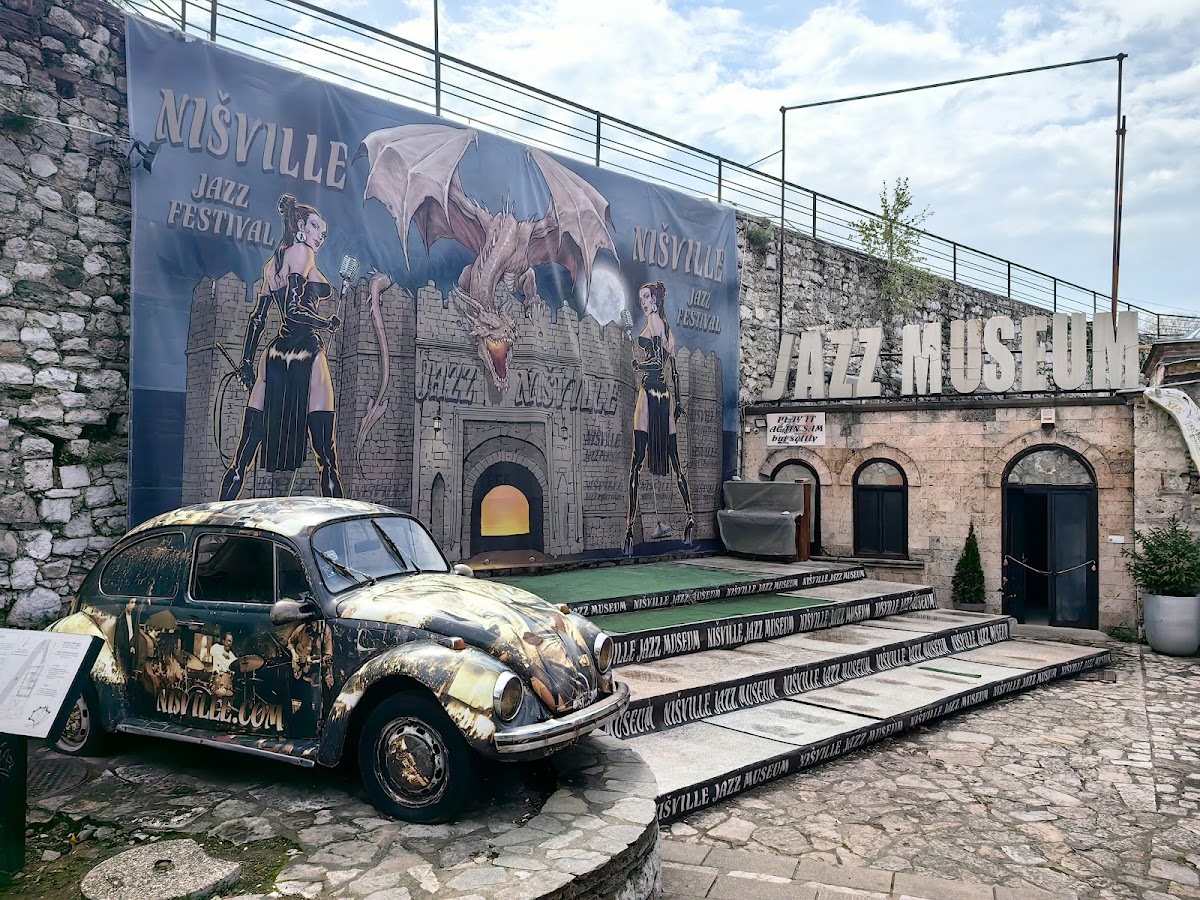
Since 1966, the complex has hosted the Niš Film Festival. It also accommodates the Niš Historical Archives, the Gallery of Contemporary Art of Niš, and the Nišville Jazz Museum, which is associated with the international Nišville jazz festival. Other events held within the fortress include the Nišville Jazz Festival and the International Knights’ Festival “Protectors of the Fortress.”
Remains
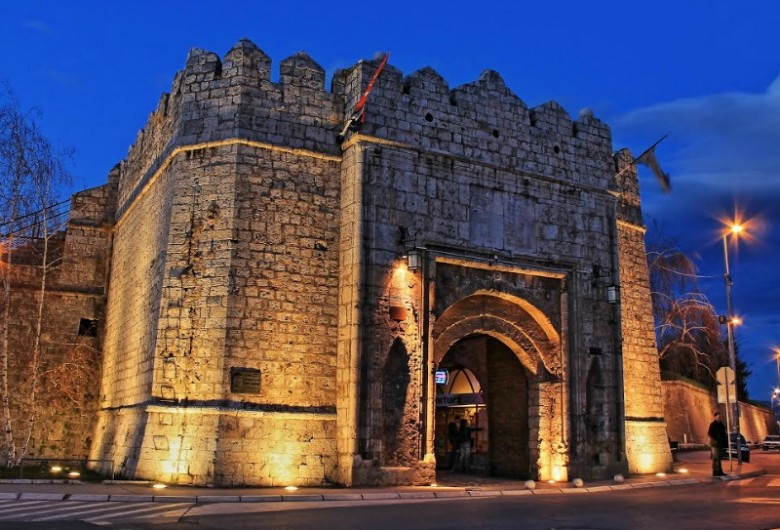
Niš Fortress occupies approximately 22 hectares within a polygonal ground plan. Its defensive system includes eight projecting bastion terraces, which allowed defenders to protect adjoining walls with flanking fire, and four massive gates. The fortress is built primarily of stone, with blocks taken from nearby quarries and cut into relatively regular shapes.
Walls, Bastions, and Moat
Ramparts
The ramparts, the main defensive walls surrounding the site, extend for about 2,100 metres. They rise approximately 8 metres high and average 3 metres in thickness. Their inner faces were strengthened by a wooden reinforcement called a santrač, while an additional bulwark known as a trpanac provided further support.
Moat and Gates
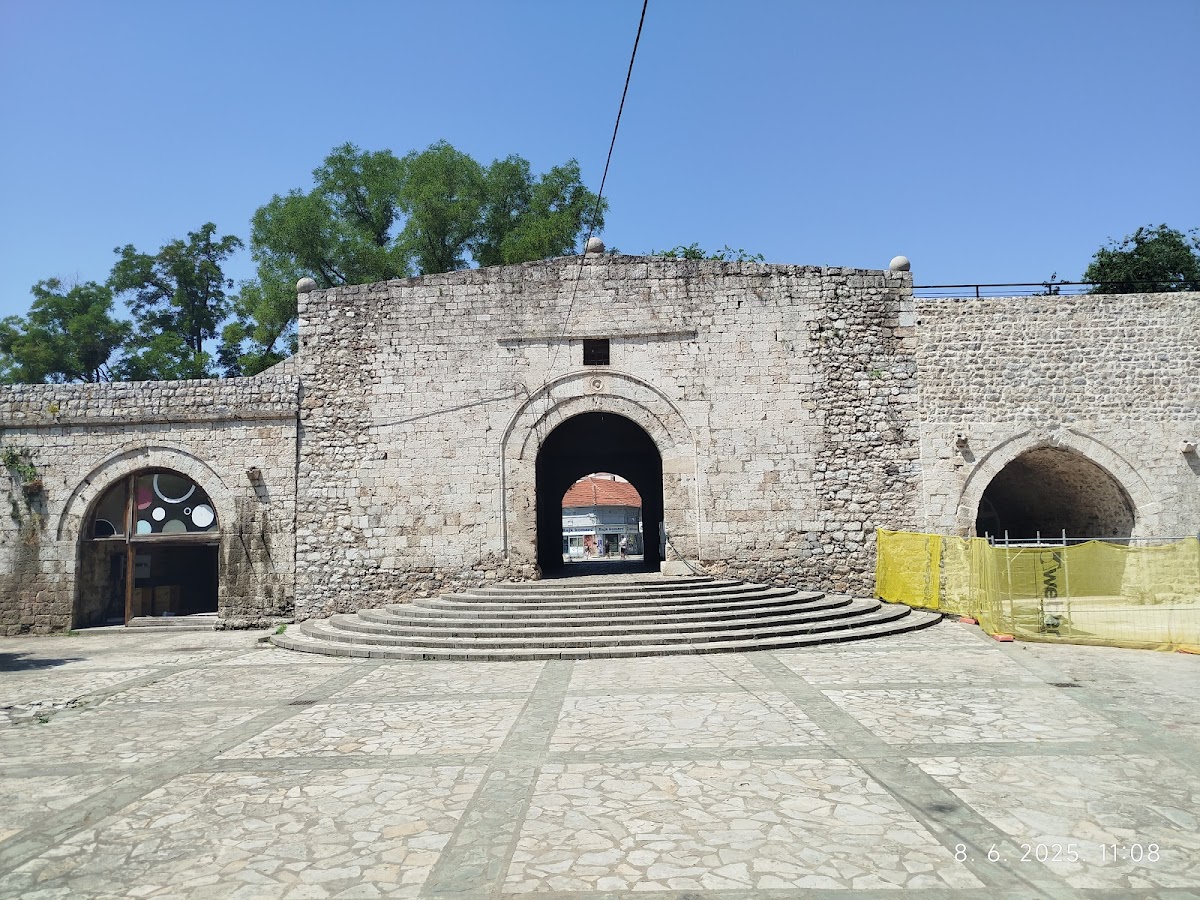
A wide moat formerly enclosed the fortress. Its northern section survives, while the nearby Nišava River also served as part of the defensive water system. The southern Stambol Gate and western Belgrade Gate remain relatively well preserved. The water gates survive in part, and the northern Vidin Gate and southeastern Jagodina Gate survive as archaeological remains. Reconstructing all four gates would restore the fortress’s character as a closed defensive system.
Archaeological and Ottoman Remains
Ancient and Byzantine Features
Within the walls are ancient baths and a Proto-Byzantine street, dating to the early Byzantine period, with a vaulted building and basilica. A separate Byzantine street also survives among the archaeological remains, preserving evidence of the settlement’s earlier urban organization.
Ottoman Structures
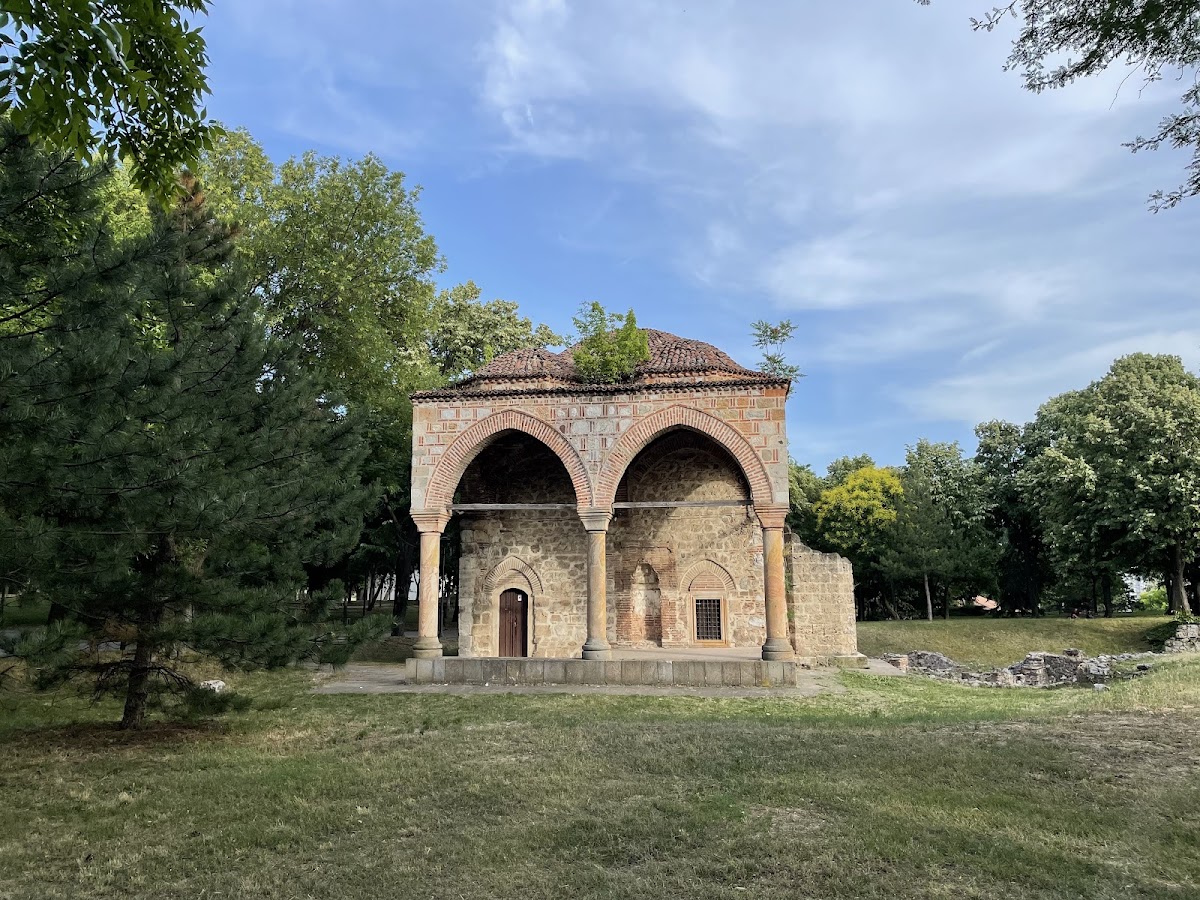
The Ottoman remains include powder magazines, the Bali-bey Mosque, an Ottoman hammam, or public bath, and an arsenal. Together, these structures represent the religious, military, and service facilities that formed part of the fortified complex.
Commemorative and Later Features
Ossuary and Lapidarium
The fortress contains a commemorative ossuary dedicated to participants in the Toplica uprising, a Serbian revolt during the First World War against occupying forces in the Toplica region. A lapidarium, a display of stone archaeological and architectural fragments, is also located within the complex.
Archives and Weather Station
A building in the western part of the fortress houses the Niš Historical Archives. A weather station stands in the northeastern part of the complex and provides forecasts for Niš.
The fortress park provides nesting habitat for several bird species, including the great tit, red-backed shrike, Eurasian collared dove, and common nightingale.