Castillo de Torreparedones: A Medieval Fortress in Córdoba, Spain


Site at a Glance
- Rating
- 4.4
- Popularity
- Very Low
- Country
- Spain
- Primary era
- Medieval
- Eras represented
- Medieval, Modern
- Civilizations
- Crown of Castile
- Site type
- Military
- Remains
- Castle
On this page9 sections
History
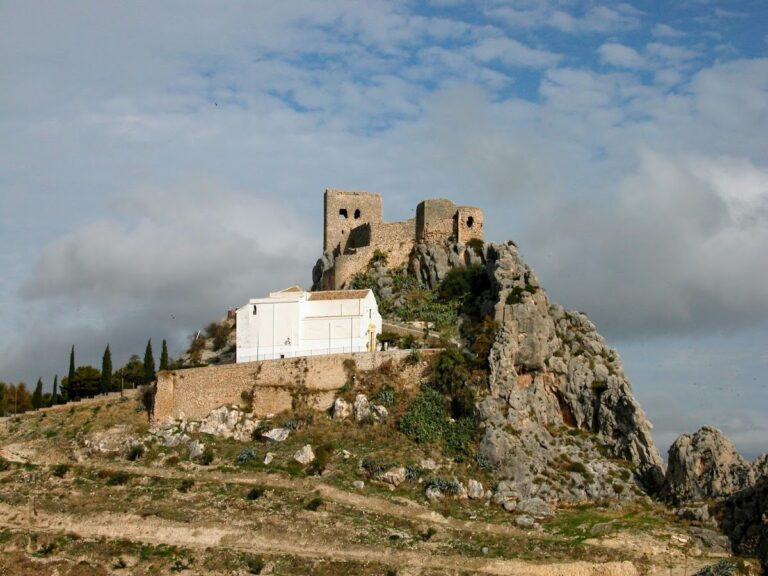
Castillo de Torreparedones is a medieval fortress in Spain, located within the Torreparedones archaeological site in the Córdoba countryside, between the municipalities of Baena and Castro del Río. The wider site originated in the Chalcolithic, or Copper Age, and continued to develop through the medieval period, although occupation was not continuous. The castle is first mentioned in the thirteenth century, when its ownership changed, and it remained involved in local political and military affairs into the fifteenth century.
Thirteenth-century ownership
In 1269, Alfonso X of Castile and León, known as Alfonso the Wise, granted the castle to Fernán Alonso de Lastres, the alcalde, or local municipal and judicial official, of Baena. The grant recognized Fernán Alonso’s services. His son later sold the castle to the lord of Espejo and Castro el Viejo to pay his ransom. The castle apparently housed both Arab and Christian inhabitants until 1386.
Fourteenth- and fifteenth-century control
In 1328, the Council of Córdoba requested that the castle be removed from the possession of Pedro Díaz de Aguayo. It then came under the protection of Fernández Álvarez, Córdoba’s senior bailiff, a high-ranking administrative and law-enforcement officer.
During the mid-fifteenth century, Luis Portocarrero, lord of Palma, seized the castle in the name of Enrique IV of Castile, who ruled from 1454 to 1474. The fortress formally passed to Enrique IV in 1469.
Restoration and archaeological work
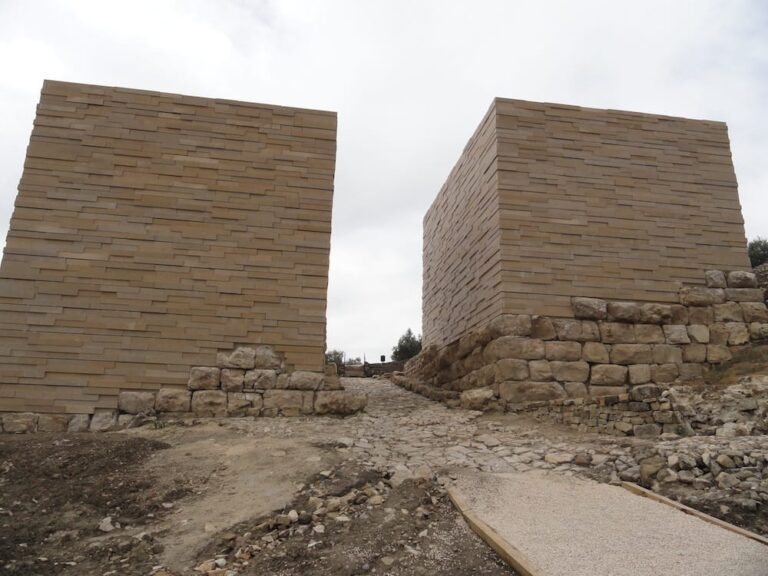
Several restoration phases took place in the main enclosure between 2011 and 2015 under the direction of architect and conservator José Manuel Reyes Alcalá. The work restored one of the castle towers, made it accessible to the public, and created a viewing platform on its roof. Later excavation and consolidation in the eastern enclosure clarified the fortress’s defensive systems, building form, and construction techniques across its different phases, while supporting the preservation of the monument. Castillo de Torreparedones has been protected as a Bien de Interés Cultural since 2007.
Remains
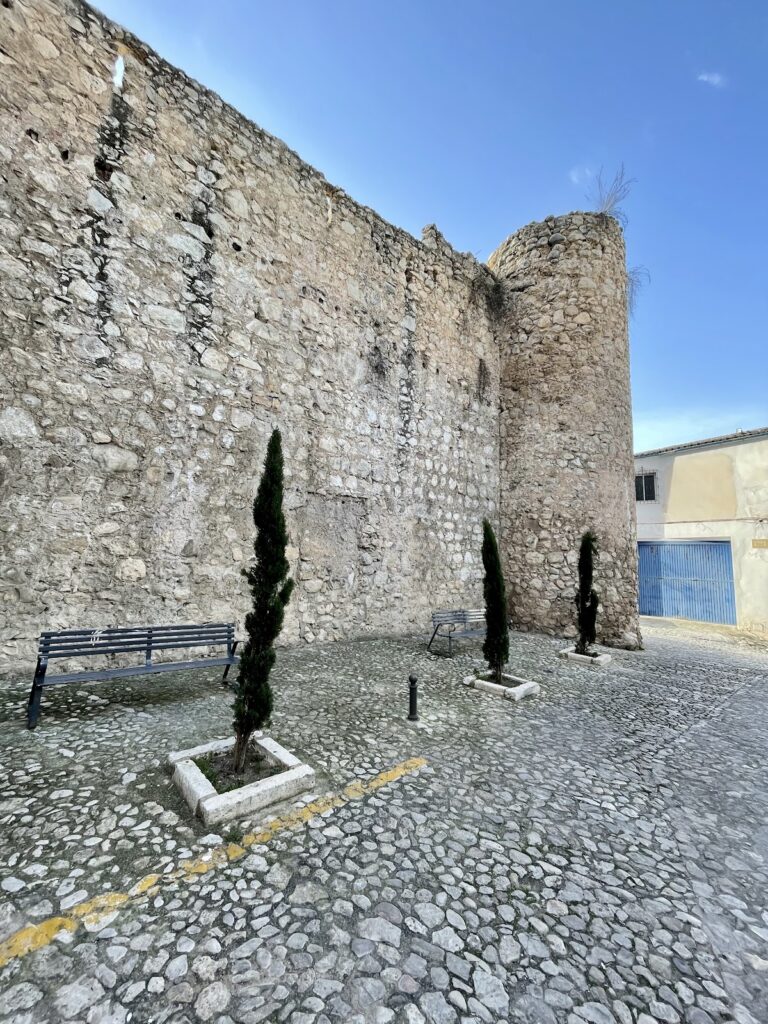
Castillo de Torreparedones is a simple square fortress formed by masonry walls and square corner towers. The walls use dressed stones laid in courses, with the stones extending into the wall in a header-oriented technique. An additional defensive wall outside the castle reinforces the enclosure and is built from relatively irregular stones bonded with mortar.
Main enclosure
Southeast tower
The corner towers are generally solid at their bases and contain vaulted chambers above. The best-preserved example stands at the southeast corner and uses the same masonry as the castle walls. Openings appear on three of its faces. Inside, the tower has two levels, while its lower level contains two rooms covered by the remains of a mortar-formwork sail vault, a vault whose curved surfaces rise from a square or polygonal plan. Restoration recovered the tower and added a viewing platform to its roof.
Water storage
A vaulted cistern occupies the parade ground inside the enclosure. A cistern is a tank for storing water, while a parade ground is an open courtyard within a fortress.
Eastern enclosure
The eastern enclosure has been excavated and consolidated. This work revealed information about the castle’s defensive arrangements, its changing building form, and the construction methods used during its different phases.