Burg Westerhusen: A Former Lowland Castle in Germany
Site at a Glance
- Rating
- 4.8
- Popularity
- Very Low
- Country
- Germany
- Primary era
- Medieval
- Eras represented
- Medieval, Early Modern
- Civilizations
- Holy Roman Empire
- Site type
- Military
- Remains
- Castle
On this page7 sections
History
Burg Westerhusen is a former lowland castle in Germany, located in the village of Westerhusen within the municipality of Hinte in Lower Saxony. Its construction date is unknown, although the site was associated with a judge and local chieftain by at least the fourteenth century. A Renaissance small castle occupied the location during the sixteenth century, linking the medieval seat with the later estate that developed there.
Medieval Chieftain’s Seat
Westerhusen served as the seat of a regional chieftain who also exercised judicial authority. The castle first enters the historical record through its destruction in 1436. Ewe, also known as Ewo, Howerda defended it against mercenaries acting for Hamburg, a leading city of the Hanseatic League, and the Cirksena family, a prominent ruling dynasty in East Frisia. Their campaign targeted pirates and chieftains allied with them.
According to the account associated with Eggerik Beninga, Ewe turned back the first attack. The mercenaries captured the castle during a second assault, however, and dismantled almost the entire complex. They carried its timber, stone, ironwork, and other materials to Emden, where the materials strengthened the city’s fortifications.
The destruction ended Ewe’s position as chieftain. He later used the title “former chieftain of Westerhusen” and died in 1457. He may have passed his judicial and chieftainly authority to his son Wyloff during his lifetime, since Wyloff appears in a document dated 5 November 1445. Whether Wyloff rebuilt the castle on a larger or more elaborate scale remains unknown.
Renaissance Castle and Estate
A Renaissance small castle stood at Westerhusen in the sixteenth century. The chieftain Reint owned it in 1529, but chieftains no longer appear in records from Westerhusen after the end of that century. The Renaissance building was probably demolished during the seventeenth century and replaced by a manor house.
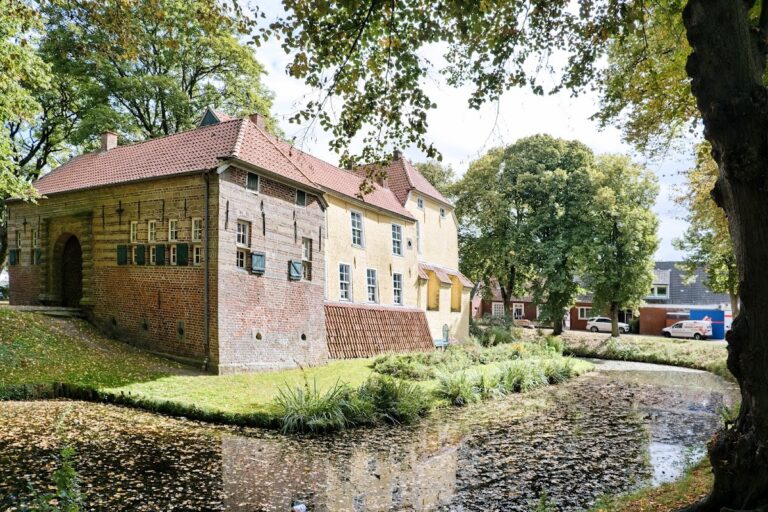
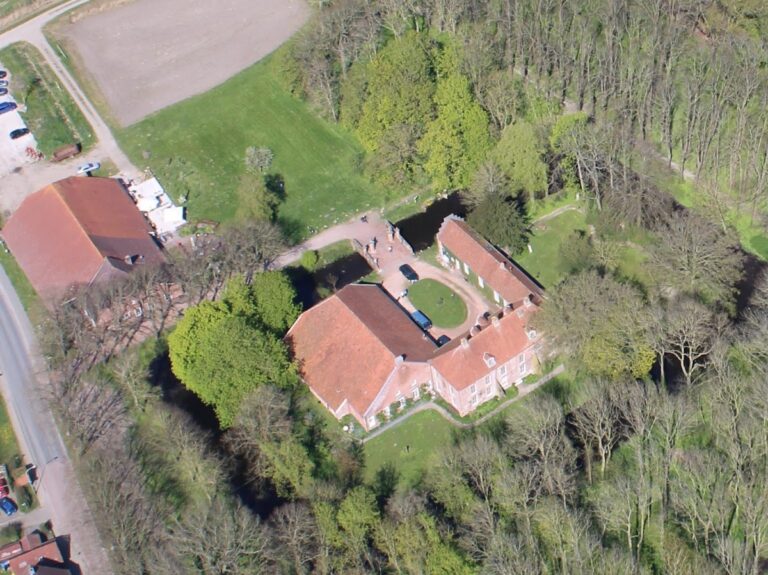
The manor burned around 1780 and was rebuilt as a large country house. The land-revenue official Conring purchased the estate in 1785. During the nineteenth century, the prosperous farmer Dirk Janssen Groenewold owned the manor and had it remodelled around 1860. These alterations included a balcony, a veranda, or a feature described as a shield gable.
Twentieth-Century Changes
In the twentieth century, the Ukena family sold the estate and transferred the building to the East Frisian Employment and Residential Facilities organization, a residential institution for people with disabilities. The organization operates a residence there. The municipality of Hinte acquired the surrounding land, including the former castle garden. The surviving castle remains and the circa-1600 Schatthaus are protected as monuments.
Remains
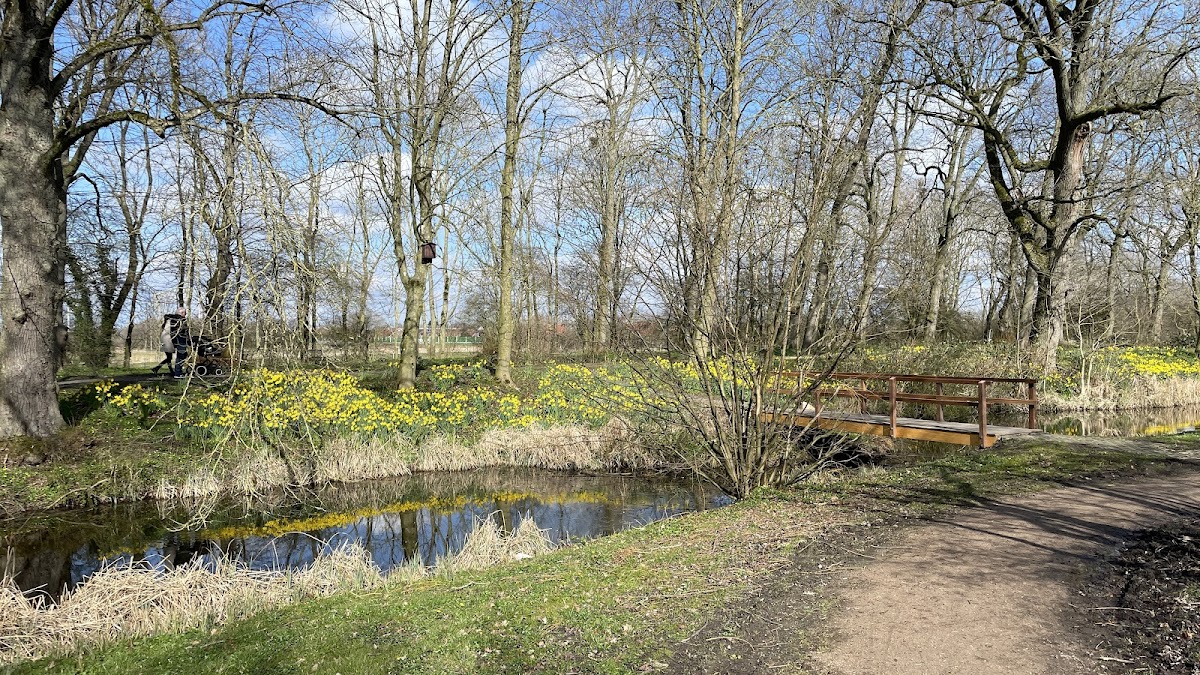
Burg Westerhusen survives primarily as a castle site, or Burgstall, where the original buildings have disappeared or remain only as archaeological features. The lowland castle stood within the village on relatively flat terrain. Parts of the site are still enclosed by moats, defensive ditches, and an outer enclosure wall, while surviving wall remains and ditch features preserve elements of its former boundaries.
Castle Site
The original complex may have taken the form of a fortified stone house, comparable to the surviving stone house at Bunderhee, although its date and precise arrangement are unknown. The site’s remaining walls and water-filled or former ditch lines represent the physical evidence of the castle’s defensive layout. The later Renaissance castle, manor house, and country house occupied the same location during successive phases of the estate’s development.
Schatthaus
The Schatthaus, an ancillary building associated with the former estate, was built around 1600 and survives at Burg Westerhusen. It forms part of the surviving estate complex alongside the archaeological castle remains. The building and the castle site are protected as monuments.