Andelfingen Castle: A Bailiff’s Residence and District Administration Seat in Switzerland
Site at a Glance
- Rating
- 4.8
- Popularity
- Very Low
- Country
- Switzerland
- Primary era
- Early Modern
- External website
- Open
- Eras represented
- Early Modern
- Civilizations
- Swiss
- Site type
- Domestic
- Remains
- Manor House
On this page9 sections
History
Seventeenth-century origins
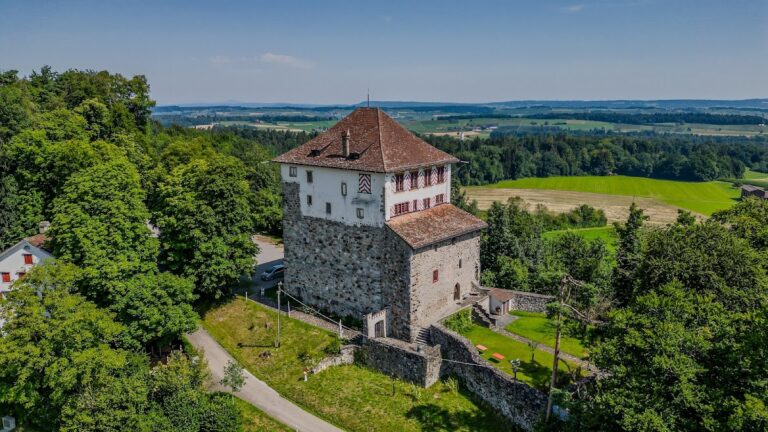
Andelfingen Castle is a historic manor house in Switzerland that developed through two major building phases. The present representative building dates from the eighteenth century, while its predecessor, known as the first New Andelfingen Castle, was constructed in 1613 and 1614. That building replaced an older castle located approximately 200 metres to the west.
The seventeenth-century castle served as the residence of the bailiff of Andelfingen. A bailiff was an official who administered a territory for a higher authority. The building also contained an arsenal, a powder tower, and an archive, combining residential, administrative, and military functions.
The eighteenth-century replacement
An expert assessment by a carpenter from the Grubenmann family of Teufen led to the demolition of the first New Andelfingen Castle between 1780 and 1782. The Grubenmanns were a Swiss family of builders and carpenters especially associated with timber construction. The present castle was erected as its replacement and continued to house the bailiff.
The building remained the bailiff’s residence until the French invasion of 1798. After Ludwig Escher, the last bailiff, left, the physician Matthias Escher rented the castle.
Administrative and private ownership
After the French withdrawal and the abolition of the Mediation Constitution, Andelfingen Castle became the seat of the chief district official, a senior administrator responsible for a district. Hans Kaspar Schweizer had the castle garden laid out in 1817 and accommodated Salomon Landolt, a Swiss magistrate and painter, there during the final months before Landolt’s death.
Junker Hartmann Escher von Berg succeeded Schweizer in 1828. The office was abolished in 1830 when the Canton of Zurich was reorganized into districts. The City of Zurich then sold the no-longer-needed castle to Johann Heinrich von Sulzer-Wart in 1832. It remained with his family until the death of his last heir, Anna Maria von Sulzer-Wart.
Municipal and later use
After Anna Maria von Sulzer-Wart’s death, the municipality of Andelfingen acquired the castle and garden as a donated gift made possible by a benefaction. From 1925 to 1999, the castle served as an old people’s home. A foundation has owned it since 2000, and the building now accommodates the district governor’s office, an apartment, and several event rooms.
Remains
Castle grounds and surviving buildings
Manor house and garden
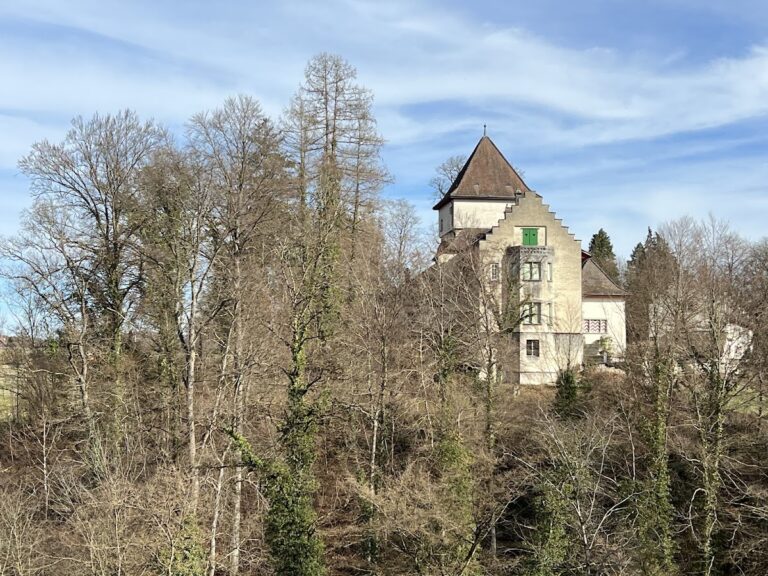
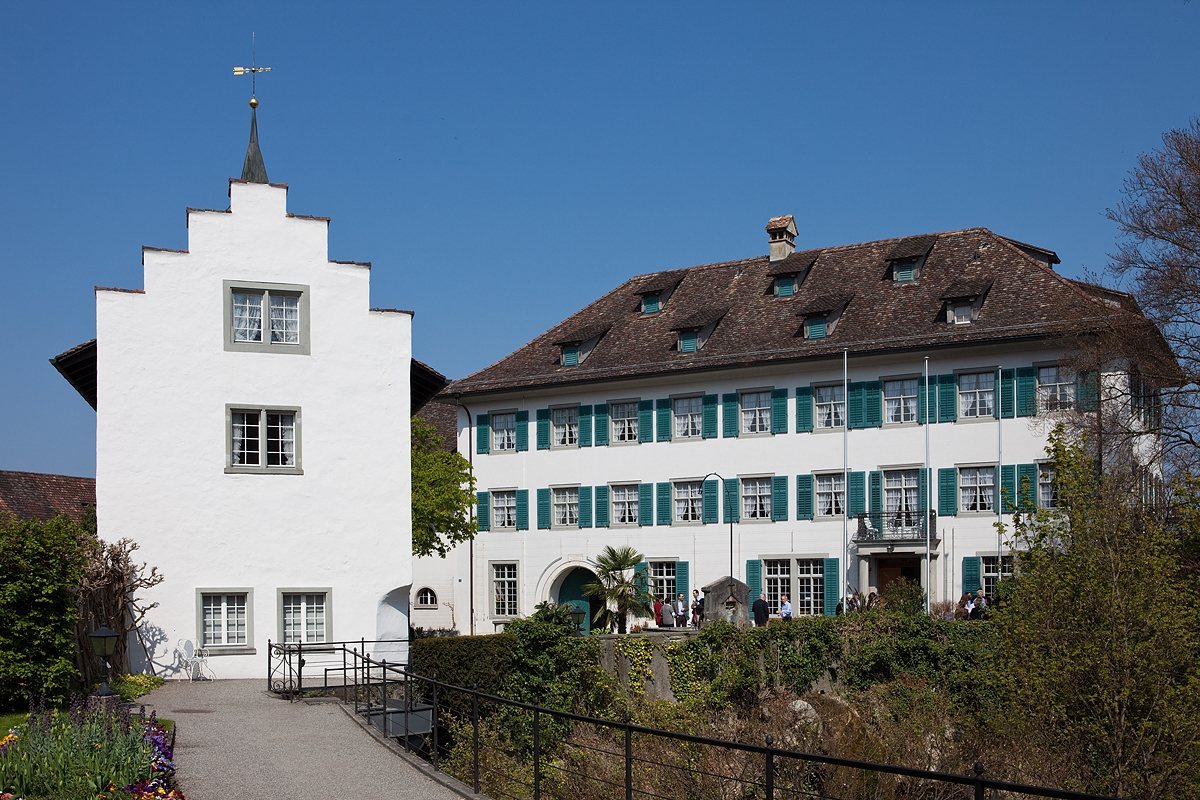
The present castle is an eighteenth-century representative manor house standing roughly halfway between the church and the River Thur. It overlooks the covered wooden bridge across the river and is surrounded by a castle garden. The property covers approximately 1.5 hectares, while the castle itself has a ground-plan area of 829 square metres.
The castle and garden survive as a single property. Their current arrangement combines the eighteenth-century replacement building with the garden laid out in 1817, preserving the principal elements of the estate’s later historic form.
Gatekeeper’s house
A gatekeeper’s house is associated with the castle and forms part of the surviving property. Together with the manor house and garden, it belongs to the physical arrangement that developed after the eighteenth-century rebuilding and the nineteenth-century creation of the garden.