Ziegenberg Castle: A Medieval Fortress and Baroque Palace in Germany
Site at a Glance
- Rating
- 3.9
- Popularity
- Very Low
- Country
- Germany
- Primary era
- Medieval
- Eras represented
- Medieval, Early Modern, Modern
- Civilizations
- German, Holy Roman Empire
- Site type
- Domestic
- Remains
- Elite Residence
On this page11 sections
History
Ziegenberg Castle is a medieval castle in Ober-Mörlen, Germany, transformed into a Baroque palace around 1747. It stands above the district of Langenhain-Ziegenberg and reflects centuries of changing ownership, aristocratic residence, military use, destruction, and redevelopment.
Medieval origins and changing lordships
Ziegenberg belonged to the Mörler Mark, which became a hereditary fief of the Lords of Falkenstein in 1356 after it had previously been held by the Lords of Eppstein. A fief was property or jurisdiction granted by a superior in return for service or other obligations.
During the imperial war of 1365 to 1366 against Philipp VI of Falkenstein, troops from Frankfurt captured a tower at Ziegenberg. The tower was probably built by the Lords of Eppstein. The Lords of Falkenstein probably began a new castle in its place from 1367, and Ziegenberg Castle was first recorded in 1388.
After the Falkenstein line became extinct, the Treaty of Butzbach transferred the castle to the Lords of Eppstein-Münzenberg on 24 May 1419. The brothers Gottfried and Johann of Eppstein-Münzenberg sold it to Count Philipp I of Katzenelnbogen in 1478. Philipp died in 1479 without a male heir, and the castle passed through the marriage of his daughter Anna to Landgrave Heinrich III of Hesse-Marburg. In 1500, it became part of the Landgraviate of Hesse-Kassel.
The Drachsdorf and Diede zum Fürstenstein estate
In 1506, Landgrave Wilhelm II granted Ziegenberg and its associated rights as a fief to Jost von Drachsdorf, the landgrave’s official at Eppstein. A landgrave was a high-ranking territorial ruler in the medieval and early modern German Empire. The grant included the Ziegenberg valley, milling rights, other jurisdictions, and revenues at Wernborn, Pfaffenwiesbach, Langenhain, and Fauerbach.
Drachsdorf surrendered his fief at Veckerhagen and made a monetary payment in return. Wilhelm II retained the right to redeem the fief for 2,500 gulden, although that right was never used. Drachsdorf later served as chief official of Lower Katzenelnbogen from 1514 to 1519, followed by service as a Hessian court official and councillor.
His son-in-law Konrad, also known as Kurt, Diede zum Fürstenstein continued to enlarge the estate. After marrying Ottilia, Jost von Drachsdorf’s daughter, in 1540, he obtained sole possession of Ziegenberg in 1557. The transfer combined inheritance through his wife with a payment of 4,000 Reichstaler to her brothers, Philipp and Marsilius von Reifenberg.
Palace, headquarters, and destruction
Hans Eitel Diede zum Fürstenstein, burgrave of Friedberg from 1745 to 1748, had the medieval castle converted into a Baroque palace around 1747. Baroque architecture was an early modern European style associated with formal planning, monumental composition, and elaborate architectural treatment.
When Wilhelm Christoph Diede zum Fürstenstein died in 1807, the family became extinct and the estate passed by inheritance to the Counts of Rantzau. They sold it in 1896 to the Passavant-Gontard family of Frankfurt, which used the complex as a summer residence. The family transferred the estate to the German Reich in 1937 and 1938.
From 1939, the Wehrmacht built extensive bunker installations within the complex for the Adlerhorst headquarters. The Wehrmacht was the armed forces of Nazi Germany from 1935 to 1945. In September 1944, Generalfeldmarschall von Rundstedt directed preparations for the Ardennes Offensive from Ziegenberg. The offensive was Germany’s major western-front attack during the Second World War and began in December 1944.
American fighter-bombers largely destroyed the palace in March 1945. After partial restoration, the complex was completely converted into condominiums in 1992 and 1993.
Remains
Ziegenberg Castle occupies a mountain spur on the left bank of the Usa River above Langenhain-Ziegenberg, within the municipality of Ober-Mörlen in Hesse. The surviving complex is centered on the former Baroque palace, a rectangular arrangement of two wings set at right angles, together with the fortified medieval tower and wartime bunker installations.
Palace and medieval tower
Baroque palace
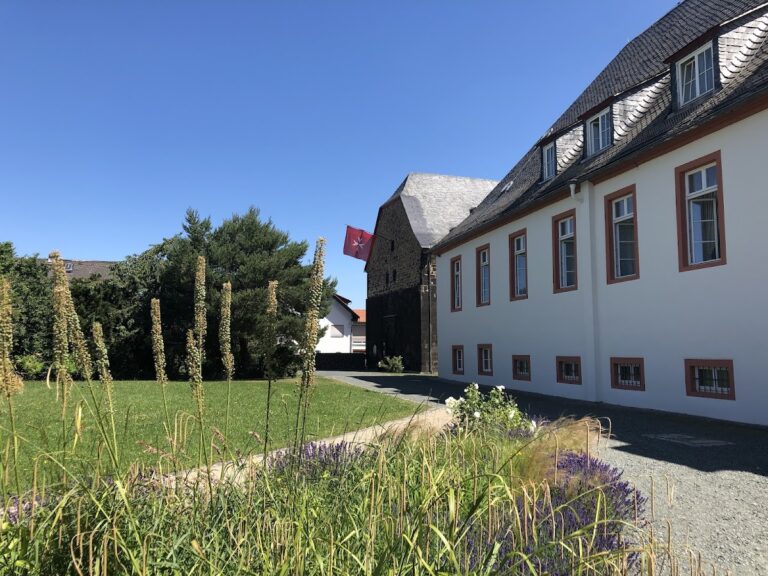
The palace was created around 1747 by converting the medieval castle into a Baroque residence. Its principal form is rectangular, with two wings meeting at a right angle. Bombing in March 1945 largely destroyed the building. The complex was partly restored after the war and later remodelled as residential apartments during the conversion of 1992 to 1993.
Medieval fortified keep
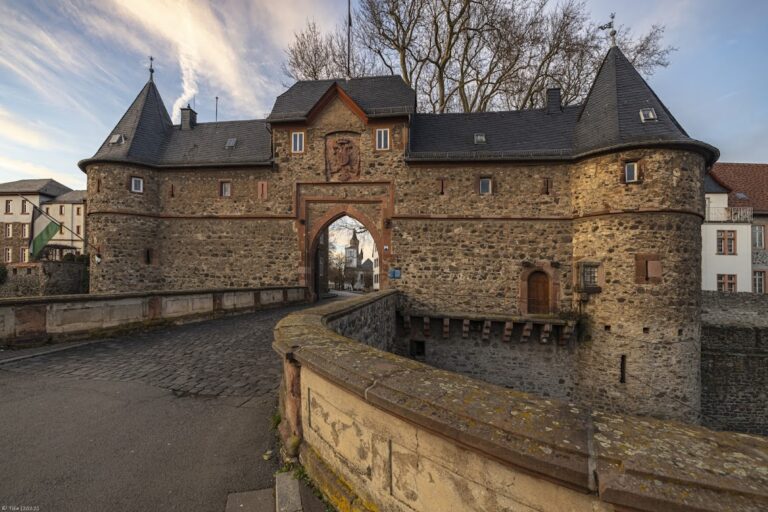
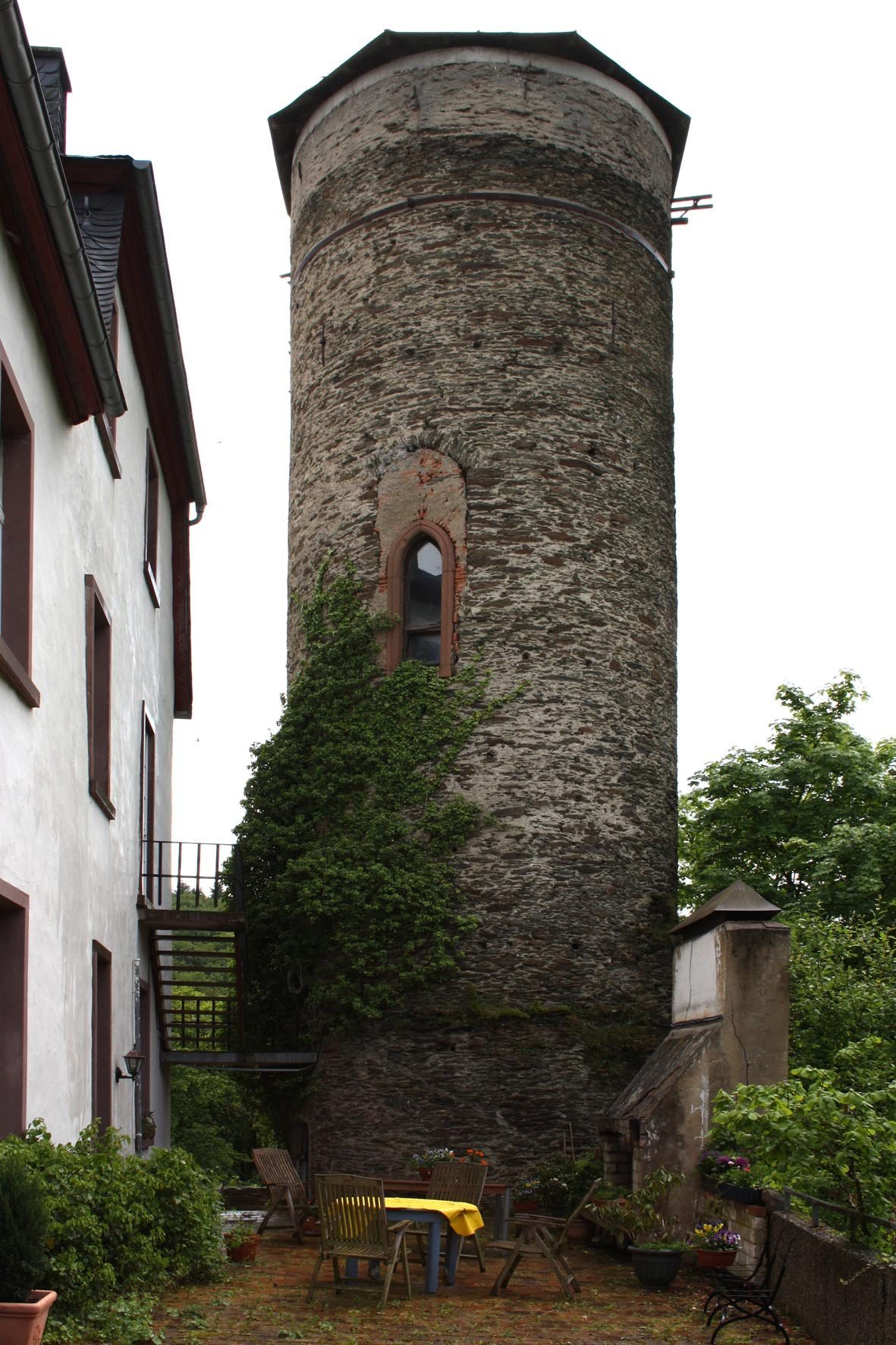
The bergfried, the principal fortified tower of a medieval German castle, is the surviving element of the earlier castle. Such towers generally served defense and refuge rather than permanent residential use. At Ziegenberg, the tower belongs to the medieval phase associated with the earlier fortress and the castle-building activity of the Lords of Falkenstein from 1367.
Wartime installations and later residential conversion
Adlerhorst bunker installations
From 1939, extensive bunker installations were constructed within the castle complex as part of the Adlerhorst headquarters. These wartime structures formed a later military layer within the former aristocratic estate.
Postwar apartments
Following the palace’s partial restoration after its wartime destruction, the complex was remodelled as condominiums in 1992 and 1993. This conversion established the present residential use of the surviving buildings and structures.