Wasserburg Nieder-Rosbach: A Water Castle and Municipal Community Centre in Germany


Site at a Glance
- Rating
- 4.4
- Popularity
- Low
- Country
- Germany
- Primary era
- Medieval
- Eras represented
- Medieval, Early Modern
- Civilizations
- Holy Roman Empire
- Site type
- Domestic
- Remains
- Castle
On this page8 sections
History
Medieval Origins and Hanau Fief
Wasserburg Nieder-Rosbach is a water castle in Germany, in Nieder-Rosbach within Rosbach vor der Höhe, whose origins reach back to the thirteenth century as the seat of the Lords of Carben. A water castle is a fortified residence surrounded wholly or partly by a moat. The castle was first recorded in 1356 as a fief of the Counts of Hanau. A fief was property granted by a superior lord to a vassal in return for service and obligations.
In 1367, the fortified house passed to the Lords of Kolnhausen. It later came from them as a Hanau fief to the Löw von Steinfurth family. In 1412, the family had to grant the Count of Hanau the right of opening. This arrangement allowed the count to enter and use the castle for military purposes when necessary, reinforcing the castle’s connection with Hanau’s territorial power.
Manor House and Municipal Use
The Lords of Greiffenclau zu Vollrads owned the castle from 1503 until 1816. During their ownership, the complex was remodeled as a manor house between 1696 and 1699, changing the character of the medieval fortified residence.
After further changes of ownership, the municipality acquired the building and its grounds in 1913. The estate first continued to serve residential purposes, then underwent extensive renovation for municipal administrative offices. Wasserburg Nieder-Rosbach is now a protected historic monument. Following comprehensive renovation in 2011, the city-owned building became a public community meeting place.
Remains
Castle Complex
Manor House
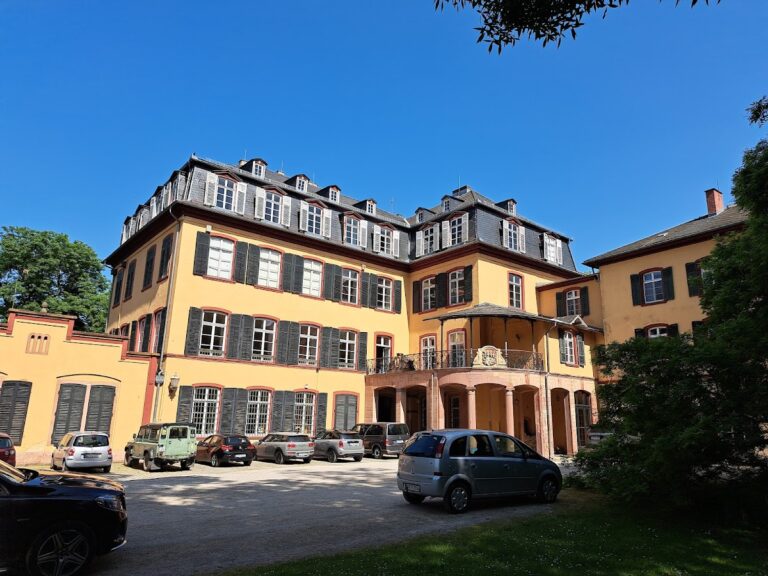
The surviving complex stands on the bank of the Rosbach and consists of the manor house, a farm building, and the surrounding water-filled ditch. The two-storey manor house rises on a raised base. Its base and first storey are solidly constructed, while the upper storey uses half-timbering, a structural timber frame filled with another material such as plastered masonry. Modern elevator installations were added at the rear during the 2011 renovation.
Moat and Bridge
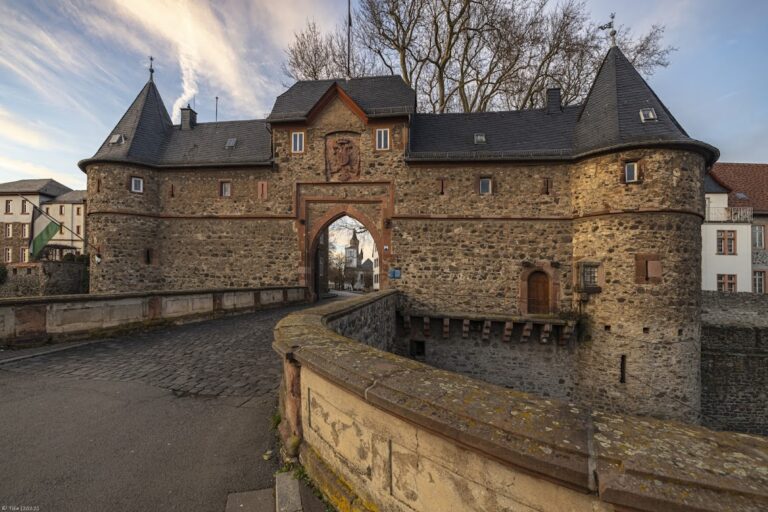
The moat surrounds the building, with its southeastern corner partially restored. A three-arched bridge made of rubble stone crosses the water and leads to the main entrance, preserving the physical relationship between the approach and the fortified residence.
Former Economic Courtyard
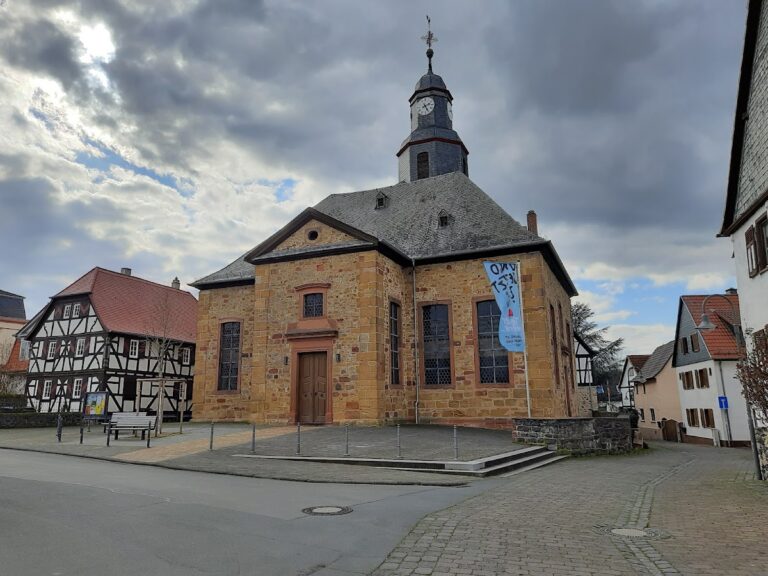
A broad square lies in front of the water castle. Beside it stands the former Nieder-Rosbach elementary school, a building that originally served as the castle’s economic courtyard. After the school closed, it was used as a village community centre and is now privately occupied. The nearby church is named after the castle complex, while the open area forms a visual axis between the castle and the church.
Nearby sites